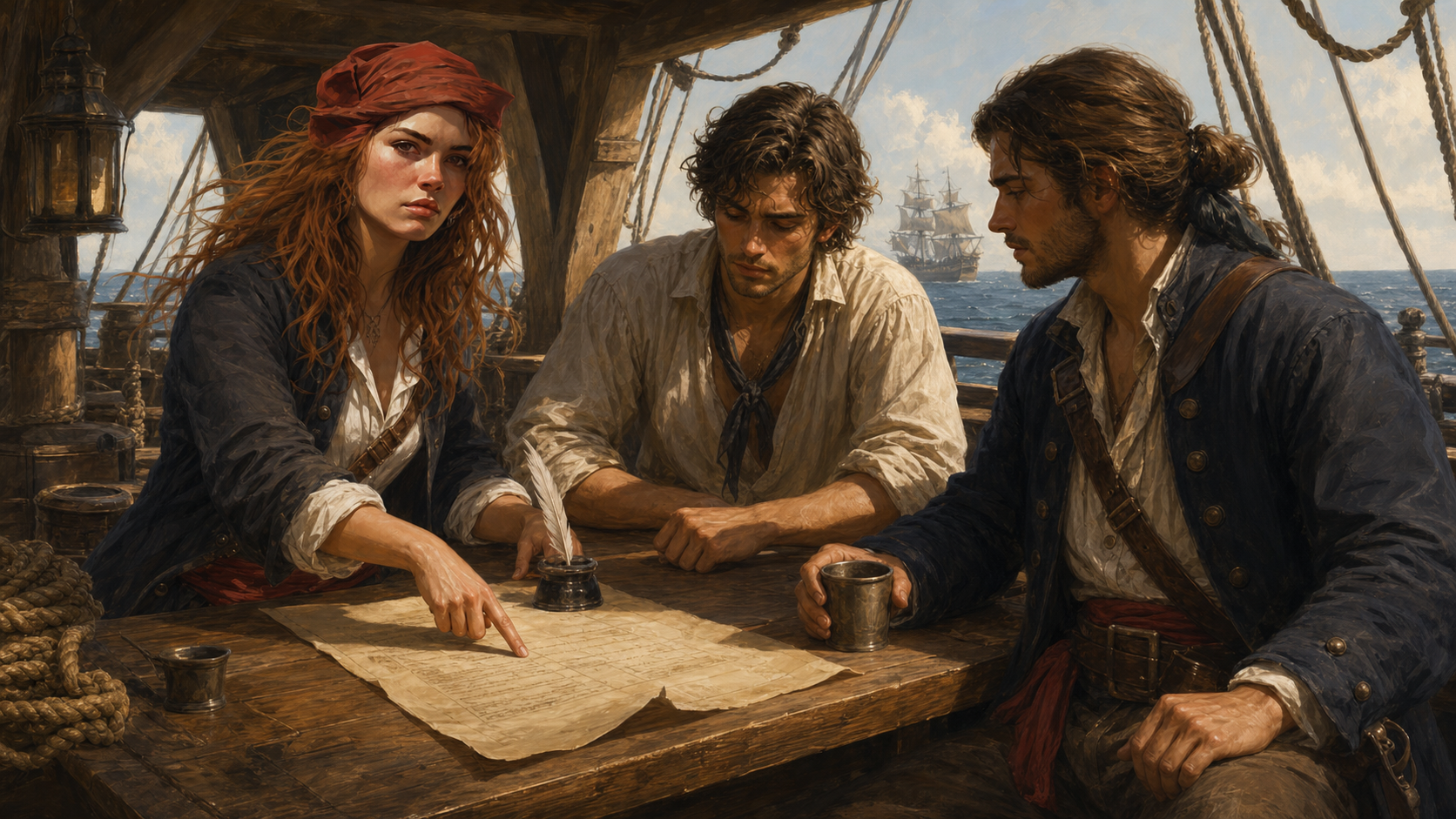
Bartholomew Roberts' articles are startling because they sound so administrative. Shares are named. Gambling is banned. Lights go out. Weapons must be ready. Injury compensation is listed. Theft from the company has consequences. It is all very sensible, which is exactly what makes it unnerving. The scary part is not that pirates had no rules. The scary part is that some pirates had rules good enough to keep robbery moving. The myth loves pirates as chaos with hats. The record points somewhere stranger. A ship full of armed men could not survive on swagger alone. It needed food, water, labor, discipline, navigation, repairs, voting, and a way to stop one quarrel from becoming twenty. Pirate articles turned criminal violence into an operating system.
What The Evidence Can And Cannot Say
The distinction should be clear. Surviving articles and early accounts show that some pirate crews used agreed rules. That does not mean every crew followed one grand Pirate Code whispered through the taverns of the world. The universal code is mostly later legend. The real thing is more local, more practical, and more interesting. Different crews needed different agreements. A small sloop, a captured merchantman, and a fleet operation did not face the same problems in the same proportions. But the recurring concerns are revealing: who commands, who votes, who gets paid, who is punished, and what the crew owes a man damaged in its service.
Piracy required cooperation under pressure. A crew had to chase, board, guard prisoners, sort cargo, repair damage, feed itself, and escape patrols. One careless fire, one hidden sack of coins, one drunken quarrel, one cowardly break in battle could wreck the entire company. Rules existed because the work was dangerous and the workers were armed. That does not redeem the enterprise. Organized robbery is still robbery. But organization explains why some pirate crews survived long enough to become a problem for merchants and governments. Chaos is cinematic. Procedure is efficient. Plunder commonly moved through shares. Captains and skilled specialists might receive more than an ordinary sailor, but the ordinary sailor's portion was visible in a way many legal maritime workers could only envy. A known division reduced suspicion. If everyone knew the bargain, the argument could begin from the article instead of the knife.
The share system also made recruitment easier. Piracy promised danger, possible hanging, and a brief life if luck soured. But it also promised that success would not vanish entirely into a superior's purse. That promise helped turn desperate or ambitious sailors into participants. In battle, hesitation kills. Pirate captains could hold strong authority when chasing or fighting. Outside those moments, the crew and quartermaster could limit them. This made pirate command more conditional than the absolute image suggests. A captain who failed to deliver prizes, made bad decisions, or lost the crew's confidence could be challenged or removed.
That conditional authority was practical. A pirate captain was not a king at sea; he was the dangerous manager of a dangerous bargain. His power depended on results. A captain who could not turn risk into reward became a liability with a hat. Pirate freedom has been romanticized into nonsense. Articles could punish desertion, theft, cowardice, concealed loot, fighting, gambling, or breaking shipboard safety rules. Some punishments were severe. A man who endangered the company endangered everyone, because capture could mean prison, trial, and rope. This is where the myth flips. Pirates did not love freedom because they hated rules. Some loved rules because rules protected their chosen freedom from collapsing into private violence. The rules made the ship steadier, and a steady pirate ship was a more serious threat.
Injury compensation looks like a humane surprise until the larger system appears. A crew wanted men willing to fight. Men wanted to know whether a lost arm, leg, or eye would leave them with nothing. Articles could name payments for wounds because risk had to be priced before men would stand in it. That is not modern insurance. It is the logic of violent labor. The companion article on pirate injury compensation follows that ledger further, including the uncomfortable places where compensation intersects with slavery and the Atlantic economy. A disciplined crew could frighten more effectively than a disordered one. The goal was often surrender, not a beautiful fight. Pirates wanted cargo, ships, stores, weapons, and information. Damaging the prize too badly could reduce profit. A crew that looked organized, moved quickly, and had a reputation for consequences made resistance feel expensive.
That is why rules and fear belong together. The black flag might open the conversation, but organization finished it. A target captain weighing surrender against resistance did not face a cloud of random villains. He might face a company of men who had already agreed how the next hour would work. The rule-bound ship is more interesting than the lawless ship because it explains more. It explains recruitment, loyalty, discipline, compensation, and why pirate crews could be both internally participatory and externally cruel. It also makes the moral picture sharper. These were not lovable rebels who accidentally stole things. They were organized criminals who built working systems.
That system is the point. The rules do not soften piracy. They make it clearer. They show how a crew could reject legal authority while creating a smaller authority of its own. Humans do that often: flee one set of chains, then write another set that suits the job. A disorganized pirate ship might be loud, but a competent one was worse. Competence meant the lookout saw first, the crew moved quickly, the guns were ready, the boarding party knew its work, and the quartermaster could keep profit from becoming immediate private theft. That kind of order made the threat believable.
This is the useful correction to the myth. The rules did not make pirates polite. They made them capable. A capable pirate crew could be faster, calmer, and more persuasive than a mob. From the target's deck, that difference mattered. The factual route is the code of conduct on a pirate ship, where the articles themselves get the spotlight. The darker route is the real pirate violence Hollywood made too clean, because organized fear was still fear. The rules did not make piracy safe. They made it work.
<!-- Codex notes: - Import as draft only. Do not publish automatically. - Preserve attribution decision exactly as specified in frontmatter. - Review internal links against current Umbraco paths before publishing. - Source queue bucket: Blank-author, needs attribution decision - Audit note: Review for small clarity, evidence, and ending improvements without stretching the topic. -->


