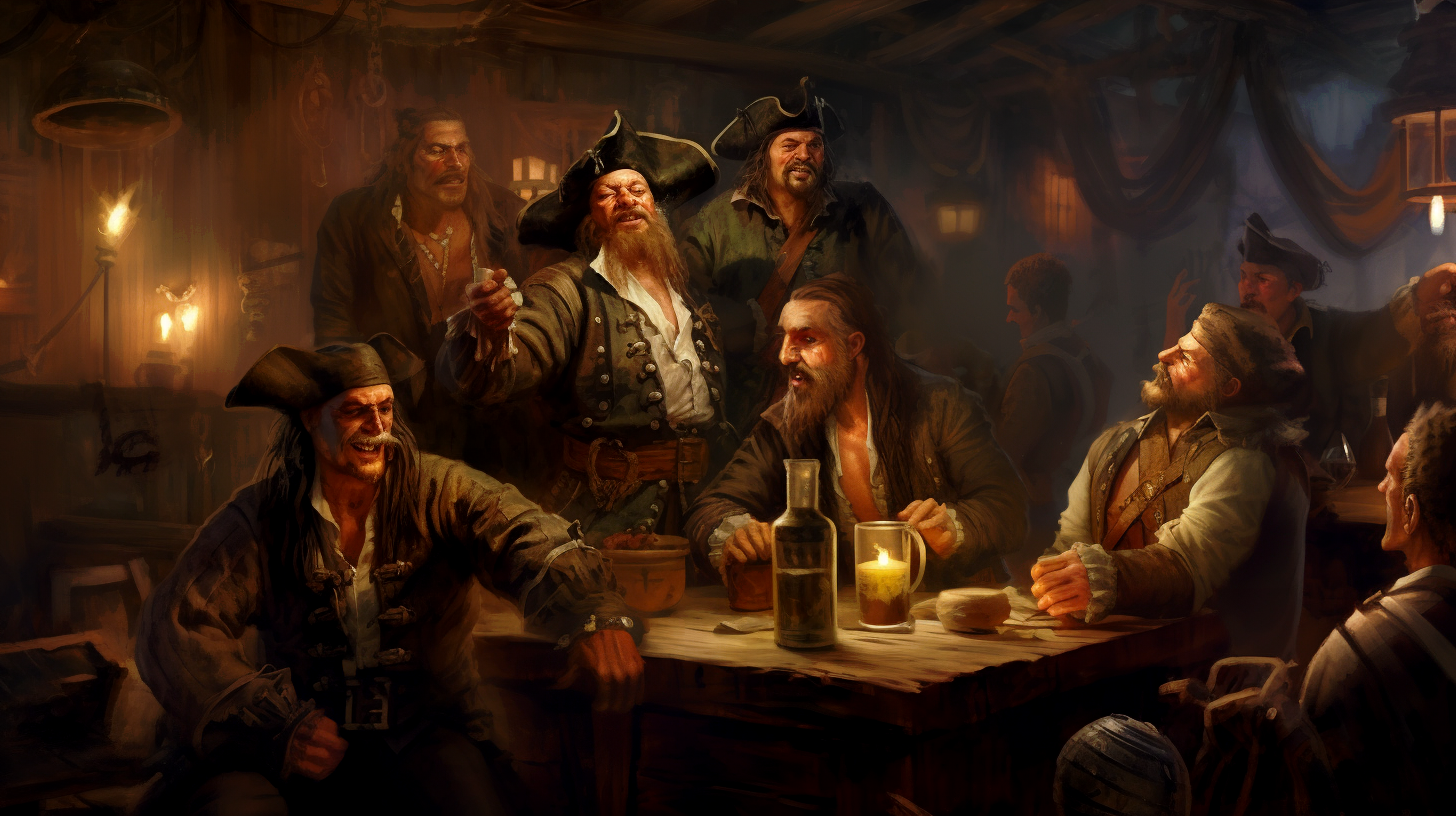


Pirate speech is a beautiful infection.
One good “Arrr” and suddenly everyone in the room believes they have maritime authority. This is not historically responsible. It is, however, very funny.
The trick is to enjoy pirate talk without pretending it is a transcript from an eighteenth-century deck. Real pirates came from many places and spoke many languages, dialects, and accents. The familiar growling voice belongs far more to performance history than to the global history of piracy.
That does not mean you cannot use it.
It means you should know what you are doing before you make a whole paragraph wear an eye patch.
The pirate accent is mostly theatre
The classic pirate voice owes a great deal to actors, especially the stage-and-screen tradition around Long John Silver. The rolling “Arrr,” the heavy West Country flavor, the growl, the “matey,” the theatrical rhythm — these became popular because they were easy to recognize and fun to imitate.
They did not represent every pirate. They did not even represent every English-speaking sailor. The sea was full of regional voices, colonial accents, multilingual crews, enslaved and free Africans, Indigenous people, Dutch, French, Spanish, Portuguese, Irish, Welsh, Scottish, English, American colonial, Caribbean, Chinese, North African, and many more maritime worlds.
One pirate voice cannot carry that map.
But as play, the stage voice works because it signals pirate instantly. It is a costume for the mouth.
Use flavor, not fog
A readable pirate sentence needs restraint. Too much dialect spelling makes the reader work harder than the joke deserves. Use a few recognizable words, keep the structure clear, and let rhythm do more than apostrophes.
Bad pirate speech tries to respell every word until the sentence looks like it was attacked by gulls.
Better pirate speech keeps the sentence readable and adds a small turn of flavor: matey, aboard, deck, haul, plunder, captain, crew, shore, chart, black flag, treasure, trouble, no quarter, or a dry threat delivered with too much confidence.
One “ye” can be plenty. Three may require medical attention.
Vocabulary helps more than noise
Pirate talk becomes stronger when it uses maritime words with purpose. A sentence about “taking the helm,” “making for shore,” “signing the articles,” “sharing the plunder,” or “striking colors” feels more seaworthy than a sentence that merely replaces “you” with “ye” twelve times.
The lexicon pages help with that. They give you words, phrases, and concepts that can be used in games, party invitations, school projects, captions, or dialogue without turning the whole thing into parody soup.
The best pirate phrase sounds like it has been near a ship, not only near a Halloween aisle.
Talk Like a Pirate Day gets its own rules
Talk Like a Pirate Day is not a historical reenactment. It is a social excuse to be ridiculous with permission.
That is its charm.
Use it for jokes, office messages, party games, classroom activities, costumes, social posts, treasure hunts, and a little harmless swagger. Just do not confuse the day’s accent with actual pirate speech across centuries and oceans. The fun is stronger when the claim is smaller.
A good Talk Like a Pirate line should be brief, readable, and a little mischievous. It should not trap the reader in a fogbank of fake spelling.
This section’s routes
Start with the pirate accent page if you want to know where the familiar voice came from. Move to the lexicon if you want vocabulary. Use the sentence guide if you want to write pirate-flavored lines without making them painful. Try tone and emotion if you want to know why the voice sounds threatening, comic, boastful, or drunk on its own hat.
Then loop back to history. Pirate speech leads naturally to myth-busting, pirate clothing, flags, and the larger question of how entertainment turned sea robbers into lovable mascots.
Say “Arrr” if you must.
Just do not let it do all the thinking.


