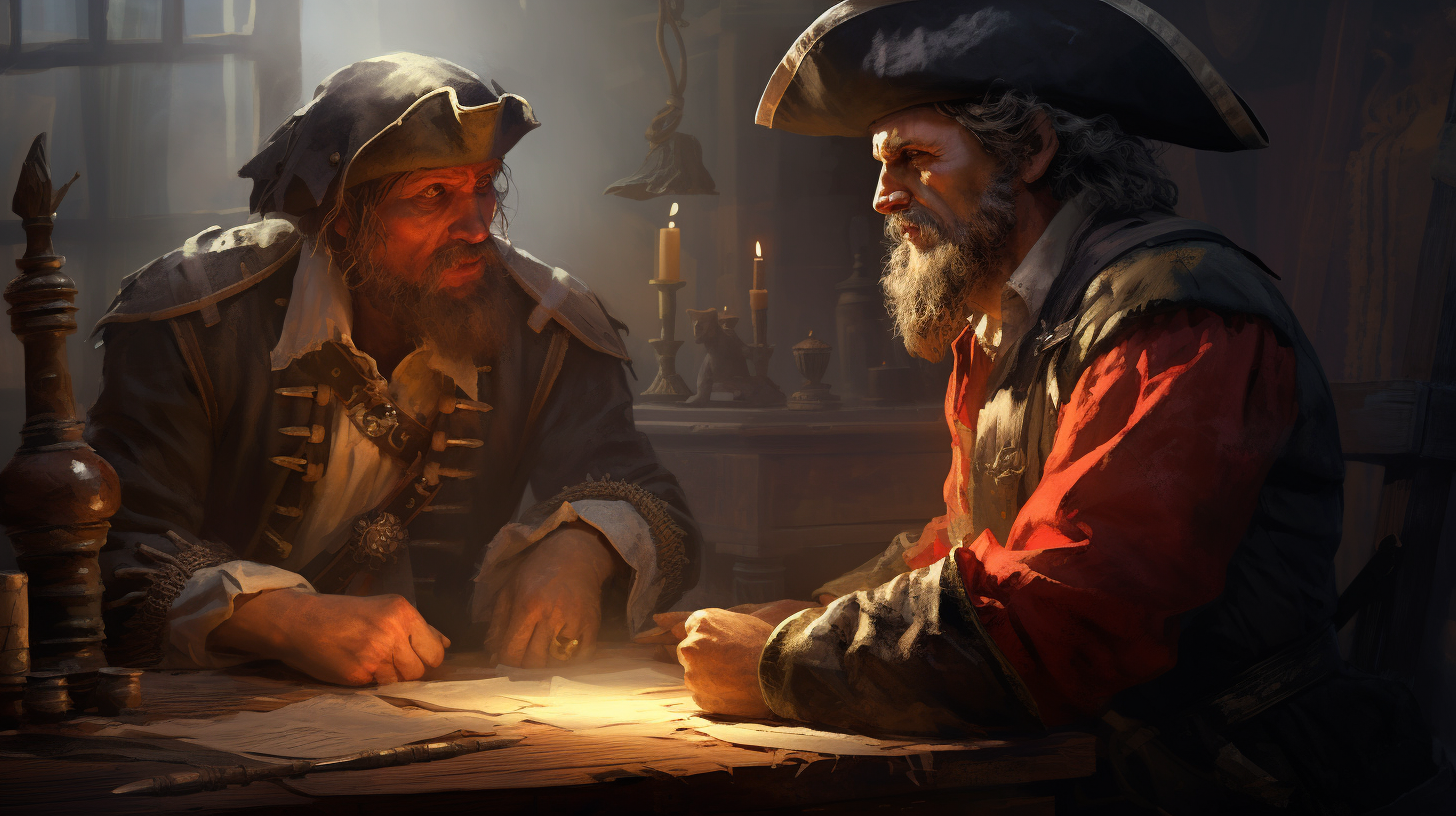
Pirate codes can sound almost wholesome if you squint hard enough.
Shares of plunder. Compensation for injury. Rules about gambling, weapons, quarrels, and lights. Captains who could be elected or removed. A quartermaster with real authority. Compared with the brutal discipline of many naval and merchant ships, pirate articles can look strangely modern.
Then the reader remembers the articles were designed to make armed robbery function better.
That is the useful tension. Pirate codes were not proof that pirates were good. They were proof that even criminals needed rules when trapped together inside a wooden machine full of weapons, hunger, fear, and money.
Naval Discipline Was Not a Soft Alternative
Life in a navy could be harsh, hierarchical, and violent. Officers held authority backed by law, custom, class, and punishment. Sailors could face flogging, poor food, low pay, disease, long separation, impressment, and command decisions they had little power to challenge.
This does not mean every naval ship was identical or every officer cruel. It means the system was built around obedience. A warship could not function if every order became a debate. The price of that order often fell hardest on ordinary sailors.
For men who had lived under hard discipline, pirate articles could look attractive. Not because piracy was safe, but because the bargain was different.
Pirate Articles Were Practical Agreements
Pirate crews often used articles to define expectations before trouble arrived. These agreements could establish shares, leadership, compensation for injuries, punishments for theft from the company, and rules for behavior aboard ship.
A crew that did not agree on money was a mutiny waiting for weather. A crew that could not control weapons, drunkenness, lights, gambling, or quarrels was a danger to itself. Pirate articles turned chaos into procedure.
That procedure made piracy more durable. It could also make a pirate ship more frightening to victims. A disciplined raider could repeat the process: approach, intimidate, board, strip, divide, escape. Disorder is colorful in fiction. Order is often more dangerous in history.
Democracy, With Teeth
Pirate democracy should not be romanticized into a floating town hall. The franchise was limited, the enterprise violent, and the people outside the crew had no vote at all. A ship could be more equal internally while remaining predatory externally.
Still, the contrast with naval hierarchy matters. Some pirate crews gave ordinary men more voice over leadership and profit than legal maritime labor did. That helps explain recruitment. A sailor did not have to be an idealist to prefer a share system over wages that might be delayed, stolen, or never paid.
The pirate ship offered a rough bargain: more say, more possible money, more danger, and a much better chance of ending at the gallows.
Compensation Was Not Sentiment
Rules for injury compensation are among the most striking parts of pirate articles. A lost limb, eye, or disabling wound could be assigned a payment. This can sound humane, and in a narrow internal sense it was practical recognition that bodies were tools of work.
But the purpose was not modern welfare. It helped recruit men, maintain morale, and make risk calculable. If a sailor believed he would be abandoned after losing a hand, he might think differently about boarding an armed ship. Compensation made danger negotiable.
The victims of piracy did not receive the same generosity from the men taking their goods.
What the Comparison Teaches
The comparison between pirate codes and naval discipline should make the reader more curious, not more sentimental. Pirates borrowed, rejected, and rearranged the shipboard order they knew. They did not abolish violence; they reorganized it.
For more on internal pirate rules, follow the pirate code page. For the harsher fate awaiting captured pirates, continue to the punishment and hanging pages. Shipboard law mattered on both sides of the rail: pirates used rules to make crime work, and states used courts and executions to make piracy end.
That is the real lesson. A pirate code was not a love letter to liberty. It was a business plan with pistols nearby.


