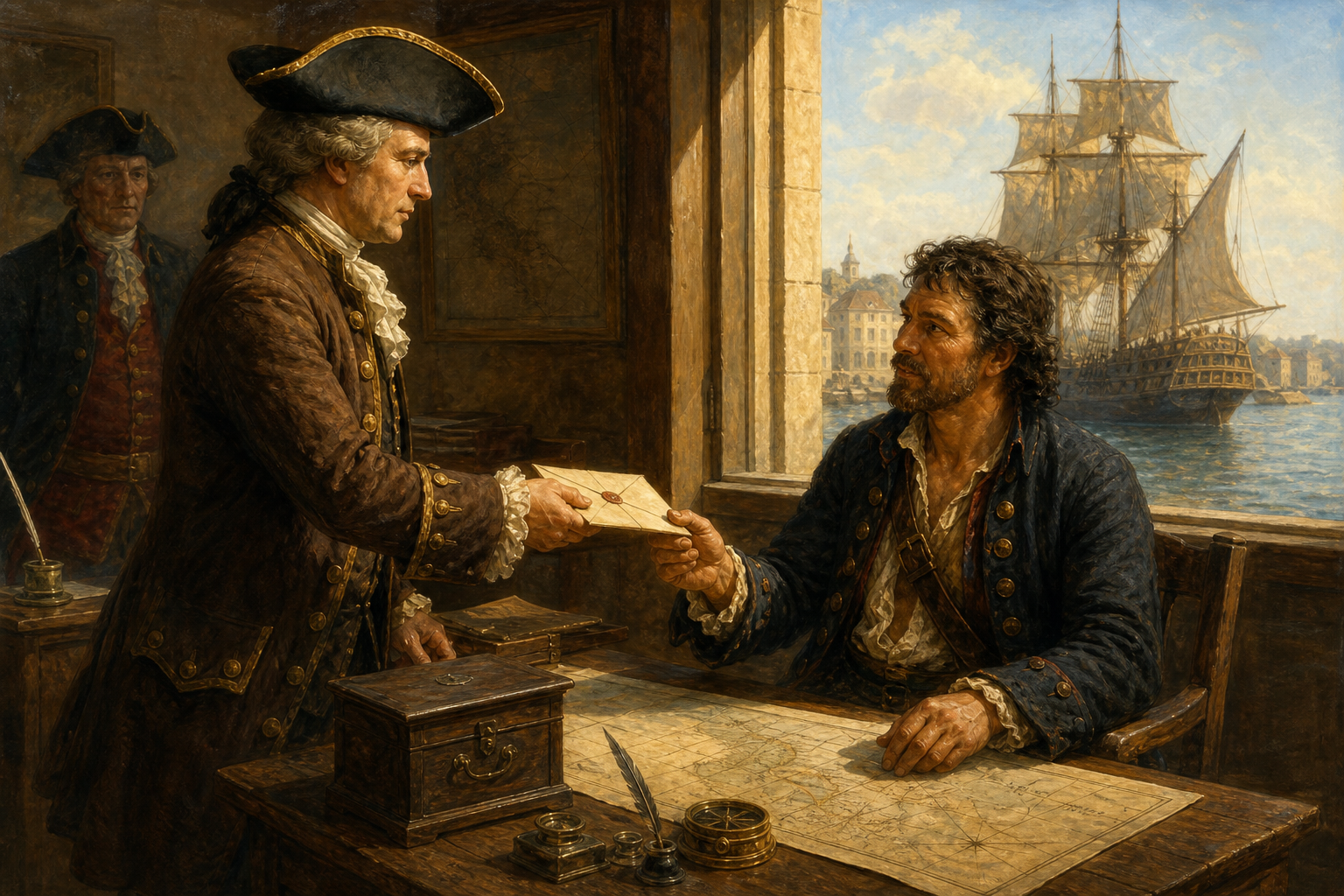
A privateer was not supposed to be a pirate.
That was the entire point of the paperwork.
A government issued a commission, often called a letter of marque, giving a private vessel permission to attack enemy shipping under specified conditions. In theory, this turned robbery at sea into lawful war. In practice, it created a wonderfully combustible mixture of profit, violence, ambition, bad information, slow communication, and later arguments about what the captain thought he was allowed to do.
Privateering was legal violence with an invoice attached.
Why Governments Loved It
Privateering let states hurt enemies without paying for every ship themselves. A crown or government could outsource part of maritime war to private captains and investors. Enemy commerce could be harassed, prizes captured, money made, and patriotic language applied afterward like fresh paint.
For smaller naval powers, privateering could be especially useful. It spread risk and cost. It gave ambitious captains a reason to arm ships. It turned merchants and investors into participants in war. It also blurred the line between public policy and private profit so thoroughly that everyone involved needed documents nearby.
Those documents mattered. Without them, the same act could become piracy.
Why Captains Loved It
A privateering commission offered opportunity. A captain could chase prizes, enrich investors, reward the crew, and return home with a legal explanation. If the target was enemy property and the prize court agreed, the violence could become profit.
But the sea rarely made the legal questions convenient. Was the target truly enemy? Was the cargo protected? Had peace been declared but not yet heard at sea? Was the captain following the commission or stretching it until it screamed? Did the crew push for risk because the voyage had not paid?
Privateering rewarded aggression, then asked lawyers to sort the pieces later.
When the Line Moved
The line between privateer and pirate could move quickly. A man useful in wartime might become embarrassing in peace. A captain with powerful backers might be defended until his prize created diplomatic trouble. A crew that began with authorization might keep raiding after the authorization stopped helping.
Captain Kidd is the classic warning. He sailed with commissions and influential sponsors, but his disputed captures and political context dragged him into a trial and a noose. Whether one sees him as pirate, failed privateer, scapegoat, or guilty captain, his case shows how dangerous the border could become.
Henry Morgan shows another outcome. Spain could call him pirate. England found him useful enough that he became Sir Henry Morgan. That does not make the violence gentle. It shows how power decides which violence is service and which violence is crime.
The Victim’s View Was Different
To the people being attacked, legal paperwork written in another country could feel like a cruel joke. A Spanish merchant captured by Francis Drake did not recover his cargo because Elizabethan England admired the commission. A town raided under privateering logic still experienced fear, damage, loss, and death.
That is why the word pirate often depends on perspective. Drake was England’s privateer and Spain’s dragon. Morgan was England’s useful buccaneer and Spain’s scourge. Laffite could be smuggler, privateer, patriot, or pirate depending on which official was speaking and which war had recently become inconvenient.
The labels are evidence. They tell us who had power to name the violence.
Why Privateering Matters
Privateering matters because it keeps pirate history from becoming too simple. It shows that states did not merely fight sea robbery. They also licensed, encouraged, profited from, and later condemned forms of maritime violence when circumstances changed.
For the wider legal route, read the letters of marque page. For lives shaped by the border between legality and piracy, follow Francis Drake, Henry Morgan, Captain Kidd, and Jean Laffite. These figures do not all belong in the same box, but the boxes are the point.
A pirate steals at sea. A privateer steals at sea with permission. History becomes interesting when the permission expires, fails, or turns out to have been less protective than the captain hoped.


