Pirate culture
Custom, symbol, and story
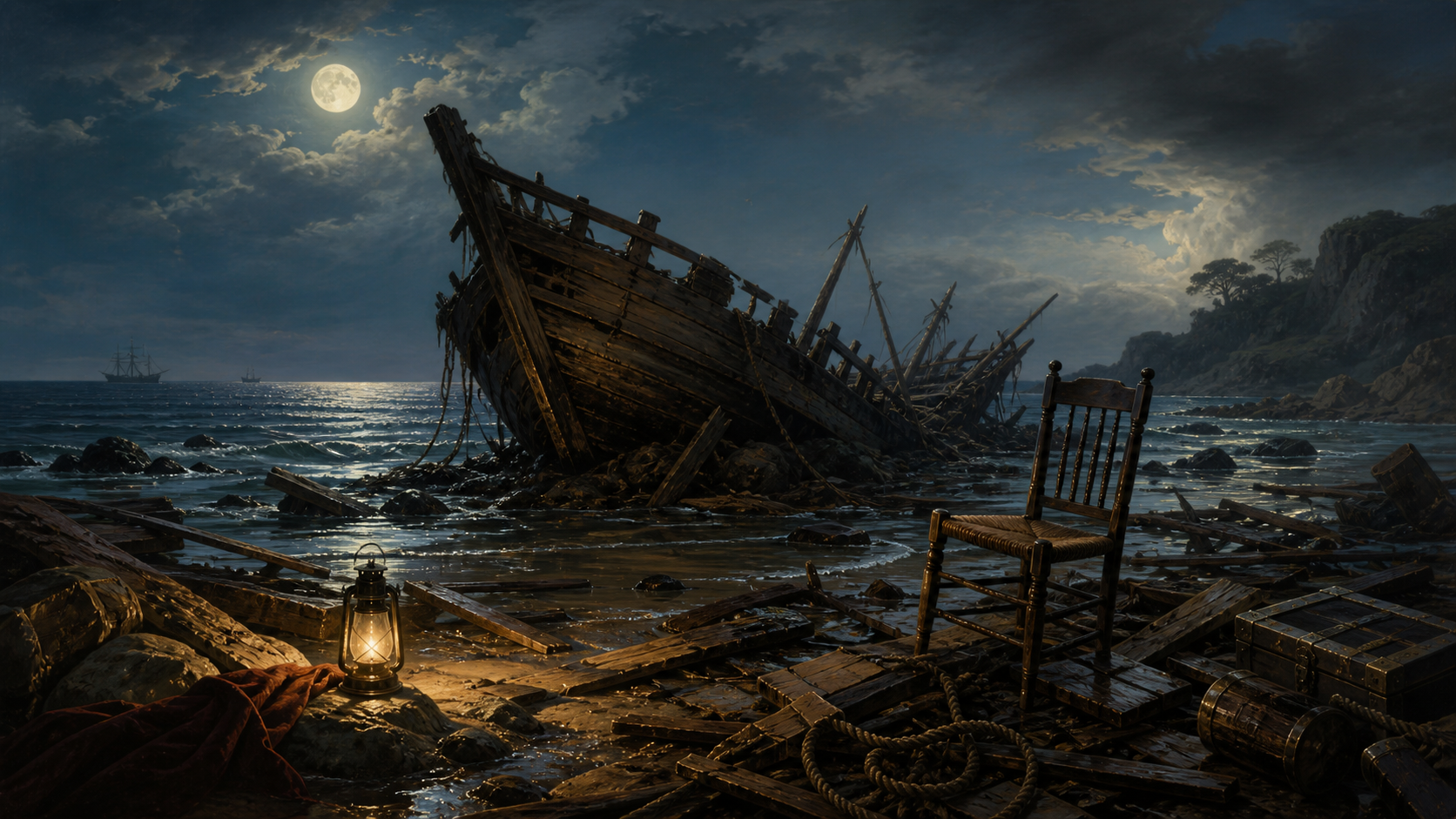
Dive into history's depths with famed pirate shipwrecks like "Black Sam" Bellamy's Whydah Gally, Blackbeard's Queen Anne's Revenge, and Bannister's Golden Fleece. From Cape Cod to the Caribbean, these sunken treasures, d...
Pirate shipwrecks sound like treasure waiting for a better shovel.
That is the story we prefer: a storm, a black flag, a chest of gold, a lost reef, a diver’s lamp catching one impossible glitter under the sand. It is a fine image. It has sold books, tours, documentaries, and several generations of childhood daydreams.
The real wreck is usually less obedient.
A wreck can preserve cannon, anchors, coins, tools, hull fastenings, cargo traces, personal objects, bones, ballast, corrosion, mud, broken timber, and the blunt fact that ships are temporary arrangements with weather always invited.
Treasure stories love the glitter.
History needs the context.
Wrecks are evidence before they are treasure
A pirate wreck can be thrilling because it gives historians something rare: material evidence.
Many pirate stories survive through court records, official letters, merchant complaints, newspapers, hostile witnesses, and early printed histories that enjoyed a dramatic criminal. Those sources are valuable, but they usually show pirates at moments of crisis: capture, accusation, battle, trial, execution, rumor.
A wreck can show ordinary things.
Tools. Guns. Ship fittings. Food remains. Coins. Personal objects. Cargo. Repair work. The practical life of a vessel that did not expect to become an exhibit.
That kind of evidence matters because piracy was not only attitude and flags. It was work: sailing, repairing, loading, cooking, navigating, fighting, sleeping badly, chasing prizes, and trying not to be killed by the same sea that made escape possible.
A coin can be exciting.
A tool can be more revealing.
Ships wrecked for ordinary reasons
Pirate ships did not wreck because the sea recognized moral drama.
They wrecked because ships wreck. Storms, shoals, bad charts, poor decisions, pursuit, battle damage, rot, overloaded hulls, risky inlets, strong currents, and exhausted crews could all end a voyage. Pirates often used dangerous waters because those waters offered hiding places, ambush points, and escape routes. The same shoals that frustrated a naval pursuer could break the pirate vessel if the wind shifted or the pilot misjudged the channel.
Geography was a partner with terrible manners.
A shallow inlet might save a crew one day and kill it the next. A storm might scatter a fleet, bury a fortune, or erase a career that had seemed unstoppable in tavern memory. The sea did not care whether the ship flew black, red, royal, or nothing at all.
It only cared whether wood met water badly.
The Whydah: the wreck that answered back
The Whydah Gally is the great pirate wreck because it joins legend to physical evidence.
Samuel Bellamy captured the Whydah in 1717 and made the former slave ship his flagship. That earlier history matters. The ship’s wealth and route belonged to the brutal Atlantic world of forced labor, commerce, disease, and imperial profit before Bellamy’s crew ever took it. Pirate treasure did not arrive from a clean fairy tale. It often moved through systems already soaked in violence.
Then the Whydah wrecked off Cape Cod in April 1717, killing Bellamy and most aboard.
The storm gave no speech. It did not care that Bellamy was young, successful, romanticized, or later called the Prince of Pirates. A short, rich career ended in cold water.
The later recovery and study of the wreck made the Whydah unusually important. Coins, weapons, fittings, ship remains, and other artifacts connect the story to an actual site and a known event. That does not make every Bellamy legend true. It gives the history firmer ground than rumor alone.
The Whydah is not valuable only because of treasure.
It is valuable because it complicates treasure.
Queen Anne’s Revenge: Blackbeard under the sand
The wreck site believed to be Queen Anne’s Revenge gives Blackbeard’s story another kind of anchor.
Edward Teach, or Thatch in some records, captured the French slave ship La Concorde in 1717 and refitted her as Queen Anne’s Revenge. The vessel became the physical body of his legend: armed, intimidating, and large enough to make coastal authorities nervous.
The archaeological site off North Carolina helps pull that story away from pure smoke. Cannon, fittings, and wreck material remind us that Blackbeard was not only an image from an illustration. He operated real vessels in real waters, and those waters included shoals, inlets, and the risks of grounding.
That is the useful correction.
A famous pirate ship is still a ship. It must be supplied, repaired, crewed, steered, armed, and kept off the bottom. Queen Anne’s Revenge was not a magical fortress. It was a captured vessel used brilliantly for a short time, then lost from Blackbeard’s command.
The wreck makes the legend more tangible.
It also makes it less invincible.
Treasure hunters and historians want different things
Treasure hunting asks one question first: what is it worth?
History asks different questions. Where was it found? What was it found with? What layer? What material? What ship? What date? What route? What does it tell us about trade, violence, repair, food, weapons, or people who were not famous enough to get their own portrait?
A coin removed from context loses some of its voice. A cannon without documentation becomes more decorative than informative. A wreck treated only as a prize box can destroy the very evidence that made the site important.
That is why pirate wrecks need care.
The glitter is not the story. It is one clue inside a larger scene.
Sometimes the mud knows more than the gold.
Not every wreck is a pirate wreck
Pirate legend is generous with labels.
A cannon on the seabed does not automatically mean pirates. A rumor of treasure does not make a wreck criminal. A dramatic local story may preserve something true, or it may preserve a wish that learned to wear barnacles.
Ships of many kinds carried guns. Merchant vessels, privateers, naval craft, slavers, traders, and smugglers could all leave behind material that looks exciting from the surface. Proving a pirate connection usually requires a stronger chain: location, artifacts, documents, dating, vessel history, cargo, historical accounts, and careful interpretation.
This is where the responsible answer may disappoint treasure fever.
“Possibly” is not the same as “proven.”
“Associated with” is not the same as “definitely commanded by.”
The best pirate history can still be fun while refusing to turn every broken anchor into Blackbeard’s lost retirement plan.
Why shipwreck myths survive
A wreck is a perfect myth machine.
It has absence, danger, secrecy, lost wealth, death, and a place where the story seems physically hidden. Unlike a vanished pirate, a wreck suggests that the answer may still be down there. The sea becomes an archive with terrible filing habits.
That is why shipwreck stories keep returning. They promise that history is not over. Something can still be found. A lost object can rise. A rumor can become a site. A legend can be tested against wood, metal, sand, and salt.
The best discoveries do not simply confirm the fantasy.
They make the fantasy answer harder questions.
Who owned the wealth? Who suffered for it? Who sailed the ship? Who died nameless? What economy produced the cargo? What did the pirates actually use? What did the sea preserve by accident that people forgot on purpose?
That is where pirate wrecks become more than treasure stories.
The better truth
Pirate shipwrecks are not just sunken chests waiting for a lucky hand.
They are crime scenes, work sites, graves, archives, legends, hazards, and evidence fields. They show that pirate history was made from wood, labor, violence, weather, trade, and human decisions under pressure.
Gold gets the headline.
The wreck gets the truth.


