Pirate culture
Custom, symbol, and story
Speed, guns, reputation, and timber under pressure.
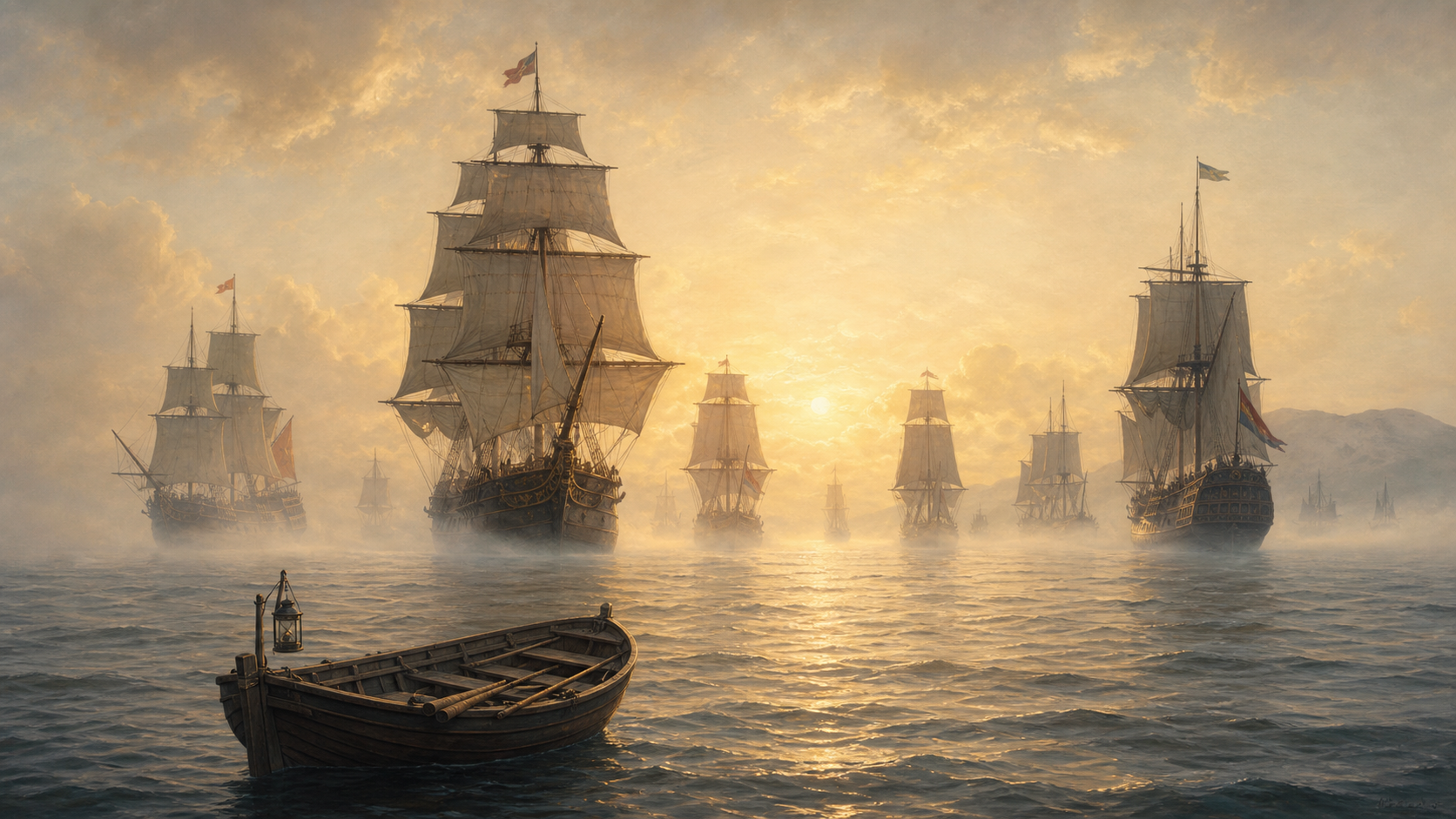
A pirate ship becomes famous when wood, violence, memory, and a good name all decide to sail in the same direction.
Queen Anne’s Revenge sounds like a threat before the cannon fire begins. The Whydah feels like treasure, tragedy, and evidence in one hull. Adventure Galley carries Captain Kidd’s doomed respectability problem right in its timbers.
But famous pirate ships are not famous for one reason.
Some were powerful. Some were unlucky. Some were renamed at exactly the right dramatic temperature. Some became famous because archaeology pulled them back from the seabed. Some matter because they show how quickly an ordinary vessel could become a criminal instrument once captured, refitted, and pointed at trade.
Popular culture treats pirate ships as custom-built villain palaces.
The record is more interesting. Pirates usually stole possibilities and made them work until they stopped working.
Queen Anne’s Revenge: Blackbeard’s floating threat
Queen Anne’s Revenge is the pirate ship most people can name without being entirely sure why.
The name helps. It sounds political, angry, and expensive. The ship’s association with Blackbeard helps even more. Edward Teach, or Thatch in some records, understood reputation. A heavily armed flagship gave his legend a physical body, a thing that could appear near a coast and make officials feel suddenly underdressed.
The ship began as La Concorde, a French slave ship, before Blackbeard captured and refitted her in 1717. That origin should stay visible. Pirate romance often likes to separate ships from the brutal economies that produced them. Queen Anne’s Revenge came out of the Atlantic world of forced labor, imperial trade, disease, profit, and violence before Blackbeard layered piracy onto the hull.
As a pirate vessel, she gave him size, guns, men, and intimidation. She helped make Blackbeard more than a quick raider. For a brief period, he could operate with a kind of theatrical force that made ports and merchants take notice.
Then she was gone from his command.
That brevity is part of the point. Pirate power could flare quickly: captured, renamed, armed, feared, grounded, lost, remembered.
The ship did not need a long career to become a permanent silhouette.
Whydah: treasure, storm, and evidence
The Whydah is famous for a different reason.
Samuel Bellamy captured the Whydah Gally in 1717 and turned the former slave ship into his flagship. Like Queen Anne’s Revenge, the Whydah carries a darker history than pirate treasure alone can explain. Its earlier role in the slave trade ties the vessel to Atlantic exploitation before Bellamy’s crew ever took it.
Then the ship wrecked off Cape Cod in a storm in April 1717, killing Bellamy and most of those aboard.
That ending gives the Whydah its terrible power. A fast, rich pirate career met weather and vanished under it. The sea did not care about romance, reputation, or how useful the story would become later.
But the Whydah also returned in another form: evidence. The wreck became one of the most important archaeological connections to Golden Age piracy. Coins, weapons, fittings, ship remains, and human traces gave historians material culture rather than only trial records, official letters, hostile accounts, and later legend.
That does not make every romantic Bellamy story true.
It makes the ship unusually valuable because it lets the pirate world be touched, not merely repeated.
The Whydah is not just a treasure ship.
It is a correction to the idea that pirate history is all smoke and pamphlets.
Adventure Galley: Captain Kidd’s respectable problem
Adventure Galley belongs to William Kidd’s complicated world of commissions, investors, privateering, politics, and accusation.
Kidd did not begin as the clean storybook pirate with a map already folded in his pocket. He sailed with backing and authorization, in a world where privateering could be respectable violence if the paperwork, targets, and politics held together. Adventure Galley was part of that respectable frame.
That is what makes the ship interesting.
It was not merely a pirate vessel. It was a tool in a mission meant to hunt pirates and enemy prizes. The problem was that maritime violence could become legally poisonous after the fact. A ship authorized for one kind of violence could become associated with another kind, especially when captures became disputed and powerful people needed distance from the mess.
Adventure Galley therefore carries Kidd’s larger question:
When does sanctioned violence become piracy?
The answer did not depend only on what happened at sea. It depended on papers, courts, merchants, politics, sponsors, and the embarrassment created when the wrong prize made the wrong people angry.
The ship’s fame is not only nautical.
It is legal.
Fancy: Henry Every’s vanished fortune machine
Henry Every’s Fancy deserves attention because it carried one of the most politically explosive pirate raids of the seventeenth century.
Every and his crew took the ship after a mutiny from the Charles II, renamed her Fancy, and sailed into the Indian Ocean. The name is almost comically mild for a vessel that would help create an international crisis.
In 1695, Every’s crew attacked the Mughal ship Ganj-i-Sawai, a vessel tied to imperial wealth, pilgrimage traffic, and the power of Aurangzeb’s empire. The result was not merely a rich pirate story. It endangered English commercial interests in India and forced English authorities to prove that Every was an outlaw rather than an instrument of English policy.
Fancy became famous because of what she made possible: a mutiny, a long-range pirate cruise, a huge prize, a diplomatic emergency, and a disappearance that gave legend room to grow.
The ship herself is less visually famous than Queen Anne’s Revenge or Whydah.
The consequences she carried were enormous.
Small ships did much of the work
Famous pirate ships can distort the subject.
Large, named vessels are easy to remember. They look good in illustrations. They make piracy feel like a parade of dramatic flagships. But many pirates depended on smaller craft: sloops, schooners, brigantines, periaguas, boats, and captured merchant vessels adapted for speed, shallow water, or sudden attack.
A smaller vessel could be more useful than a grand one. It could slip through coastal waters, use inlets, avoid deeper-draft warships, and move quickly between islands and prizes. A pirate did not always need a floating fortress. He might need a fast hull, a shallow draft, a bold crew, and enough reputation to make the target surrender.
That is why ship fame should not be confused with ship usefulness.
The most famous vessel is not always the most typical one.
Piracy was often built from whatever floated, moved fast, and could be made frightening at the right distance.
A ship became legend when the story held
A pirate ship was a tool first.
It chased, carried, threatened, stored, escaped, and occasionally died spectacularly. The legend came afterward, once a name attached itself to a captain, a wreck, a trial, a treasure rumor, or a coastline.
Queen Anne’s Revenge gives Blackbeard size and smoke. Whydah gives Bellamy treasure, tragedy, and archaeology. Adventure Galley gives Kidd the paperwork problem. Fancy gives Every the international scandal. Smaller vessels remind us that the daily work of piracy often happened without a grand ship name at all.
The better truth is that pirate ships were not born legendary.
They were captured, renamed, armed, overworked, grounded, wrecked, abandoned, hunted, or broken up by circumstance.
Then memory did what memory does best.
It kept the names that sounded like they were already halfway to a story.


