The story
Samuel Bellamy
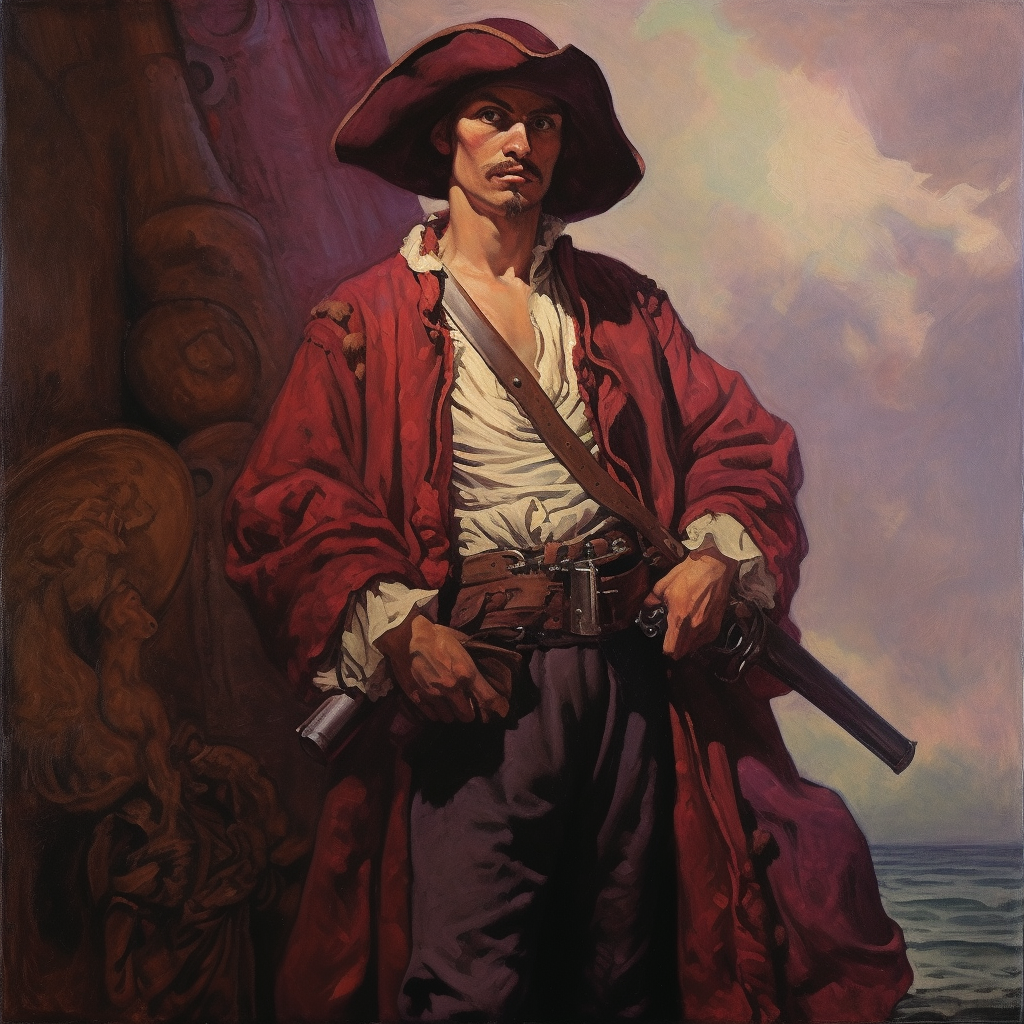
Samuel Bellamy's pirate career was short, rich, and ended by weather with brutal efficiency. Known as Black Sam, he became one of the most successful pirates of the Golden Age before the Whydah wrecked off Cape Cod in 1717. His story has the ingredients that legend likes: youth, speed, treasure, a possible love story, a reputation for unusual fairness, and a shipwreck that later gave historians more than rumor to work with.
That combination can make Bellamy look almost too romantic. He is often called the Prince of Pirates, a nickname that gives the story a dangerous shine. The better version keeps the shine but does not let it blind the reader. Bellamy operated inside a violent Atlantic world. His crew stole ships and cargo, threatened sailors, and profited from systems already built on coercion, war, empire, and enslavement. Charm is not an acquittal. It is one reason the story survived.
A Fast Rise In A Hard Atlantic
Bellamy likely came from England and entered piracy during the postwar surge of the early eighteenth century. Queen Anne's War had left many sailors trained in armed maritime work and poorly rewarded by peace. Merchant service could be harsh, naval discipline harsher, and wages uncertain. Piracy offered risk, violence, and a real chance of death, but it also offered shares, elected authority in some crews, and a way for skilled seamen to turn their resentment into power.
By 1716 and 1717 Bellamy had become a captain and gathered prizes with startling speed. His success depended on more than swagger. Pirates needed information about shipping, fast vessels, experienced crews, intimidation, and somewhere to sell or trade what they captured. The Golden Age was not a parade of isolated villains. It was a moving economy of violence, held together by sailors, ports, buyers, rumors, coastlines, and the thin reach of law.
Bellamy's reputation grew because he seemed to embody the pirate alternative to ordinary shipboard hierarchy. He has often been linked with a more generous or democratic image than some captains. There is substance behind that appeal: pirate crews could use articles, elect leaders, divide plunder by shares, and compensate injuries in ways that made grim practical sense to sailors. But internal fairness did not make the enterprise harmless. A crew could be more democratic inside the ship and predatory outside it. That contradiction is not a flaw in the story. It is the story.
The Whydah And The Darker Treasure
Bellamy's capture of the Whydah Gally in 1717 made his name glitter. The ship had been used in the slave trade, and that fact cannot be treated as background scenery. The wealth aboard the Whydah came from Atlantic commerce tangled with human bondage, extraction, and imperial trade. Pirate treasure did not fall out of a clean fairy tale. Bellamy captured wealth from a brutal system, but stealing from exploiters did not make the wealth innocent.
That is what gives the Whydah its weight. It ties Bellamy to the Atlantic world as it really was: profitable, mobile, violent, and morally crowded. The ship became his flagship, but only briefly. In April 1717 it wrecked in a storm off Cape Cod, killing Bellamy and most of the crew. A career that had expanded with astonishing speed ended in one night because the sea had no interest in reputation.
The wreck later became one of the most important archaeological finds connected to Golden Age piracy. Many pirate stories survive through hostile reports, trial records, early printed histories, and later retellings. Bellamy's story also left objects. Weapons, coins, fittings, and wreck material helped pull the tale out of pure legend and into physical evidence. That does not make every romantic detail true, but it gives the profile an anchor many pirate stories would cheerfully steal if they could.
Fairness, Violence, And The Crew
Bellamy is useful because he lets readers hold two truths at once. Pirate crews could attract men by offering arrangements that felt less abusive than legal maritime labor. Shares, articles, elections, and injury compensation could make piracy seem like a rough answer to a rough world. For sailors who had known hunger, withheld pay, brutal discipline, or disposable status, that answer could be persuasive.
At the same time, Bellamy's crew survived by taking from others. Their freedom was purchased through fear, theft, and the vulnerability of ships that crossed their path. A captain praised as fair to his own men could still be violent toward outsiders. That moral doubleness is not something to tidy away. It explains why pirates can look attractive in memory while remaining terrifying in the records.
The presence of John King, a child associated with Bellamy's captured world, makes the point sharper. Pirate history was not only captains, flags, and clever names. It included young people, coerced people, ordinary sailors, prisoners, and people whose choices were narrower than legend likes to admit. Readers who want that smaller, more unsettling angle can follow John King. Bellamy's profile becomes better when it lets the people around him remain visible.
Romance, Cape Cod, And Caution
Bellamy is often connected to Maria Hallett of Cape Cod, a story that gives his return north a tragic romantic shape. It is easy to see why the tradition lasted. A young pirate, a possible lover, a treasure ship, and a wreck off the coast make a story with very little need for decoration, though decoration arrived anyway. The romance belongs in the profile as tradition, not as the load-bearing beam.
Bellamy does not need the love story to be interesting. His career already contains postwar labor anger, rapid success, the Whydah, the Atlantic slave trade, a catastrophic wreck, survivors, trials, archaeology, and a reputation that still asks to be tested. The Maria Hallett tradition may preserve a local association, or it may be a later frame placed around a disaster already rich enough for memory. Either way, it should not crowd out the harder facts.
The survivors of the wreck carried Bellamy's story into court. Trials turned disaster into testimony, and testimony turned pirates into legal categories. Who had joined freely? Who claimed coercion? Who deserved mercy? Who could be believed? These questions mattered because the storm did not end the story for everyone. For those who lived, the wreck was followed by law, accusation, and punishment.
Why Bellamy Still Matters
Bellamy matters because his story sits where romance meets evidence. The legend gives him glamour. The Whydah gives him material proof. The ship's earlier life gives the treasure a darker origin. The storm gives the ending no romance at all. Together, those pieces make him more than a handsome outlaw with a nickname. They make him a compact lesson in how pirate history becomes pirate memory.
For a broader route through famous sea rogues, return to Famous Pirates. For the wider setting of war, trade, law, punishment, and empire, follow the history of piracy. Bellamy belongs between those paths because his life shows both the appeal and the cost of piracy: the crew's rough internal bargain, the violence inflicted outward, and the physical wreckage that refused to let the story float away as pure romance.
Samuel Bellamy was not famous because he lasted. He was famous because he burned through a violent opportunity with extraordinary speed, captured a ship heavy with ugly wealth, and died in a wreck that preserved enough evidence to trouble the legend three centuries later. The best version of Black Sam is neither saint nor cardboard villain. He is a young captain in a hard Atlantic, glamorous from a distance, colder up close, and still most useful when the treasure does not get the final word.


