The story
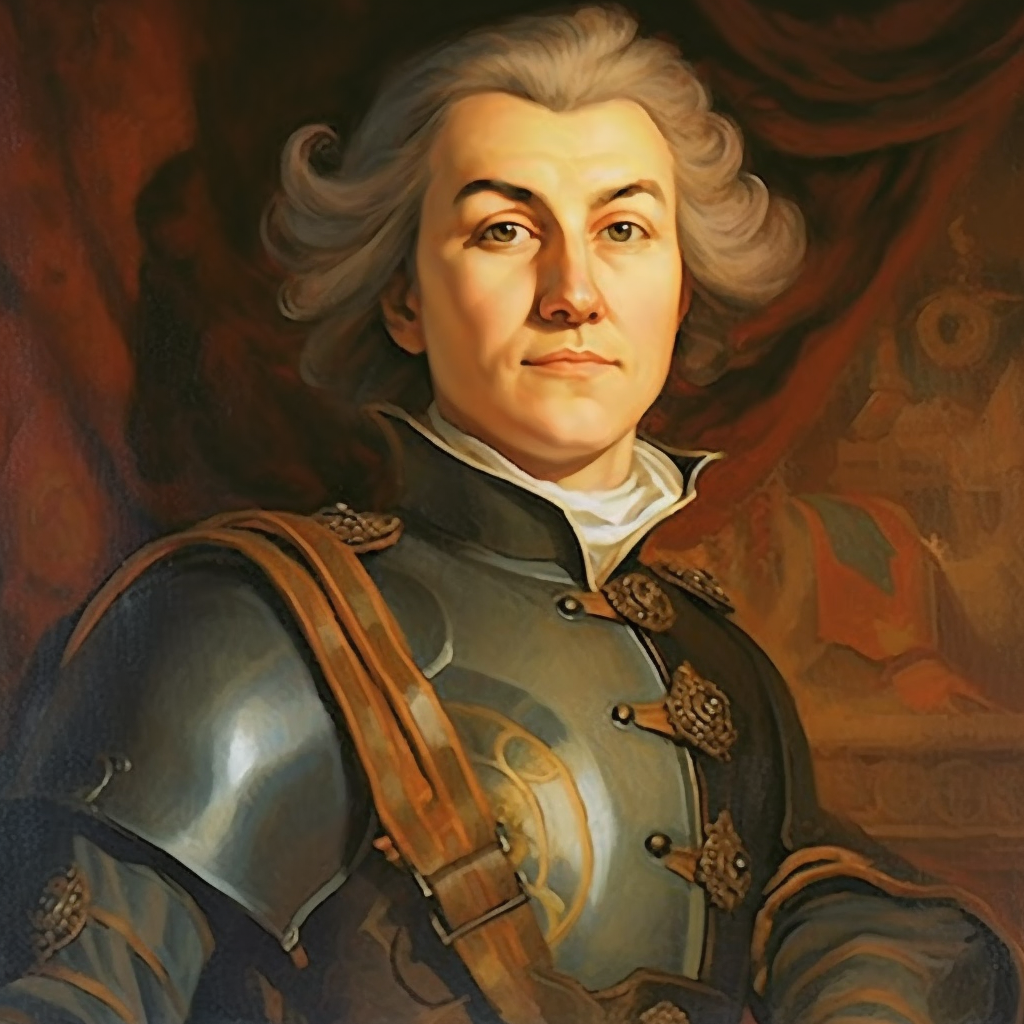
Maurycy Beniowski
Maurycy Beniowski is a troublesome guest at the pirate table, which is why he is worth keeping there. He was not a neat Golden Age captain with a familiar cruise, a prize list, and a gallows ending. He was a Polish-Hungarian nobleman, soldier, political prisoner, escapee, adventurer, writer, and Madagascar claimant whose life moved through the edges of empire. Calling him simply a pirate makes the story too easy. Leaving him out entirely misses how often piracy, rebellion, private violence, and imperial ambition overlapped at sea.
The honest version begins with uncertainty. Beniowski's reputation depends partly on records and partly on his own memoir-shaped self-portrait. Memoirs can preserve real experience, but they also know where to put the author so the light falls attractively. That does not make Beniowski useless as history. It makes him more interesting. He belongs among famous sea rogues as an edge case: a man whose life became pirate-shaped because it involved exile, ship seizure, oceanic escape, Madagascar, colonial conflict, and a talent for turning danger into reputation.
From Exile To Escape
Beniowski was born in the eighteenth century in Central Europe and became entangled in the conflicts around the Bar Confederation. Captured by Russian forces, he was exiled to Kamchatka, a remote imperial frontier where distance itself was part of the punishment. That setting matters. Pirate stories often begin in ports and taverns, but Beniowski's begins with politics, captivity, and the machinery of empire pushing a troublesome man to the far edge of the map.
His escape from Kamchatka is the episode that pulls him closest to pirate history. The story involves rebellion, the seizure of a vessel, desperate navigation, and a voyage out of captivity across the Pacific world. Those ingredients feel instantly maritime and dangerous. They also need careful handling. A seized ship during an escape is not the same thing as a sustained career of robbery at sea. The motive was survival, politics, and reinvention rather than ordinary prize-taking for profit. The resemblance to piracy is real, but the category is not simple.
That distinction gives the article its shape. Beniowski's story is exciting because it refuses to sit still. He was not merely a victim of empire, not merely a rebel, not merely an adventurer, and not quite the sort of pirate popular culture expects. His sea escape shows how a ship could become more than transport. It could be a weapon against confinement, a way out of imperial punishment, and the first stage in a new public identity.
Madagascar And The Lure Of The Frontier
Beniowski later became associated with French ambitions in Madagascar. He presented himself as an organizer and leader there, and later accounts sometimes place him in grand, almost royal poses. Madagascar was not a blank stage waiting for European drama. It had its own peoples, politics, trade, coastal networks, conflicts, and rulers. Any profile that treats the island as scenery for one man's legend has already lost its footing.
That matters because Madagascar already carried a powerful pirate afterlife in European imagination. Stories of pirate settlements, remote refuges, and imagined free communities clung to the island in ways that mixed fact, rumor, wishful thinking, and literary appetite. Beniowski entered a world where European readers were ready to believe in distant islands as places of escape, danger, opportunity, and convenient self-invention. The island did not need that fantasy. European fame did.
His Madagascar story therefore belongs as much to imperial history as to pirate lore. It involves ambition, negotiation, conflict, and the attempt to turn a distant political situation into personal authority. That is not the same as Blackbeard terrifying the American coast or Bartholomew Roberts running a large raiding operation. It is still useful for PiratesInfo because it shows how maritime violence and reputation could travel through colonial projects, memoirs, and European hunger for exotic adventure. A pirate label can illuminate that world if it is used carefully. Used lazily, it only throws a hat on a much stranger story.
The Memoir Problem
Beniowski helped build the version of Beniowski later readers inherited. That is not a minor footnote; it is central to the case. His memoirs offered exile, rebellion, ocean crossing, distant islands, political ambition, and danger, arranged around a man who rarely appears smaller than the occasion. One can admire the narrative energy while still asking who benefits from the arrangement. The author, in this case, had excellent reasons to look heroic.
This is where the page can be lively without becoming gullible. A self-serving source is not automatically false. Many historical sources are self-serving; officials, captains, merchants, prisoners, and enemies all had reasons to write strategically. The question is not whether Beniowski should be dismissed. The question is which parts of the story rest on firmer ground, which parts depend heavily on his own account, and which parts became larger because later readers preferred a grand adventure to a complicated colonial life.
That makes Beniowski a useful lesson in pirate memory. Some sea rogues were mythologized by enemies, trial records, pamphlets, or later entertainers. Beniowski took part in his own myth-making. He shows how a life could become famous not only through action but through narration. The pen did not replace the ship, the prison, or the island. It arranged them into a career that later readers could carry away.
Was He Really A Pirate?
The better question is not whether Beniowski can be stamped pirate or not-pirate in one motion. The better question is why his life keeps drifting toward the category. He had the ingredients pirate memory likes: forced exile, rebellion, a seized vessel, oceanic flight, contested authority, Madagascar, violence, and a self-authored legend. Those ingredients resemble piracy even when the legal and practical category is more complicated.
A stricter pirate profile would emphasize repeated maritime robbery, prize-taking, crew discipline, ports, buyers, and pursuit by naval or colonial authorities. Beniowski does not fit that mold cleanly. His strongest connection to pirate history lies in maritime rebellion and the politics of reputation. He belongs near the subject, not at its center. That is not a demotion. It is what makes him useful. Edge cases teach the reader how the categories work.
For contrast, Francis Drake shows how state backing could make one person's hero into another person's pirate. Jean Laffite shows how smuggling, privateering, local power, and legend can tangle along a coast. Beniowski sits in a different tangle: political exile, ship seizure, colonial ambition, Madagascar, and memoir. These are not identical lives. That is the point.
Why Beniowski Belongs Here
Beniowski's value is not that he proves every dramatic adventurer was secretly a pirate. He proves something better: maritime history was full of people who moved between labels because empire, war, trade, law, and storytelling did not stay in tidy lanes. A man could be a rebel in one document, an adventurer in another, a colonial agent in a third, and a pirate-shaped legend in memory. The sea made that slipperiness easier. So did distance. So did a good memoir.
His death in Madagascar during conflict with French forces gives the story a hard colonial ending rather than a theatrical pirate finale. There is no neat treasure chest, no clean last words, no simple moral. There is ambition, violence, contested authority, and the danger of mistaking a distant place for an opportunity designed around oneself. That ending is stronger than a forced pirate costume because it lets the life remain strange.
Maurycy Beniowski should be read as a maritime adventurer whose life touches piracy without being swallowed by it. He helps explain the borderland around pirate history: rebellion, private violence, imperial schemes, self-invention, and the later appetite for stories that make complicated men look cleanly legendary. For the wider gallery, return to Famous Pirates. For the broader setting of law, violence, empire, and reputation at sea, follow the history of piracy.
The memorable thing about Beniowski is not that he fits the pirate mold. It is that he makes the mold visible by refusing to fit it. That is a useful kind of fame. It asks the reader to enjoy the adventure and keep one hand on the evidence, which is usually where the best pirate history begins.


