The story
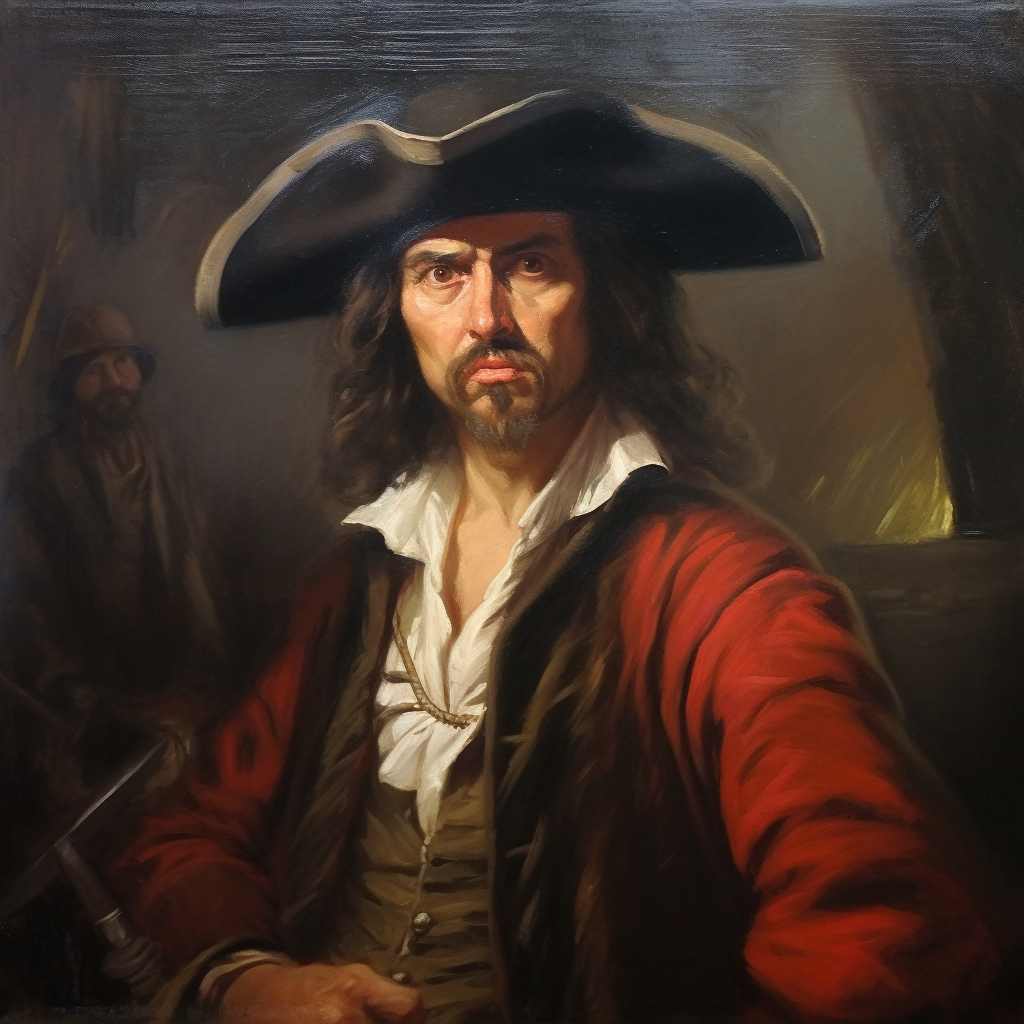
Jean Laffite
Jean Laffite makes legal definitions reach for a chair. Smuggler, privateer, merchant, patriot, pirate, local power broker: each label fits for a moment, then slips. His world was the Gulf Coast in the age of embargoes, customs laws, Spanish ships, American expansion, and coastlines full of inlets where enforcement arrived late and argument arrived early. Laffite was real, Barataria was real, and his help at New Orleans was real enough to polish his reputation. The rest of the story needs care because legend has been doing business in his name for a long time.
The useful version of Laffite is not the foggiest one. It is the one that explains how a smuggling network could become powerful, why local buyers mattered, how war made illicit men useful, and why a reputation could shift from criminal nuisance to patriotic complication. Laffite did not live in a clean category. He lived in the profitable space between law, appetite, geography, and opportunity.
Barataria Was A Network
Laffite and his associates operated from Barataria, south of New Orleans, where smuggled goods and privateering prizes moved through a profitable Gulf Coast network. The United States had trade restrictions and customs laws. Barataria had ships, storage, buyers, pilots, auctions, and people willing to treat paperwork as a negotiable substance. That disagreement created money. It also created political irritation, because local customers often liked cheap goods more than they liked federal enforcement.
Calling Laffite simply a pirate misses the commercial machinery. Goods needed vessels, landing places, warehouses, contacts, protection, and customers who preferred not to ask too many questions. Calling him simply legitimate misses the same machinery from the other direction. The system worked because legality could be made complicated, and Laffite was comfortable in complication. Smuggling survives when demand, geography, and weak enforcement cooperate. Barataria had all three.
The Gulf Coast setting matters as much as Laffite himself. New Orleans sat near river traffic, plantation wealth, imperial rivalries, and a coastline difficult to police neatly. Spanish authority, American law, Caribbean trade, and local appetite all met in the same humid economy. Laffite's power came from relationships, not only from daring. He needed men who could sail, people who could move goods, buyers who would pay, and communities willing to tolerate the operation because they benefited from it.
That local tolerance is easy to underestimate. Smuggling did not work because one clever man hid crates in the reeds. It worked because goods moved into households, shops, plantations, and warehouses where people wanted price, access, and speed more than clean paperwork. Federal law could condemn the traffic, but law had to meet neighbors, customers, juries, officials, and merchants who understood the advantages of looking away at the right moment.
That shore-side world keeps the story from becoming a cartoon hideout. Barataria was a market problem, a law-enforcement problem, and a political problem. Ships get the romance, but ports, customers, officials, bribes, embargoes, auctions, and local knowledge made the business possible. Laffite was dangerous because he belonged to a system people used even while denouncing it.
War Made Him Useful
During the War of 1812, the British tried to draw Laffite and the Baratarians to their side. That approach tells us something important: both sides understood his practical value. He had men, supplies, local knowledge, and influence in a region where formal control could be thin. Governments that condemned illicit networks could still want their help when war arrived. Few things clarify public morality like an approaching enemy fleet.
That approach also shows why Barataria was more than a nuisance. Laffite's people knew channels, stores, weapons, boats, and local loyalties. They understood how goods and information moved around New Orleans. To officials in peacetime, that network looked like defiance. In wartime, the same network looked like capacity. The labels changed because the emergency changed what power needed.
Laffite instead offered support to the Americans. Andrew Jackson's defense of New Orleans in 1815 benefited from Barataria's men, supplies, and knowledge. That contribution helped transform Laffite's image in American memory. He was no longer only a smuggler irritating customs officials. He could also be remembered as a man who helped defend New Orleans. The older crimes did not vanish, but patriotic usefulness rearranged the lighting.
This is why Laffite's reputation keeps breathing. National stories often forgive rogues who help the nation at the right dramatic moment. A smuggler who aids the enemy remains villain. A smuggler who aids the defenders becomes complicated, perhaps even charming. Laffite's choice did not make him simple. It made him useful, and usefulness is one of history's more powerful cleaning agents.
Smuggler, Privateer, Pirate, Patriot
The labels around Laffite are not interchangeable. A privateer claimed authority from a commission. A smuggler moved goods outside the law. A pirate robbed without acceptable protection. A patriot served a national story, at least in memory. Laffite's career runs across those words because the Gulf world itself was unstable. Spanish-American conflict, revolutionary movements, American enforcement, and Caribbean commerce all created room for men who could move between roles.
That does not mean every label is equally true at every moment. It means the article has to treat the labels as evidence of conflict. Officials, merchants, enemies, local buyers, and later storytellers all had reasons to name Laffite differently. The same man could be a criminal to a customs officer, a supplier to a buyer, a useful ally to a general, and a romantic outlaw to a later audience. The labels tell us who is speaking as much as what Laffite was doing.
The question of enslaved people and the Gulf economy should also remain visible. Smuggling networks did not float above the brutal economies around them. The region was tied to plantation labor, imperial rivalry, forced movement, and markets that profited from human suffering as well as ordinary goods. A cheerful contraband story without that background becomes too easy. Laffite's world was clever, profitable, and violent. All three facts belong in the room.
Galveston And The Thinning Record
After New Orleans, Laffite did not become a simple respectable citizen. He and his brother Pierre remained connected to Gulf ventures, and Galveston became part of the later story. The same pattern continued: coastal base, flexible legality, privateering claims, Spanish-American uncertainty, and a man trying to keep opportunity alive as politics shifted. Laffite was not merely hiding from law. He was operating in places where law had to travel through weather, distance, money, and local cooperation.
Galveston also keeps the story from ending too neatly at New Orleans. The patriotic frame was powerful, but Laffite's habits and opportunities did not disappear after 1815. The Gulf remained a place of contested sovereignty, revolutionary claims, Spanish shipping, American ambition, and gray-market trade. Laffite's later ventures belong to that unsettled world. He was not stepping out of history; he was following the next opening along the coast.
The details become harder to pin down as the story moves toward his final years. Claims about his death and later life compete with one another, and the evidence is not strong enough to turn every dramatic ending into fact. Some pirates die in battle. Some are hanged. Some become officials. Laffite evaporates into competing claims. The honest sentence is stronger than the fake answer: we do not know the final shape of his life with enough confidence to make every tale true.
That uncertainty fits the man better than a clean curtain. Laffite was a figure of coastlines, papers, aliases, rumors, and exits. A tidy death scene would almost feel rude. The record thins, the claims multiply, and the legend keeps doing business. That does not make the whole story unknowable. It means the secure parts should be separated from the later embroidery: Barataria, smuggling, wartime bargaining, New Orleans, Galveston, and the durable confusion of his end.
Why Laffite Still Matters
Laffite matters because he reveals piracy's shore-side world. He turns attention from cannon smoke to customs law, embargoes, customers, wartime bargaining, and coastal geography. His power came from systems: Gulf inlets, local demand, weak enforcement, privateering claims, political usefulness, and patriotic memory. He was not just a colorful man hiding in Barataria. He was a man operating where law became negotiable because too many people found negotiation profitable.
For the wider gallery of pirate lives, return to Famous Pirates. For the larger setting of maritime violence, privateering, law, and trade, follow the history of piracy. Laffite belongs between those routes. He is too useful to be only villain, too illegal to be only hero, and too slippery to be turned into a single clean emblem.
That is the real force of Jean Laffite's story. Smuggling, privateering, piracy, and patriotism can overlap in practice, but they are not the same thing. Laffite's career is the messy diagram, drawn in Gulf water and suspicious paperwork. Seen clearly, he becomes more than a romantic smuggler. He becomes a guide to a gray economy where law, war, trade, local appetite, and national memory all met in the same muddy channel.


