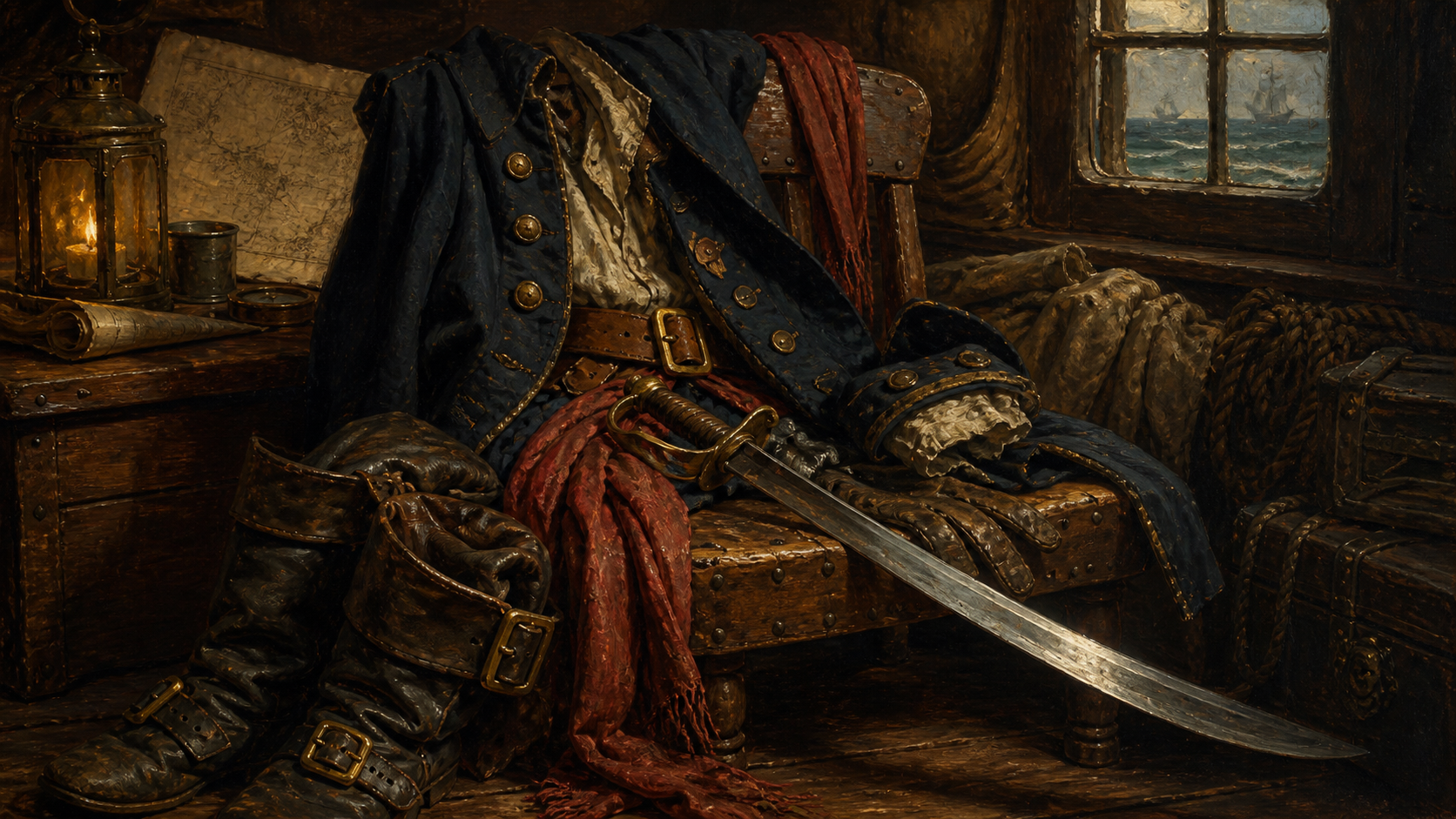
A men's pirate costume should decide what kind of trouble has entered the room.
Not every pirate is a captain. Not every captain is Blackbeard. Not every man in boots needs a sword large enough to create seating problems. The best pirate costumes for men start with role, not accessories.
Are you the captain everyone watches? The deckhand who looks like he can actually climb something? The privateer insisting the paperwork makes this legal? The tavern rogue who has improved the story three times since breakfast? The smuggler who knows a back door and hates questions?
Once the role is clear, the outfit gets better immediately.
The hat may still be involved.
But it stops being in charge.
The classic captain
The captain costume is the most recognizable men's pirate look.
It usually includes a loose shirt, vest or waistcoat, long coat, sash, belt, boots or boot covers, hat, and one strong prop. It works because it gives authority at a glance. The wearer looks like he gives orders, receives complaints badly, and has definite opinions about who touched the map.
A good captain costume needs structure. The coat should carry the silhouette. The sash should add color. The belt should anchor the outfit. The hat should support the character instead of swallowing the head.
The mistake is adding everything. Sword, pistol, eye patch, hook, parrot, compass, tankard, coins, skull necklace, and three belts can turn the captain into a storage solution.
Choose one or two statement pieces.
A strong coat and good sash will do more than a dozen plastic threats.
The working deckhand
The deckhand look is easier, cheaper, and often more convincing.
Start with a loose shirt. Add dark trousers, sash, vest, headscarf, belt, and practical shoes or boots. Keep colors muted. Roll the sleeves. Let the outfit look like it could survive rope, sweat, salt, and poor decisions.
This is the best choice for anyone who wants mobility. It works well for parties, festivals, outdoor events, and situations where a long coat would become a portable sauna.
The deckhand costume also feels closer to real maritime labor. Most pirates were not striding around in perfect captain coats all day. Ships needed men who could haul, patch, climb, row, load, steer, cook, curse, and keep watch.
A good deckhand costume says, “I know where the work is.”
It may also say, “I am avoiding it.”
Both are historically plausible.
The privateer
The privateer costume is for the man who wants pirate energy with a cleaner edge.
Think better coat, more controlled colors, boots, sash, document case, map, or spyglass. Less ragged, more dangerous respectability. The privateer is not necessarily less violent. He simply has papers, sponsors, and a tone that suggests the robbery has been reviewed by counsel.
This is a great costume for adults who want something stylish rather than cartoonish. It works especially well with navy, brown, cream, burgundy, brass, and black accents.
The privateer outfit also gives you a better story. You are not just “a pirate.” You are a legal problem with buttons.
The tavern pirate
The tavern pirate is built for comfort and charm.
Use a shirt, vest, rolled sleeves, scarf, sash, belt, pouch, tankard prop, and expression of unreliable confidence. This character has seen things, survived some of them, and lied about the rest.
This is the best choice for parties where a full captain coat would be too much. It is also easy to build from normal clothes. The tavern pirate does not need to look wealthy. He needs to look like he has a story and someone else is buying the next round.
A good tavern costume has texture: worn vest, soft shirt, scarf, belt, maybe a ring or necklace. It should look casual but chosen.
The danger is looking like a regular man with a scarf. Add a pouch, sash, and one prop to push the outfit fully into pirate territory.
Big and tall pirate costumes
Fit matters more than most costume pages admit.
A pirate costume should not depend on the wearer being one narrow body type. Shirts can be loose. Sashes can define shape without strangling. Vests and coats can create structure. Dark trousers and boots keep the base simple.
For larger men, avoid flimsy one-piece costumes that cling in the wrong places and collapse everywhere else. Build from separates when possible: real shirt, real pants, larger sash, proper belt, open vest or coat.
For tall men, watch sleeve and coat length. A too-short coat can look accidental. A longer vest or open jacket may work better than a cheap costume coat. Headwear and shoulder shape can help balance the silhouette.
The goal is not hiding the body. The goal is giving the character command.
Historically inspired men's pirate costumes
A historically inspired men's pirate costume should start with sailor clothing: shirt, trousers or slops, waistcoat or jacket, sash or belt, head covering, practical footwear.
The colors should feel lived in. The materials should avoid excessive shine. The accessories should suggest function: pouch, knife-like prop, map, compass, telescope, rope, document.
If you want a Blackbeard-inspired look, remember that the real power of Blackbeard's image was theatrical intimidation. You do not need to copy every legend. Dark coat, strong beard, sash, weapons-as-props if allowed, and a controlled use of smoke-like drama in styling can do enough. Please do not actually set yourself on fire for authenticity. History has limits.
If you want a Bartholomew Roberts-inspired look, lean cleaner and more stylish: good coat, rich color, confident posture, fewer ragged details.
If you want a Stede Bonnet-inspired look, dress slightly too respectable and look as if you bought the ship before reading the manual.
What to buy first
If building a costume from scratch, spend attention in this order:
1. Shirt 2. Trousers 3. Sash 4. Belt 5. Vest or coat 6. Headwear 7. Shoes or boot solution 8. One prop
The sash and belt do enormous work. They break up the modern outline and give the costume shape. A vest adds period flavor. A coat adds authority. A headscarf is cheaper and often more comfortable than a hat.
Props should come last. A man in a bad outfit holding a sword is not a pirate. He is a problem with accessories.
What to avoid
Avoid too much shine. Glossy fabric often makes the costume look cheaper.
Avoid too many skulls. One skull is a signal. Six skulls are a marketing department with anxiety.
Avoid toy weapons that look too realistic in public settings. Keep props event-safe and obviously costume-grade.
Avoid boots you cannot walk in. The sea was cruel enough without voluntary foot punishment.
Avoid overdoing fake pirate speech. A costume can survive without “Arrr” every sentence. Your friends may not.
Easy formulas
Captain: cream shirt, dark trousers, long coat, red sash, wide belt, boots, hat, map or spyglass.
Deckhand: loose shirt, cropped dark pants or trousers, vest, headscarf, sash, pouch, plain shoes.
Privateer: cleaner shirt, navy or brown coat, boots, belt, document case, restrained jewelry.
Tavern rogue: rolled shirt, vest, scarf, tankard, belt, pouch, amused expression.
Blackbeard-inspired: dark coat, heavy belt, sash, beard, strong hat, safe props, controlled menace.
Low-effort but decent: white shirt, black pants, scarf sash, belt, bandana, boots, hand-drawn map.
The best men's pirate costume has a job
The costume should tell the viewer what this pirate does.
Commands. Climbs. Smuggles. Drinks. Maps. Threatens. Negotiates. Fails upward. Runs from the navy with style.
That one decision makes the outfit feel alive.
A men's pirate costume does not need to be historically perfect, expensive, or covered in accessories. It needs a clear role, comfortable layers, grounded colors, useful textures, and one strong signal.
The rest is posture.
Stand like you know where the treasure is.
Even if, historically speaking, the map is probably nonsense.


