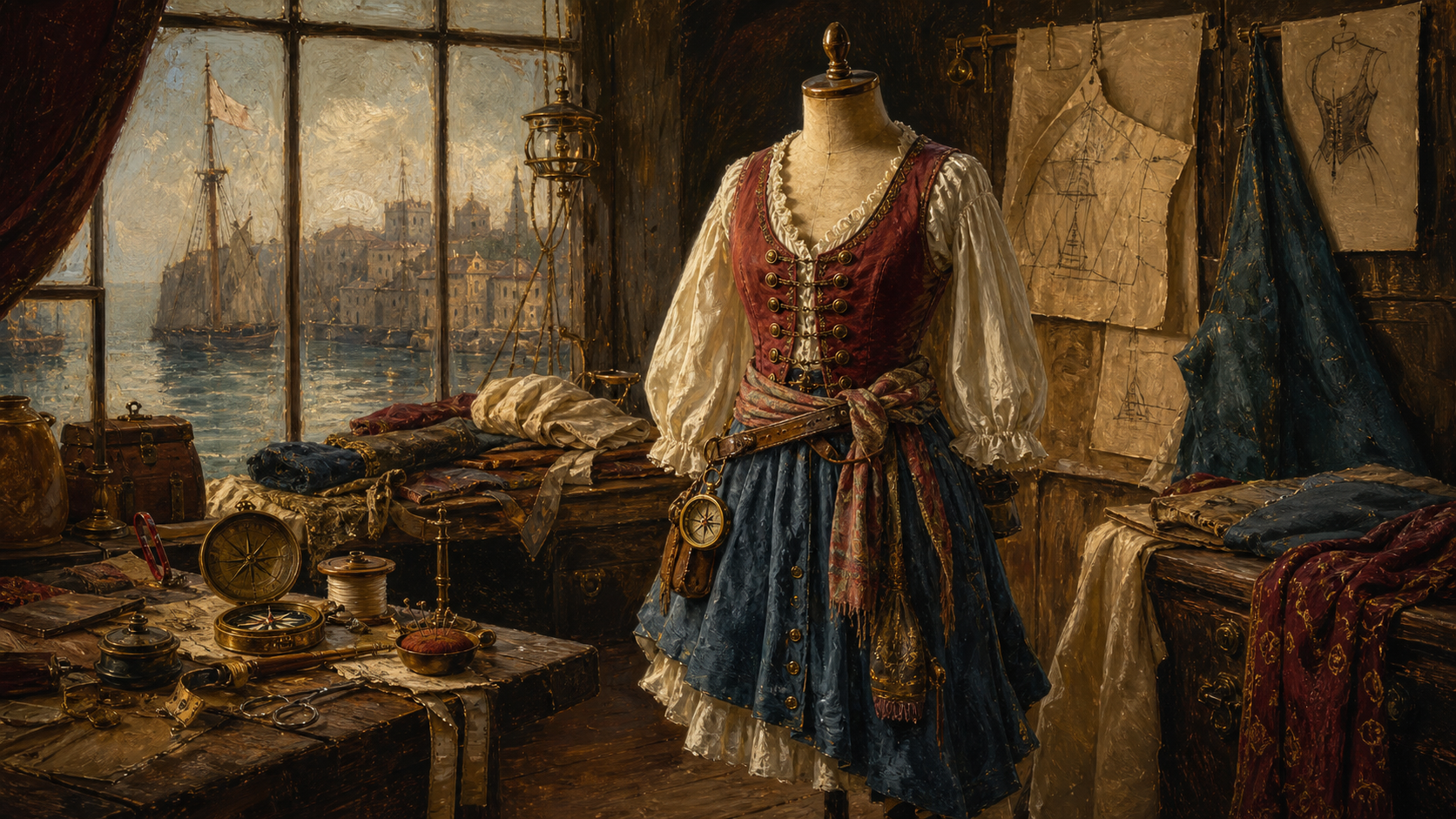
Pirate costumes for girls should start with a simple rule.
The girl gets to have the adventure.
Not just the pretty hat. Not just the pink version of someone else's story. Not just a skirt with a skull printed on it and the faint suggestion that boarding parties were mostly decorative. A good pirate costume gives the wearer movement, confidence, play, and a clear role in the crew.
That role can be many things.
She can be a captain. She can be a deckhand. She can be a treasure hunter. She can be a mapmaker, smuggler, sea queen, tavern rogue, privateer, sword-swinging storybook menace, or practical pirate who has no patience for shoes that hurt.
The best costume does not force a choice between dramatic and practical.
It lets her run.
Comfort is the real captain
A children's costume has one job before all others: survive the child.
It should allow walking, running, sitting, climbing stairs, carrying a candy bucket, eating, laughing, and changing plans without turning the evening into a wardrobe negotiation. A costume that looks beautiful in a photo but makes the child miserable after ten minutes has failed the voyage.
Look for soft fabrics, easy closures, secure hats or headscarves, and pieces that do not scratch, pinch, drag, or slide. Elastic waistbands are not glamorous, but neither is a meltdown beside the coat rack.
If the costume includes a skirt, make sure she can move in it. If it includes trousers, make sure they fit comfortably. If it includes a sash, tie it safely and not too tightly. If it includes boots or boot covers, test them before the event.
The pirate should defeat imaginary enemies, not her own costume.
Choose the character
A better costume starts with a character type.
The Captain: coat, hat, sash, belt, boots, and a confident stance. This look is dramatic and easy to recognize.
The Deckhand: shirt, trousers or leggings, vest, sash, and headscarf. Practical, comfortable, and good for active kids.
The Treasure Hunter: map, pouch, fake coins, scarf, and comfortable layers. Great for parties, school events, and backyard adventures.
The Sea Queen: dramatic coat or dress, sash, jewelry, boots, and a commanding look. More theatrical, but still should allow movement.
The Disguised Sailor: simple shirt, vest, trousers, cap or scarf, and a secret identity. A good route for kids who like story more than sparkle.
The Pirate Scholar: map, notebook, compass-style prop, scarf, and pouch. For the child who would absolutely organize the mutiny and correct the spelling on the treasure map.
Once the character is clear, shopping or assembling gets easier.
Skirt, trousers, or both?
There is no single correct pirate silhouette for girls.
Trousers are practical and historically sensible for a sailor-inspired look. They allow movement and make the costume feel active. Pair them with a loose shirt, vest, sash, headscarf, and boots or dark shoes.
A skirt or dress can also work, especially for a captain, sea queen, port-world character, tavern figure, or fantasy pirate. The key is movement. A skirt should not be so long that it catches underfoot or so tight that the wearer cannot play.
A layered look can combine both: leggings under skirt, tunic over trousers, sash at the waist, coat over dress. This works especially well for children because it allows warmth, modesty, and movement without sacrificing drama.
The question is not “what should girls wear?”
The question is “what can this pirate do in it?”
Color and style
Many girls' pirate costumes lean pink, glittery, or overly cute. That can be fine if the wearer loves it. The problem is when that is the only option.
Pirate colors can be broad:
- red sash
- cream shirt
- black or brown trousers
- navy coat
- striped scarf
- gold-toned trim
- burgundy skirt
- tan vest
- weathered green or blue accents
A little sparkle can be fun. A lot of sparkle can turn the costume from pirate into birthday cake with a sword. Let the child choose the mood: fierce, funny, elegant, spooky, practical, glamorous, or wild.
Adventure has room for all of them.
Accessories that work for girls' pirate costumes
The best accessories support play.
A treasure map gives the child a mission. A pouch gives her something to carry. Fake coins create instant story. A headscarf keeps the costume comfortable and readable. A soft sash gives color and shape. A captain's hat adds authority. A toy spyglass suggests command and exploration.
Toy swords can be fun, but they are not always allowed at schools or public events. A map, compass, pouch, or treasure chest can often do the same storytelling with fewer rules involved.
Good accessories:
- map
- pouch
- fake coins
- scarf or bandana
- soft belt or sash
- captain hat
- spyglass
- small treasure chest
- boots or dark shoes
- simple jewelry
Avoid anything sharp, heavy, easy to trip over, or likely to become a problem before the party begins.
Historically inspired options
A historically inspired girls' pirate costume should borrow from real sailor clothing: loose shirt, trousers, vest, sash, head covering, and practical footwear. It does not need to be perfectly accurate. It should simply look like a person who could function on a ship.
For inspiration, pages about women pirates can help, but they should be handled with care. Figures like Anne Bonny and Mary Read are often filtered through dramatic sources and later legend. The useful costume lesson is not that every detail of every story is settled. It is that pirate history gives girls more possibilities than decorative sidelines.
A girl can dress as the person holding the map.
Or the person taking the ship.
Or the person deciding the captain is doing it wrong.
DIY version
A strong DIY girls' pirate costume can be made from ordinary clothes:
- loose shirt
- leggings, trousers, or skirt
- vest or cardigan
- scarf sash
- headband or bandana
- pouch or small bag
- boots or dark shoes
- hand-drawn map
Add a coat for captain energy. Add jewelry for sea-queen energy. Add a notebook and map for clever adventurer energy. Add fake coins for treasure-hunter energy.
The DIY route is often more comfortable than packaged costumes and easier to adapt to weather. It also lets the child participate in building the character, which is half the fun.
A costume she helped create will usually be worn with more command.
Group costume ideas
Girls' pirate costumes work well in crews.
A group can include:
- captain
- first mate
- mapmaker
- treasure guard
- deckhand
- tavern storyteller
- sea queen
- powder monkey
- ship's cook
- lookout
Not everyone has to wear the same outfit. In fact, crews look better when each person has a slightly different role. One coat, one map, one sash, one pouch, one scarf, one captain hat: the group reads as a world instead of a row of identical bags.
That also lets each child choose how dramatic, practical, spooky, or silly they want to be.
What to avoid
Avoid costumes that are too tight, too short, too scratchy, too fragile, or too hard to move in.
Avoid making the costume only about being “cute.” Cute is allowed. Adventure should not be optional.
Avoid overloading accessories. A child carrying a sword, pistol, map, bag, chest, hat, scarf, and parrot may look less like a pirate and more like a small moving attic.
Avoid props that violate school or event rules. Nobody wants the pirate adventure to end at the front desk.
And avoid pretending there is only one kind of pirate girl.
There is a whole crew available.
The best pirate costume gives permission
The best pirate costume for a girl gives her permission to be bold.
Maybe bold means dramatic coat and captain's hat. Maybe it means trousers and a map. Maybe it means glitter and boots. Maybe it means a scarf, pouch, and the clear belief that treasure belongs to whoever found it first.
The costume should fit the child, not the other way around.
Give her movement. Give her choice. Give her a role with agency. Add history where it helps, fantasy where it delights, and comfort everywhere.
Then let her sail into the room as if she owns at least half the harbor.


