A pirate costume for a boy should start with one practical question:
Can he move in it?
If the costume cannot run, sit, climb stairs, survive snacks, and make it through a party without turning into a pile of itchy fabric and regret, it is not ready for a child. The best pirate costume looks bold in photos and still behaves like clothing.
That means soft layers, safe props, clear shape, and no dangling trap disguised as authenticity.
Start With the Role, Not the Hat
Not every boy has to dress as the same sword-waving captain. The outfit gets better when it has a role.
He might be a deckhand, cabin boy, lookout, map reader, treasure guard, comic captain, ship’s cook, or stormy little privateer with paperwork he absolutely cannot produce. A role gives the costume personality and helps decide what pieces matter.
A captain wants a coat, sash, and confident hat. A deckhand needs rolled sleeves, a vest, and a headscarf. A navigator gets a map, compass-style prop, and serious expression. A treasure guard needs a pouch of coins and the suspicion that everyone else is stealing from him, which is often correct at children’s parties.
The Basic Formula
Start with clothing that already works:
- loose shirt or comfortable T-shirt
- vest or open overshirt
- dark trousers, joggers, or soft pants
- sash or belt
- comfortable shoes or boots he can actually walk in
- headscarf, bandana, or lightweight hat
- one safe prop at most
Rolled cuffs and tucked hems suggest a pirate shape without forcing awkward trousers. A red sash does more work than half a dozen uncomfortable accessories. A headscarf is often safer and easier than a heavy hat, especially outside or during active play.
The goal is not museum accuracy. The goal is a costume that reads as pirate instantly and lets the child forget about it while playing.
Safe Props Beat Realistic Props
Pirate costumes often fail at the prop stage.
A toy sword may look fun at the beginning and become a problem three minutes later. Hard plastic blades, hooks, stiff pistols, and sharp buckles can turn a costume into a small portable complaint. Soft foam props are better. Fabric treasure maps are better. A pouch of plastic coins is usually better than a weapon.
For school events, avoid realistic weapons altogether. A map, spyglass, flag, coin pouch, or “ship’s papers” can carry the theme without inviting trouble from teachers who did not sign up to supervise a boarding action near the juice table.
If a sword is essential, choose something soft, short, and obviously pretend. The best pirate prop is one that survives the event without injuring a sibling, a dog, or the person who bought it.
Comfort Is the Secret Treasure
Children do not care how good a costume looks if it scratches, pinches, overheats, or keeps falling off.
Avoid heavy coats indoors. Avoid tight elastic. Avoid stiff hats that slide over the eyes. Avoid masks that make it hard to see. Avoid boots that look perfect and produce mutiny before lunchtime.
Layers solve most problems. A simple base outfit can work alone in warm weather, then take a vest, sash, or light coat if the event is cooler. Face paint should be minimal and easy to remove. A little smudge, scar, or mustache goes a long way. Full-face pirate art often ends as a damp historical disaster.
Make It Look Pirate Without Overdoing It
Pirate style is mostly silhouette and contrast.
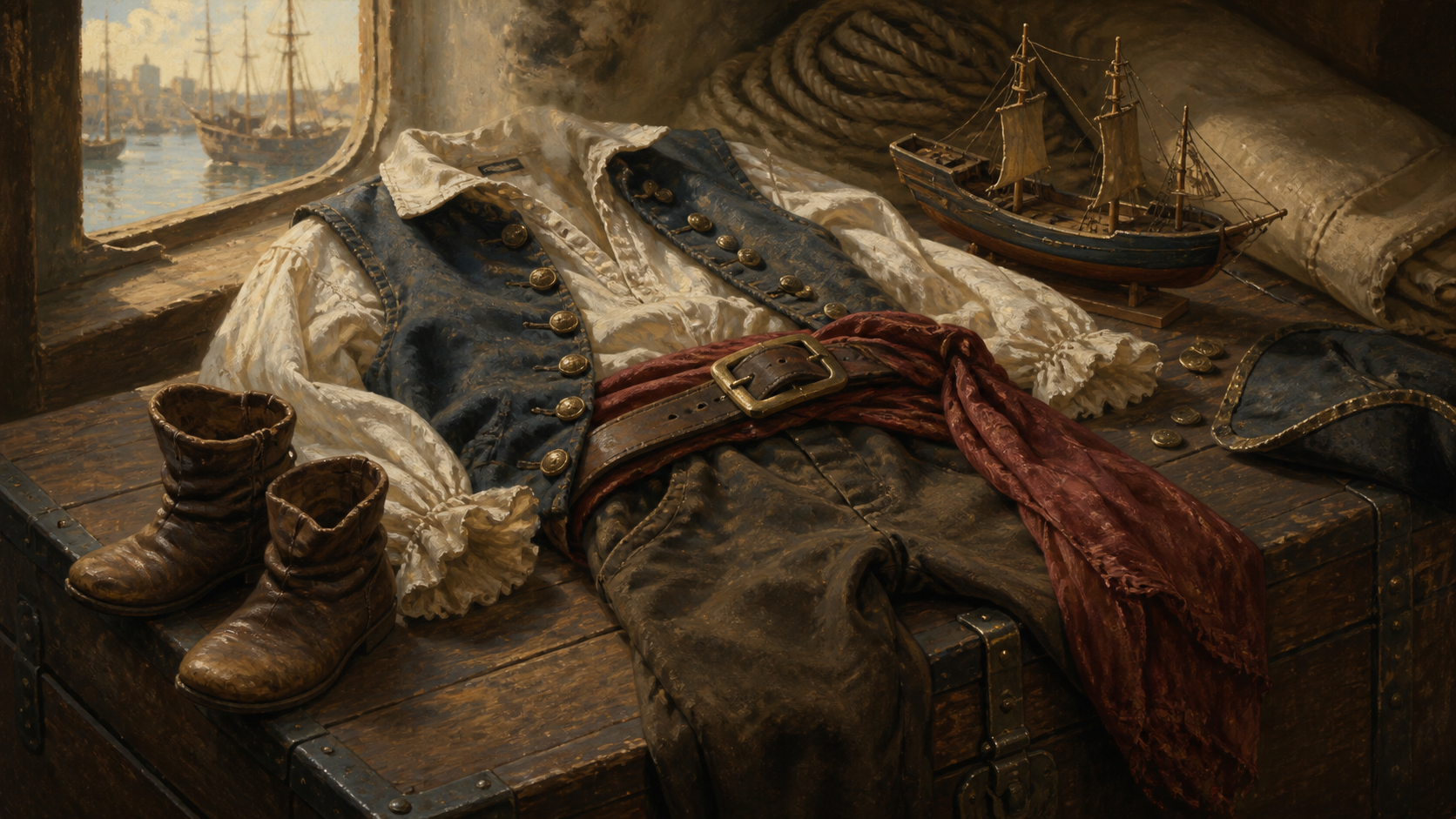
A loose white shirt, dark pants, red sash, headscarf, and vest will read clearly. Add a coin pouch or map and the costume has a story. Add too much and it becomes costume clutter.
Good details include:
- striped scarf
- soft vest
- rolled sleeves
- simple belt
- cloth pouch
- toy compass
- folded map
- temporary tattoo
- lightweight flag
Skip anything that makes movement harder. Children are not mannequins. They are weather systems wearing shoes.
Age Makes a Difference
For younger boys, keep the costume simple: soft shirt, elastic-waist pants, sash, and headscarf. Avoid small detachable pieces that vanish instantly or become choking hazards for younger siblings.
For older boys, give more control over the role. They may want a rougher deckhand look, a funny captain, a spooky ghost pirate, or a more historical sailor-inspired outfit. Letting them choose one theme keeps the costume from becoming a pile of unrelated accessories.
For tweens, comfort and coolness matter more than theatrical completeness. A subtle pirate outfit may work better than a full costume: dark pants, boots, open shirt, vest, sash, and a prop map. The less it feels like being trapped in a costume bag, the more likely it is to be worn without complaint.
Historical Enough, But Not Miserable
Real pirates were sailors, not costume-shop aristocrats. Their clothing was practical, dirty, repaired, stolen, and adapted to work at sea. That can help the costume. A pirate does not need perfect matching pieces. A little mismatch is historically useful and visually better.
A boy’s costume can borrow the idea without pretending to be a documentary: loose layers, rough colors, sash, head covering, practical shoes, and one object that suggests a job aboard ship. For more background, see Pirate Clothing Was Workwear Before It Became Costume.
The Best Costume Has a Story
A costume becomes more memorable when the child can say who he is.
“I’m the lookout.”
“I guard the treasure.”
“I’m the captain, but the crew is suspicious.”
“I’m the mapmaker, and this map is probably wrong.”
That small story does more than another buckle. It gives the costume personality and keeps the play going after the photo is taken.
For broader costume planning, return to the Pirate Costume Guide. For party language and playful phrases, visit Talk Like a Pirate. And remember the main rule: the best pirate costume for a boy is not the one with the most pieces. It is the one he can wear long enough to have an adventure.


