The story
Stede Bonnet Bought a Pirate Ship and Still Wasn’t Good at Piracy
Stede Bonnet is funny right up to the moment someone remembers the victims.
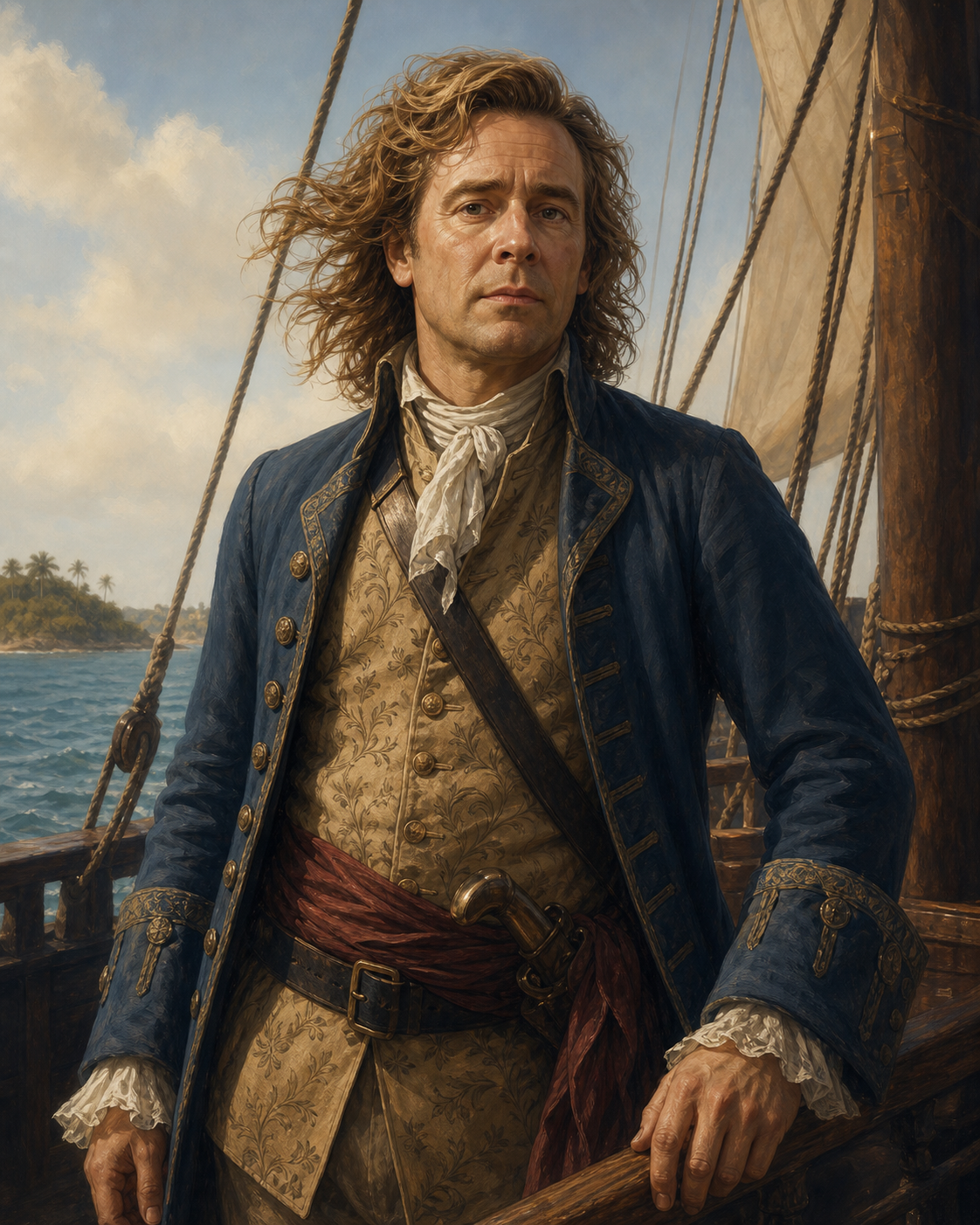
The outline sounds as if history briefly hired a satirist. A wealthy Barbados landowner, with little practical experience commanding at sea, bought a vessel, named her Revenge, hired a crew, and tried to become a pirate as though piracy were a midlife change with cannons. It is one of the strangest entrances in the Golden Age story.
But the joke has teeth. Bonnet was not harmless because he was odd. A badly led pirate ship could still frighten sailors, take vessels, disrupt trade, and pull real people into violence. The Gentleman Pirate is amusing from a distance. Up close, he was an armed man trying to buy his way into a profession that punished weakness quickly.
The Gentleman Who Bought the Door
Bonnet came from unusual comfort. Many pirates emerged from hard maritime labor, war service, unpaid wages, harsh discipline, coercion, or long familiarity with ships. Bonnet came from property and status. That contrast is why his story still catches the eye. He did not claw upward from the forecastle into command. He stepped sideways from the planter world and purchased the stage.
Buying the Revenge solved only the easiest problem. A ship could be bought. Command could not. A pirate captain needed judgment, nerve, seamanship, timing, and the ability to keep a crew convinced that the next prize was worth the next risk. Bonnet could hire men, but he still had to make them believe he could keep them alive long enough to profit.
That was the hard part.
Pirate crews were not polite employees on a gentleman’s outing. They expected shares, food, discipline, and results. If the captain failed, the crew did not have to admire his social background. At sea, land status leaked away fast. Weather, hunger, rival ships, and mutinous calculation were not impressed by a Barbados address.
The Revenge Was Not a Costume Prop
The Revenge gave Bonnet the appearance of command before he had fully earned the craft of it. A pirate ship was not merely a dramatic object with sails. It was a working machine: food, water, powder, rigging, guns, navigation, repairs, watches, prize handling, and the constant problem of armed men trapped together in a wooden workplace.
That is why Bonnet matters. He exposes the practical side of piracy by being badly matched to it.
Popular memory often treats pirates as attitude plus accessories: hat, sword, flag, glare. Bonnet shows the rest of the bill. Someone had to choose targets, read weather, judge shoals, manage a crew, divide loot, and decide when to run. Piracy was illegal, violent, and immoral, but successful piracy still required competence. Bonnet bought the ship. The sea demanded receipts for everything else.
His early cruises placed him inside the same Atlantic world as more capable predators. He was not playing on a separate board. Merchants and sailors did not experience his background as a joke when their vessels were threatened. The absurdity belongs to the biography. The danger belonged to other people too.
Blackbeard Made the Weakness Obvious
Bonnet’s association with Blackbeard is the part of the story where the comedy darkens.
Edward Teach understood fear, staging, reputation, and practical command. Bonnet had a ship and a gentlemanly nickname. Blackbeard had the more useful currency: experience, menace, and the ability to make men believe resistance would be expensive. When Bonnet crossed into Blackbeard’s orbit, the difference between owning a vessel and commanding one became painfully clear.
Bonnet was overshadowed. That was not merely an embarrassing partnership. It was a lesson in pirate authority. On land, paperwork and property could create power. At sea, power had to be performed every day. If another captain could command the crew’s fear, confidence, or obedience more effectively, ownership became a fragile thing.
For the stronger contrast, follow the route to Blackbeard. Blackbeard turned reputation into a weapon. Bonnet often seemed to have wandered into a role that had been written for someone with rougher hands.
Pardon, Relapse, and Capture
Bonnet’s story also shows how difficult it could be to leave piracy once the machinery had started moving. Royal pardons offered a way out during the wider crackdown on pirate crews. They were not sentimental gifts. They were tools: break pirate communities, reduce violence, and pull useful sailors back toward legal society.
Bonnet tried to use that opening. Then he returned to piracy under another name.
That relapse matters. It prevents the profile from treating him as only foolish or pitiable. Bonnet made choices after the joke had already turned serious. Whatever his motives, he continued in a violent trade. The law did not care that his origin story was eccentric. Merchants, sailors, and colonial authorities cared that armed men were still taking ships.
His capture near the Cape Fear River by forces under Colonel William Rhett brought the story back onto land and into court. The chase and fight stripped away the comic surface. Bonnet was no longer only the gentleman who bought a pirate ship. He was a captured pirate facing a legal system eager to make examples.
The Gallows Corrected the Joke
Bonnet was tried in Charleston in 1718. His appeals for mercy and the stories around his fear, illness, or remorse are part of the human ending, but they do not erase the career. They show a man suddenly made small by consequences.
He briefly escaped custody, which would be a perfect comic beat if the noose were not already waiting in the wings. He was recaptured and hanged in December 1718. The gallows gave the story its proper weight. Pirate oddity did not protect him from pirate punishment.
That ending is why Bonnet should not be reduced to a punchline. The strange beginning is real. The failure is real. So is the violence that carried him to court. Bonnet is memorable because he tried to purchase his way into a role that demanded experience, nerve, and command. The sea corrected him. Blackbeard corrected him. Then the courts corrected him permanently.
Why Stede Bonnet Still Matters
Bonnet matters because he makes pirate competence visible. Most famous pirates are remembered for what they did well: fear, organization, negotiation, pursuit, escape. Bonnet is remembered because he exposed the job by being badly suited to it.
He also reminds readers that pirate fame preserves failure as effectively as success when the shape is strange enough. Bonnet was not the greatest pirate. He was the gentleman who bought the door, struggled with the room, lost control to a better predator, failed to stay pardoned, and reached the same end as many more competent criminals.
For the wider gallery, return to Famous Pirates. For the broader setting of law, punishment, trade, and maritime violence, follow the history of piracy. Bonnet belongs between those routes because his life explains how ridiculous piracy can look from a distance and how unforgiving it becomes up close.
The title can stay sharp because the body earns it. Stede Bonnet bought a pirate ship and still was not good at piracy. The important word is not bought. It is piracy.


