Article
The legend, tested
Pirate gold stories often end at the rope because the systems chasing treasure were stronger than the legends chasing romance.
The easiest pirate story begins with gold.
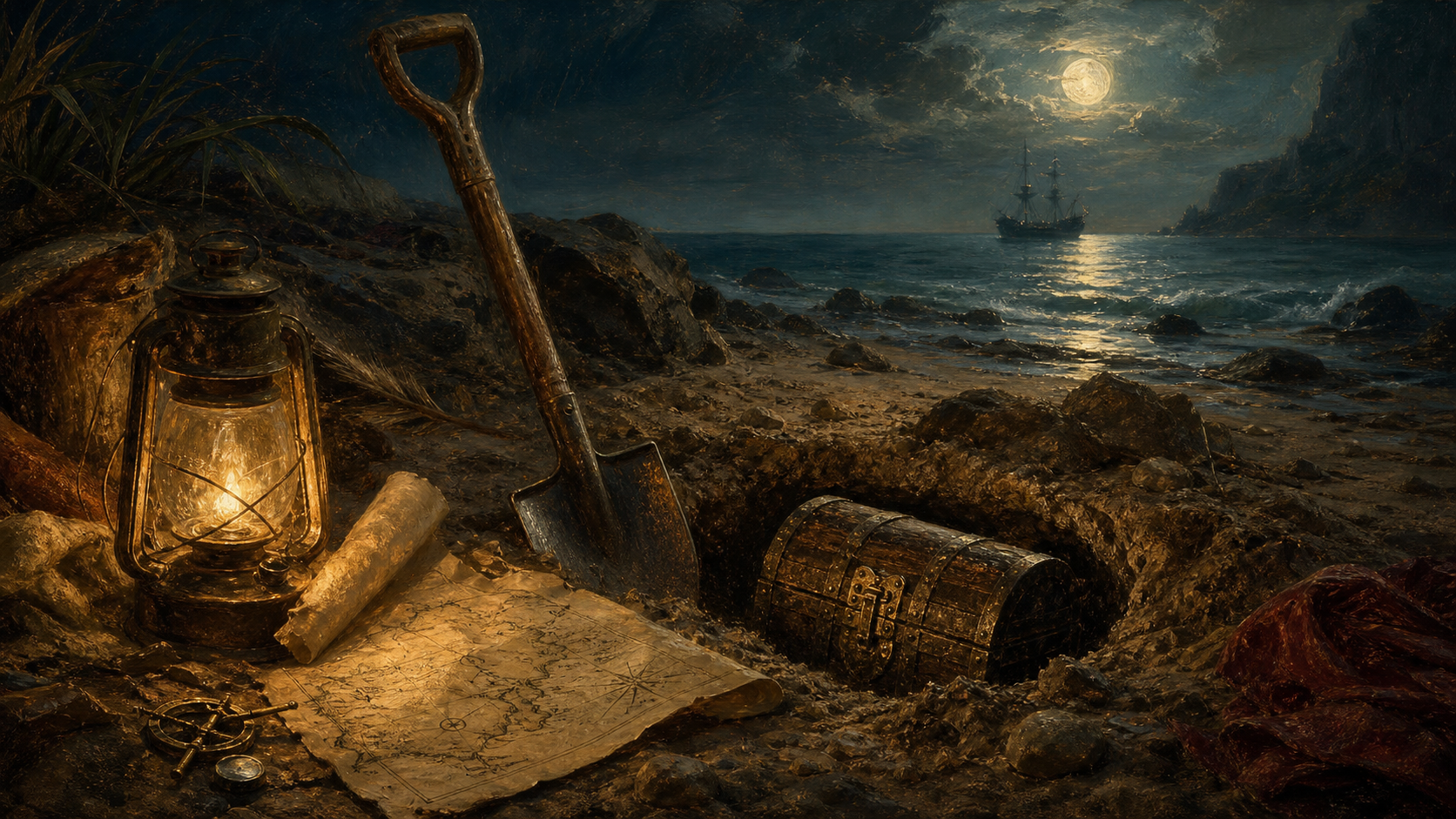
A chest sits under sand. A map curls at the edges. A dead man left a clue, because apparently pirates were excellent at robbery and terrible at retirement planning. Someone digs. Something gleams. The music rises.
History was less cooperative.
Pirates did chase profit. They risked storms, disease, battle, betrayal, trial, and hanging because stolen wealth could change a sailor's life faster than honest wages ever would. But the wealth was not usually a neat box of coins waiting for a shovel. It was cargo, credit, clothing, medicine, sugar, tobacco, cloth, tools, food, weapons, rope, sails, anchors, and anything else that could be used, sold, divided, or traded.
Gold makes a splendid prop.
Consequence was the real plot.
The myth: pirates were treasure hunters
The movie version is simple: pirates wanted treasure, treasure meant gold, gold went into chests, and chests went underground until an orphan, scholar, sailor, or suspiciously lucky child found the map.
That myth is not completely invented from air. Some pirates did take coins, silver, jewels, and high-value goods. Some treasure really was hidden briefly. Captain Kidd's buried cache on Gardiners Island gave later legend one excellent seed of truth and a thousand weeds.
But as a general model of piracy, treasure hunting gets the business backward.
Pirates were not mostly looking for buried treasure. They were creating treasure by attacking the systems that moved wealth across water. They hunted ships, not X marks. They exploited trade routes, ports, weak patrols, war habits, crew grievances, and the fact that the ocean is large and law is slower than wind.
The chest is the souvenir version.
The ship was the target.
The real prize was often cargo
A merchant vessel could carry money, but it could also carry goods far more useful than coins to a crew trying to survive. A bolt of cloth could be sold. Medicine could keep men alive. Tools could repair a ship. Rope and canvas could matter more than silver if the rigging was failing. Food and water could mean the difference between another cruise and a floating coffin.
This is why pirate treasure needs a wider definition. A captured ship was a warehouse, workplace, hostage situation, and financial opportunity all at once. The pirates wanted valuables, but they also wanted practical stores. A crew could not eat reputation. It could not patch a sail with a dramatic nickname.
The goods also had to move after capture. Stolen cargo did not become useful simply because pirates had touched it. It needed buyers, fences, sympathetic ports, corrupt officials, frightened traders, or networks willing to turn questionable property into usable value.
That is where the romance thins and the system appears.
Piracy was not only men with cutlasses. It was also coastal markets, taverns, warehouses, small boats, bribery, silence, local appetite, and the ordinary human ability to ask fewer questions when the price is good.
Shares mattered more than secret maps
A pirate crew expected division.
That is one of the strongest corrections to the buried-treasure fantasy. A crew that captured loot usually wanted it divided according to agreed rules. Captains and specialists might receive larger shares. Injured men might receive compensation. The rules varied, but the principle mattered: men accepted danger because they expected a recognizable bargain.
Now imagine a captain announcing that the money would not be divided because he preferred to bury it under a tree for later.
This is not how one keeps command among armed sailors.
Pirate crews could be violent, predatory, and cruel, but among themselves they often cared deeply about fairness of shares. Not moral fairness to the outside world. Internal fairness. The kind that keeps men from mutinying when everyone aboard knows where the pistols are stored.
A secret chest makes a wonderful story.
A transparent division of plunder made a pirate company function.
Law followed the money
Pirates did not just anger individual captains. They threatened trade.
That was the larger problem. A pirate attack could interrupt shipping, raise insurance pressure, frighten merchants, embarrass governors, damage imperial reputation, and force states to prove they could protect commerce. The stolen goods mattered, but so did the message: the route is unsafe, authority is weak, and the next sail may be trouble.
Henry Every's 1695 attack on the Mughal ship Ganj-i-Sawai shows this at full scale. The raid was rich, but the value of the prize was not the only reason it mattered. The attack created diplomatic pressure because the target was tied to Mughal power, pilgrimage, prestige, and English commercial interests in India. A pirate crew had taken a ship. English trade had to answer for the shock.
Captain Kidd shows the same problem from another angle. His story is not only treasure rumor. It is commission, disputed prize, political embarrassment, trial, and execution. Treasure survived in the legend because treasure is easier to imagine than prize law.
A chest sits still.
Politics wriggles.
Rope was part of the economy too
Pirate stories often end too early. They stop when the loot is taken.
Governments preferred a different ending.
Trials, hangings, displayed bodies, proclamations, pardons, and rewards were all part of the response. The state needed to show that piracy could be named, chased, judged, and punished. A pirate's profit made one kind of statement. The gallows made another.
Execution was not only punishment. It was public messaging. A body at Execution Dock or a head displayed after battle told sailors and merchants that the law still reached the water. The message was grim because it was meant to be readable by people who did not need a legal education to understand it.
The romance of pirate treasure makes the criminal act feel like a game. The legal aftermath returns the people and institutions who refused to play along: merchants, governors, courts, navies, families, captives, and sailors whose lives were threatened so someone else could divide the cargo.
Gold was part of the story.
So was rope.
Why gold gets remembered
Gold survives because it is clean.
A coin has no complicated rigging. It does not require a warehouse, a buyer, a customs officer, a court case, or a frightened merchant explaining losses to investors. It gleams. It stacks. It photographs well in the mind.
Cargo is harder. Law is harder. Labor is harder. The suffering behind Atlantic wealth is harder still. A pirate chest lets a story remove most of that machinery and leave behind one beautiful object.
That is why the myth is so durable. Treasure turns maritime violence into a hunt. It gives the reader a puzzle instead of a prosecution. It lets the pirate become a keeper of mystery rather than a man who attacked working ships in dangerous water.
The better story is less tidy, but it is more useful.
Pirates chased profit through a world of cargo, coercion, trade, war, ports, rumor, law, and punishment. Sometimes the profit was gold. Often it was not. Almost always, it came attached to people who paid the cost.
The treasure chest is the lie movies polished.
The rope is what history kept in the frame.


