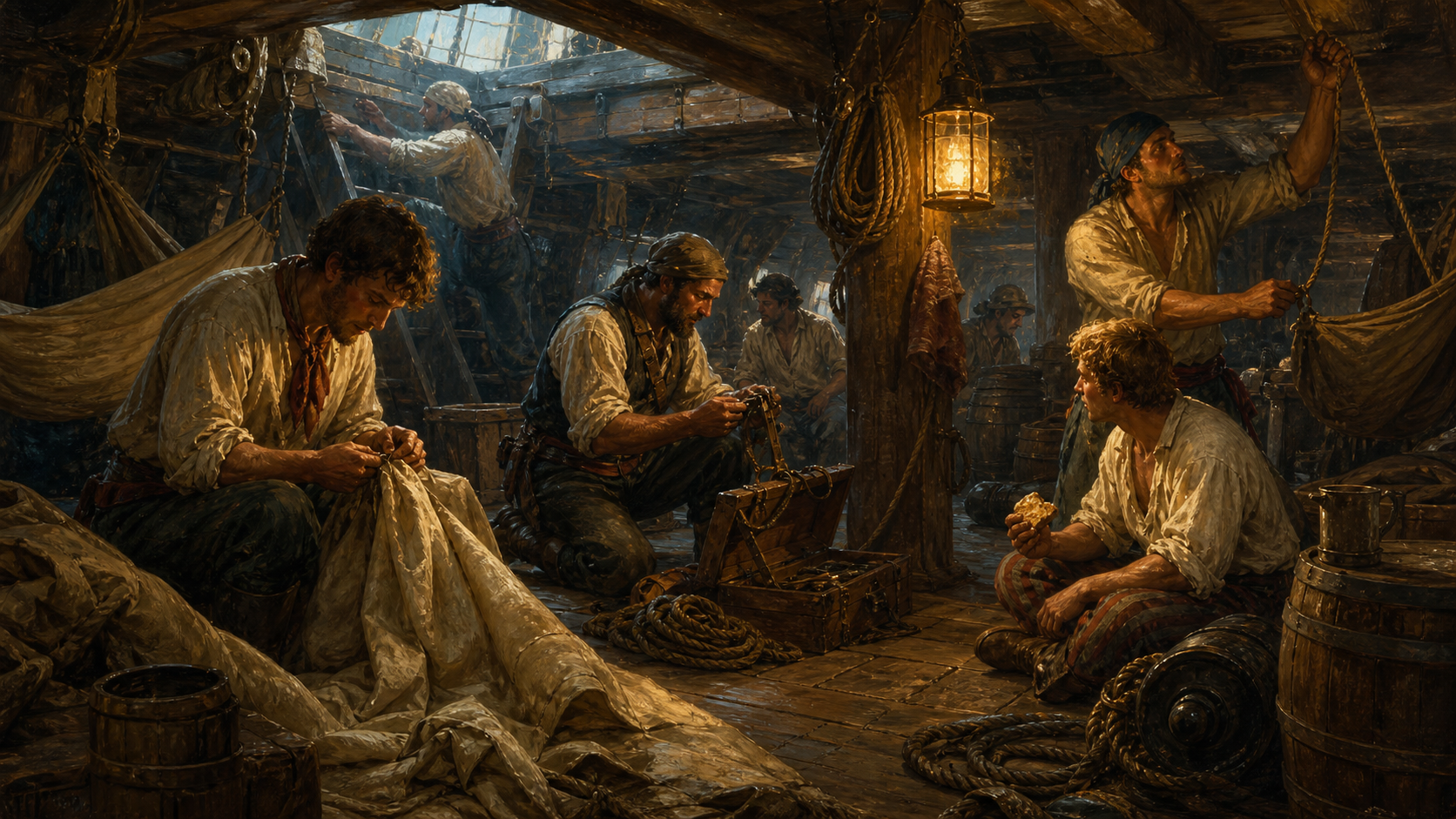
A pirate’s life sounds better when nobody mentions the smell.
Fiction gives the sea wind, moonlight, songs, treasure, and excellent coats. Real shipboard life gave men cramped quarters, hard labor, spoiled food, bad water, sickness, wounds, rats, wet clothing, splinters, fear, boredom, and the possibility of being hanged if the wrong sail appeared on the horizon.
That does not mean piracy had no appeal. It did. For some sailors, it offered shares instead of wages, a voice in leadership, injury compensation, revenge against brutal maritime labor, and a chance at sudden wealth. But the bargain was never clean. Pirate freedom was built on danger and paid for by other people’s fear.
The Ship Had to Function First
A pirate ship was not a floating tavern. It was a workplace before it was a legend.
Sails had to be handled. Watches kept. Hulls repaired. Pumps worked. Food cooked. Water rationed. Guns maintained. Powder protected. Prizes searched. Captives watched. Loot divided. Courses set. Weather judged. A crew that failed at ordinary seamanship would not survive long enough to become famous.
The captain mattered, but so did the pilot, gunner, carpenter, quartermaster, cook, boatswain, and ordinary sailors who did the labor that kept the ship alive. Pirate history remembers names. The sea rewarded competence.
Food, Water, and Disease Were Not Side Details
Pirates did not live on rum and swagger. They needed provisions. Fresh water spoiled. Food ran short. Meat could rot. Hardtack could crawl. Disease could do more damage than a cannon.
The famous demand for medicine during Blackbeard’s blockade of Charleston is useful here. It reminds readers that pirates were bodies under stress. Wounds, infection, fever, and exhaustion mattered. A crew was a machine made of people, and people break.
That practical pressure explains many pirate decisions. A ship might be taken for supplies rather than treasure. A port might matter because it offered repair, food, information, or a chance to turn stolen goods into something useful.
Rules Kept the Crime Going
Pirate crews often had articles or agreed rules. These could cover shares, discipline, compensation, gambling, quarrels, weapons, and conduct aboard ship. They were not decorative. They kept the enterprise from eating itself.
A crew of armed men with money coming in and death hanging over them needed procedure. If shares were unclear, resentment grew. If weapons were uncontrolled, quarrels became murders. If no one could settle disputes, the ship became a mutiny waiting for weather.
Rules did not make pirates good. They made piracy operational.
Violence Was Work Too
Boarding a vessel was not a graceful duel. It was noise, smoke, fear, splinters, blood, shouting, and the urgent desire to make the other side surrender quickly. Pirates often preferred intimidation because combat damaged ships, cargo, and men. Reputation could do useful work before blades and guns did.
That is why flags, numbers, speed, and a captain’s name mattered. A victim who believed resistance would bring worse treatment might surrender sooner. Terror was not separate from pirate business. It was part of the method.
The romance of piracy often forgets the victims. A serious page should not. Captured sailors, passengers, enslaved people, merchants, coastal communities, and families all belonged to the cost.
The Noose Was Part of the Job
A pirate could win prizes for months and still end in a courtroom. Trials and hangings were public messages. Bodies displayed near harbors told sailors that the sea was not beyond the law. The state used spectacle because pirates had used spectacle first.
This made pirate life unstable even when it looked successful. A pardon might offer a way out. A storm might erase the ship. A stronger enemy might end the cruise. A crew might fracture. A captain might lose the confidence that made command possible.
Why the Myth Survives
The pirate’s life survives in memory because it offers a fantasy of escape: no boss, no office, no polite obedience, a horizon instead of a schedule. That fantasy borrows a little truth from real sailor resentment and a great deal of shine from fiction.
The better truth is harsher and more interesting. Pirate life was rough work inside a violent economy. It gave some men more voice and more possible reward than legal service, but it also made them predators and targets.
For the rule side, read the pirate code page. For the punishment side, follow pirate hangings. For the costume version, go to the costume guides — and then come back here, where the boots are wet, the food is bad, and the noose is not a metaphor.


