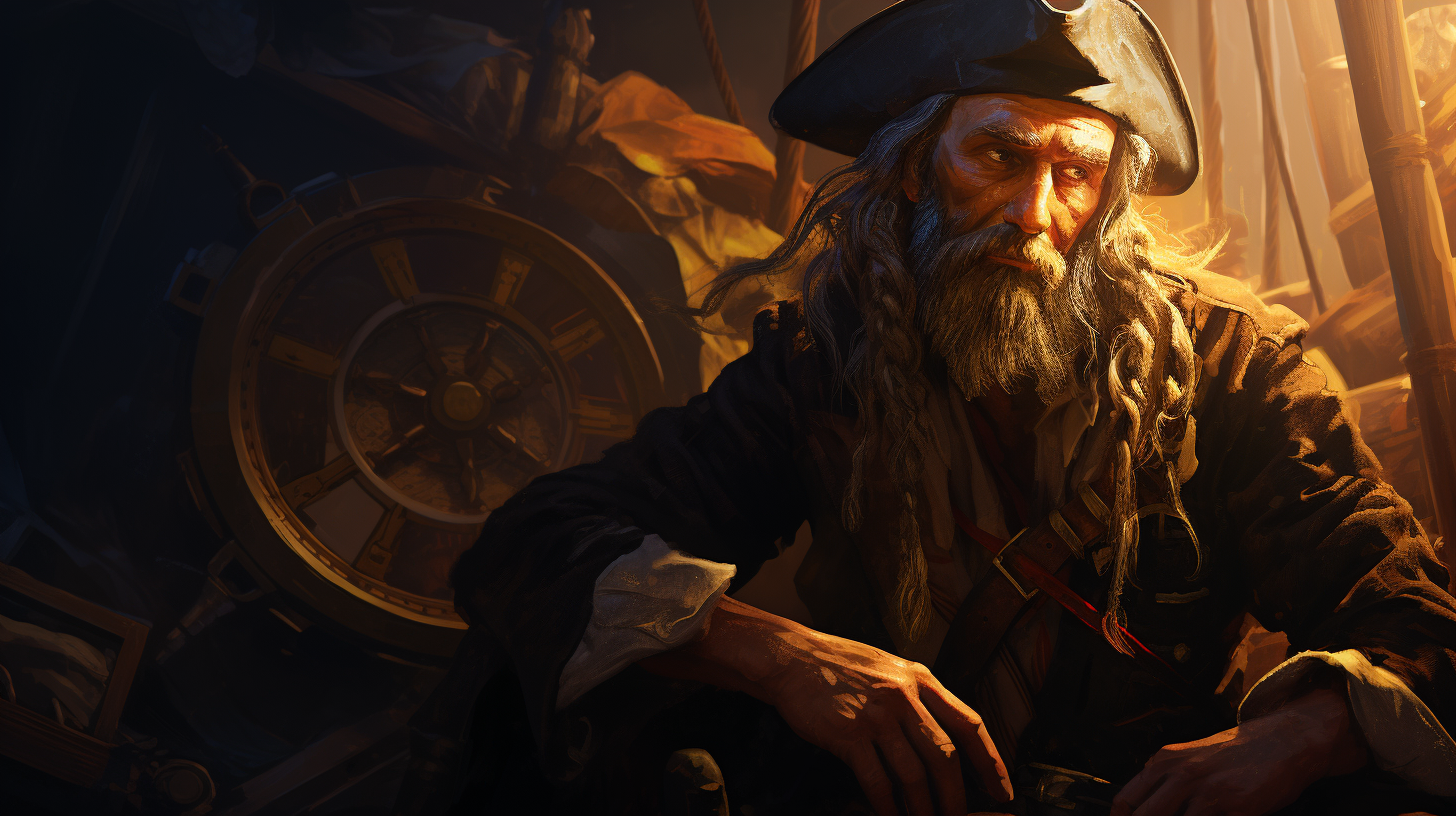
Pirate life is easy to sell as rum, rebellion, open shirts, and a heroic amount of leaning on railings.
The truth is better because it is less polished.
A pirate ship was a workplace, a weapon, a shelter, a prison, a gambling table, a courtroom, a sickroom, and a floating argument over money. The men aboard might have chased freedom, but they still had to pump water, trim sails, keep watch, cook food, mend gear, load guns, obey signals, and survive the smell of everyone else doing the same.
The legend gives us endless mischief.
The record gives us labor, violence, disease, hunger, fear, and practical choices made by men who were never as free as the poster promised.
Freedom at sea came with a maintenance schedule.
The movie version: endless liberty
The movie pirate wakes late, drinks early, sings badly, threatens everyone, and somehow finds the ship still moving in the correct direction.
Real ships did not sail themselves.
Even a pirate ship needed watches, steering, sail handling, repairs, cleaning, cooking, water management, discipline, lookout duty, and endless labor with rope. Canvas tore. Hulls leaked. Food spoiled. Water went foul. Powder had to be kept dry. Guns had to be maintained. Anchors had to be raised. Boats had to be rowed. Prizes had to be chased, boarded, searched, and handled.
The sea does not care that a man feels rebellious.
It wants work.
Pirates could escape some parts of ordinary maritime authority, especially the brutal discipline of naval and merchant service. But they did not escape weather, hunger, rot, injury, boredom, or the need to keep the ship alive beneath their feet.
A pirate ship was not freedom from work.
It was work with a share of stolen profit at the end, if the crew survived long enough.
Food was not a tavern feast
Pirate stories love taverns because taverns have light, music, mugs, and better furniture than ships.
Shipboard food was less romantic.
Sailors lived with preserved meat, hard bread, dried goods, beans, peas, rice, fish when available, whatever could be captured or purchased, and whatever had not yet been ruined by heat, damp, insects, rats, mold, or time. Fresh food mattered because disease mattered. Scurvy, fever, wounds, infection, stomach illness, and exhaustion were not background details. They shaped what crews wanted, where they stopped, what they stole, and how long they could operate.
This is why Blackbeard demanding medicine at Charleston is such a useful correction to the treasure-chest fantasy. Pirate crews needed practical things: drugs, bandages, food, water, tools, rope, sails, powder, shot, and care for bodies that were breaking under maritime work.
Gold is attractive.
A working crew also needs clean water.
Ports were escape, danger, and temptation
Pirates did not live only at sea.
They needed shore.
Ports, inlets, islands, coves, beaches, and coastal settlements provided repairs, supplies, intelligence, markets, recruits, shelter, sex, drink, gossip, and danger. A pirate crew might need a friendly trader, a corrupt official, a quiet buyer, a local pilot, or simply a place to careen a ship and scrape the hull.
Shore was not the opposite of piracy. Shore made piracy possible.
But shore could also kill a pirate career. Pardons were offered. Informers listened. Governors changed moods. Naval patrols arrived. Merchants complained. Former friends calculated rewards. A tavern could be a sanctuary one week and a trap the next.
The land promised relief from the ship’s confinement, but it also brought the law closer.
A pirate could spend weeks fearing the sea, then step ashore and discover the rope had been waiting patiently.
Pirate order was real, but not noble
The popular pirate ship is pure chaos: every man shouting, drinking, stabbing tables, and voting only on whether to sing louder.
Successful piracy needed more order than that.
Crews often used articles to define shares, duties, compensation, discipline, gambling, weapons, quarrels, and authority. Captains could be elected or removed. Quartermasters could hold major power. Shares of plunder were often set in advance. Wounded men might receive compensation. These rules made the ship more stable.
They did not make the ship good.
That distinction matters. Internal fairness can exist inside external violence. A pirate crew might give sailors more voice than a merchant captain while still robbing, threatening, and injuring people outside the crew.
The democratic-looking parts of piracy were not a moral halo. They were a working system for men engaged in crime.
Pirates did not reject order.
They rejected other people’s order and built one that served their own risk.
Violence was a job condition
Pirate life was violent even before battle.
A ship was crowded with weapons, fear, suspicion, hierarchy, money, and alcohol. Men lived in close quarters with no privacy and too many ways to die. Disputes could become dangerous quickly, which is one reason rules mattered. Violence had to be directed outward often enough for profit and contained inward often enough for the crew to survive itself.
When pirates attacked, the goal was usually surrender. A surrendered ship was easier to plunder than a damaged one. A frightened crew was cheaper than a prolonged fight. Reputation, flags, numbers, shouting, guns, and the memory of past violence all helped make resistance feel expensive.
That does not soften piracy.
It makes the threat clearer. The most efficient pirate violence was sometimes violence that did not need to happen because everyone believed it would.
Fear did the rowing before the boarding party arrived.
Land life was not a clean retirement
Pirate stories often imagine the pirate coming ashore with a pouch of coins and a grin, ready for a tavern, a romance, and perhaps a terrible song.
Some pirates did spend quickly in ports. Some drank, gambled, bought clothes, paid companions, bribed suppliers, and enjoyed brief moments of status. But shore life was unstable. Money disappeared. Pardons might not hold. Former victims might identify men. Officials might decide that yesterday’s tolerated rogue was today’s example.
The pirate economy depended on conversion. Stolen goods had to become usable value. That required buyers, fences, merchants, corrupt networks, or communities willing to tolerate dirty commerce. A pirate could not eat a bolt of cloth or retire on a cargo of sugar without someone willing to turn plunder into money, supplies, or favor.
The tavern was not just a party.
It was part of a market.
The better truth
Pirate life was freer than some legal sea labor in certain ways. That is part of why it attracted men.
It could offer shares instead of wages, voice instead of pure obedience, compensation instead of abandonment, and a chance at sudden profit instead of slow misery under a harsh captain.
But it was not freedom in the soft modern sense. It was freedom under weather, hunger, disease, fear, law, and the constant possibility of betrayal, battle, shipwreck, or hanging.
The pirate life was not one long tavern song.
It was work, risk, violence, calculation, boredom, filth, hunger, and brief flashes of wild possibility.
The myth gives pirates a life without maintenance.
The real ship leaks.


