Article
The legend, tested
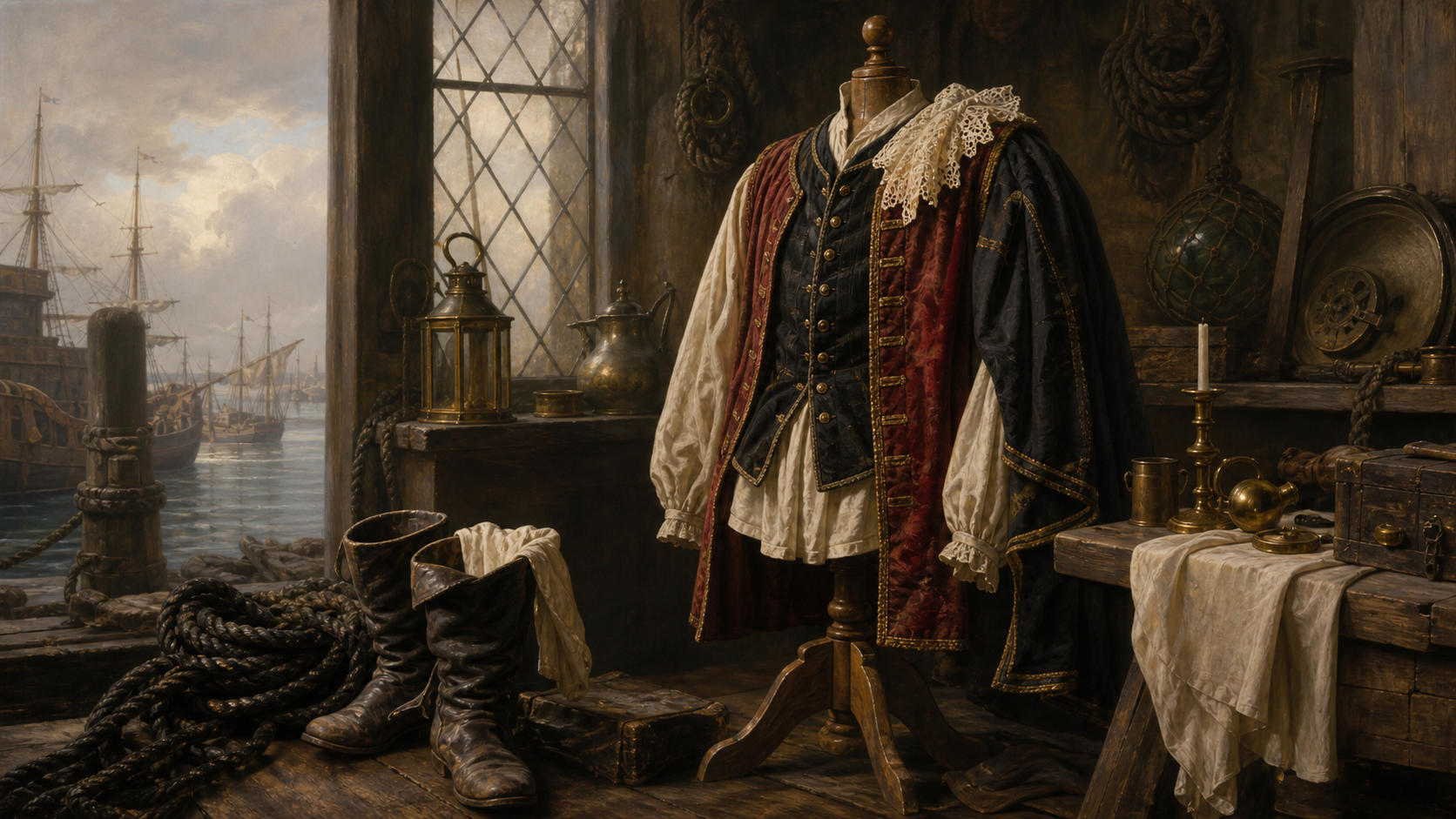
16th-century pirates sported practical attire fitting their maritime environment. Their signature wear was the smock, akin to short shirts. Discoveries from the shipwreck 'Mary Rose' highlighted diverse footwear, from sl...
The Tudor pirate does not belong in a tricorn hat.
That should be obvious, but pirate costume has a bad habit of dragging the same outfit across centuries until every sea raider looks like he just left a Golden Age tavern. Sixteenth-century sea dogs, privateers, raiders, and rebels dressed in the clothing of their own world. Their garments came from Tudor and early modern seafaring, not from later pirate theater.
This matters because clothing is one of the easiest ways to stop flattening history. A Tudor sea raider and an eighteenth-century pirate captain were not separated only by dates. They lived inside different fashions, ships, wars, laws, and sea worlds.
The Smock Was Working Clothing
One of the most useful garments for sixteenth-century seamen was a short smock or frock-like garment pulled over the head. It was practical, simple, and suited to work. It could protect clothing underneath, allow movement, and survive the ordinary abuse of shipboard labor better than more delicate garments.
That is not the costume people expect when they hear “pirate.” Good. The unexpected garment teaches more. It reminds readers that seamen dressed for hauling, climbing, rowing, carrying, and fighting in wet conditions. They were workers before they were legends.
A smock does not flatter the modern pirate silhouette. History is under no obligation to flatter our silhouettes.
Sea Dogs, Privateers, and Enemy Labels
The Tudor world also complicates the word pirate. English sea dogs such as Francis Drake could be celebrated at home and condemned abroad. Dutch Sea Beggars fought Spanish power in a different but related maritime-political world. One government’s useful raider could be another government’s criminal.
Clothing does not solve that legal problem, but it places these men in their own century. They were not Blackbeard’s ancestors wearing the same outfit in worse lighting. They were sixteenth-century seamen, soldiers, privateers, and rebels shaped by religious conflict, imperial rivalry, trade, and state-backed violence.
The clothes should reflect that world.
Breeches, Caps, Jerkins, and Practical Layers
Tudor seamen might wear shirts, smocks, breeches, hose, caps, jerkins, doublets, shoes, and other garments suitable to class, role, weather, and work. The exact outfit varied, but the larger point is clear: their clothing followed sixteenth-century forms.
A cap or bonnet makes more sense than a later cocked hat. A short working garment makes more sense than a theatrical pirate coat. A practical belt, knife, or pouch belongs to the working body. Weapons and armor could enter the picture depending on conflict, boarding, and military purpose.
The sea did not abolish fashion, but it did force fashion to negotiate with labor.
Why Later Costume Gets It Wrong
Later pirate imagery is so strong that it colonizes the past. Put any sea robber in a sash and hat, and the audience immediately understands the role. That is convenient storytelling. It is also historical vandalism when used carelessly.
A Tudor pirate in Golden Age costume is not harmless if the goal is education. It teaches readers that pirates existed outside time, wearing a permanent outlaw uniform. The better version shows change. Clothing becomes a map of period, place, and function.
That does not mean a Tudor pirate page must become a tailoring manual. It just needs to stop handing every century the same coat.
What a Better Tudor Pirate Look Should Do
A historically inspired Tudor sea-raider look should begin with the sixteenth-century sailor: smock or working outer garment, period-appropriate breeches or hose, a cap, simple shoes, belt, knife, pouch, and perhaps layers suited to weather or rank. A wealthier captain or privateer might show better fabrics or more fashionable garments, but even then the clothing should belong to the Tudor world.
The goal is not perfect reenactment in every sentence. The goal is to prevent the costume from lying too loudly. Once the period is respected, the reader can still enjoy the drama. Drake, Hawkins, privateering, raids, sea war, and imperial rivalry have enough drama without borrowing Blackbeard’s wardrobe.
Why This Page Matters
Tudor pirate clothing matters because it widens the subject. Pirates and sea raiders did not begin in the Golden Age, and they did not all look like its later mythology. The sixteenth century had its own sea violence, its own labels, its own politics, and its own clothes.
For the wider clothing route, continue to the pirate attire overview and the Golden Age clothing page. For the political frame, follow Francis Drake and the privateering articles. The useful correction is simple: Tudor sea raiders dressed like men of their century, not like Halloween remembered them.
The costume came later. The sea dog had work to do first.


