Article
The legend, tested
Pirate captains came from various backgrounds: some were officers on merchant, privateer, or naval ships, some climbed the pirate ranks, while others led mutinies. Regardless of their origins, many pirate leaders likely...
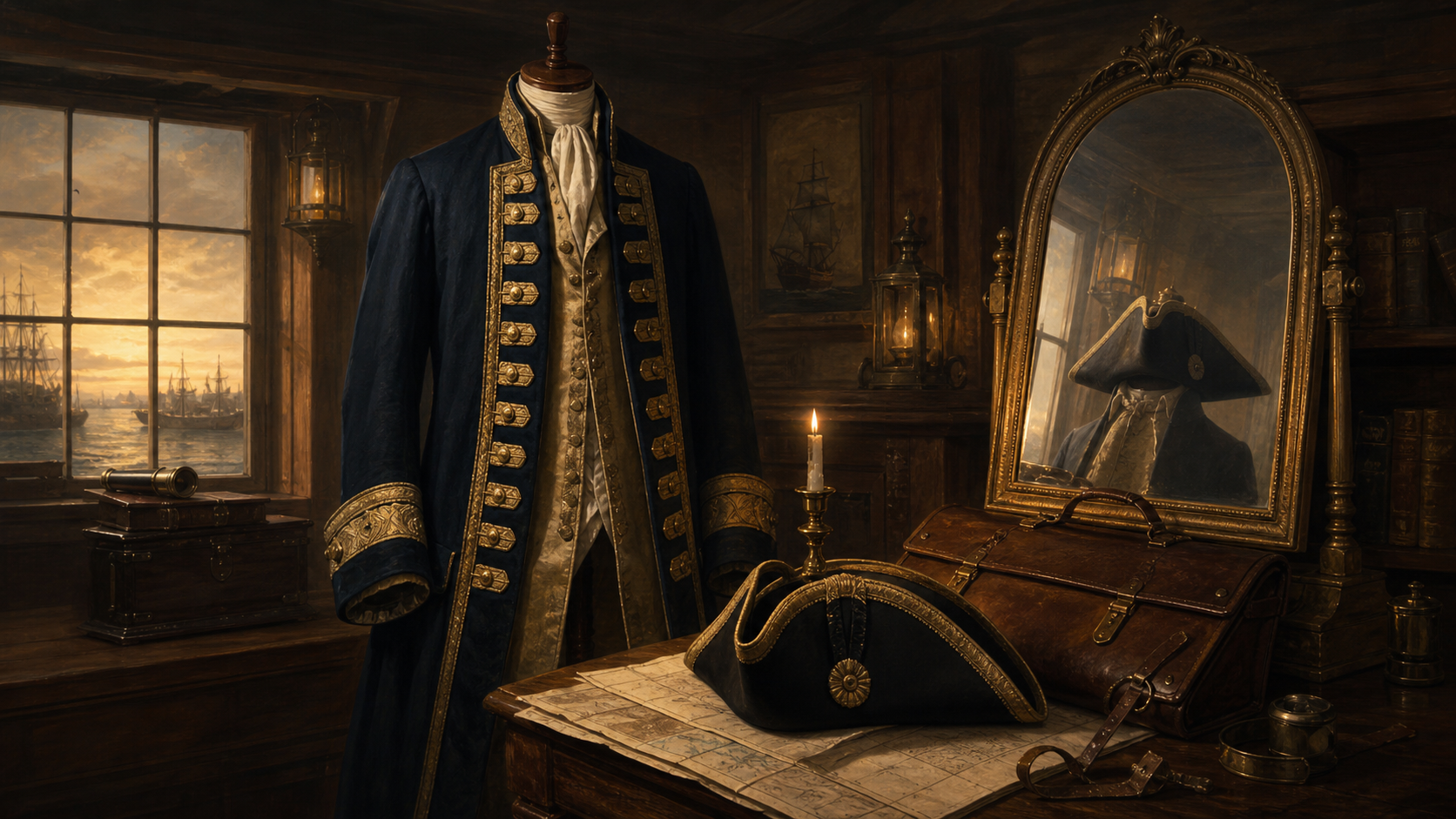
A pirate captain in popular imagination is easy to spot: huge hat, embroidered coat, tall boots, sash, pistols, and enough swagger to make the deck ask permission before moving.
That image is useful on a poster. It is less useful as history.
Pirate captains were not issued a universal uniform by some cheerful criminal tailor. Their clothing depended on period, region, money, weather, work, stolen goods, and the simple question of whether they were trying to command a ship, impress a port, frighten a prize, or celebrate ashore. Some probably looked much like the men around them. Others dressed richly when they could. The trick is not to choose one image and nail it to every captain who ever stole from a ship.
The Captain Still Had to Work
On smaller vessels especially, a pirate captain was not a floating nobleman who spent the voyage posing near the rail. He might still have to work, inspect, plan, shout, bargain, threaten, and survive the same weather as everyone else. Salt, tar, spray, sweat, cramped decks, and hard labor do not respect brocade for long.
Practical seamen’s clothing mattered because ships were workplaces before they were stages. Short jackets, loose shirts, breeches or slops, caps, kerchiefs, stockings or bare legs, and shoes when available could all make more sense than a long theatrical coat catching on every inconvenient corner of the ship.
A captain who looked too delicate for the work risked more than ridicule. Pirate authority depended on confidence. Men followed leaders who could find prizes, avoid danger, divide loot, and keep the crew alive. Fine clothes could help project success, but they could not replace competence. The sea has always been rude to overdressed fools.
Finery Was Real, But Not Routine
That does not mean rich pirate clothing is pure invention. Captains could take fine clothes as plunder, buy them with stolen money, receive them through trade, or wear them ashore to display success. Silks, brocades, damasks, lace, buttons, colored sashes, and military or naval-style coats could all enter the pirate wardrobe when money and opportunity allowed.
The important word is context. Finery was not everyday workwear for every pirate captain. It was display. A captain dressed richly in port, at a celebration, before a negotiation, or in a moment of deliberate intimidation was saying something. He had succeeded. He had taken wealth. He deserved attention. He was not merely another hungry sailor waiting for wages.
That message could matter. Pirate leadership was political inside the ship and psychological outside it. Clothing could help a captain look successful to his crew and frightening to his targets. It was not fashion for fashion’s sake. It was reputation with buttons.
Stolen Style Followed the Times
Pirate clothing also followed ordinary fashion more than fantasy admits. A captain in the seventeenth century would not dress exactly like one in the early eighteenth, and neither would look like a nineteenth-century theatrical pirate by right of birth. Naval, military, and civilian fashions all influenced what was available and impressive.
That is why the single pirate costume is so misleading. Popular culture has flattened generations of seamen into one convenient silhouette: tricorn hat, sash, boots, coat, sword. Some elements have roots in real clothing. The problem is that the costume drags them across time as if fashion never changed and sailors never noticed weather.
A better article treats each garment as evidence rather than decoration. What period is this? Who could afford it? Was it practical at sea? Was it taken as loot? Was it worn for work, status, intimidation, or shore-side pleasure? Those questions are less convenient than a costume rack, but they get closer to the truth.
The Captain’s Look Was Also a Performance
Pirates understood performance long before anyone called it branding. A captain who appeared richly dressed, heavily armed, and completely confident could make surrender feel sensible. That did not make him harmless. It made him efficient. Fear saved ammunition when it worked.
Clothing helped carry that fear. A fine coat, visible weapons, a colored sash, and a confident stance could turn a man into a symbol before he spoke. Blackbeard made this logic famous with theatrical terror. Other captains may have used quieter forms of the same idea: look successful, look dangerous, look like resistance will be expensive.
But performance had limits. A costume unsupported by reputation was only laundry with ambitions. A captain’s clothing mattered because it sat on top of power: crew loyalty, weapons, sailing skill, violence, and prizes already taken.
Why the Costume Version Survived
The costume-shop captain survived because he is immediately legible. A movie has seconds to tell the audience who matters. A huge hat and rich coat do the work faster than a lecture on maritime labor. That does not make the image useless. It makes it shorthand.
The real pirate captain is more interesting because he changes with the situation. On deck he might look practical. In port he might become splendid. In battle he might dress to frighten. In poverty he might wear whatever had not yet rotted, torn, or been traded away. Pirate clothing was not one style. It was a moving argument between work, theft, rank, theater, and survival.
So keep the great coat if the story earns it. Keep the sash when the period supports it. Keep the hat when it belongs there. Just do not mistake the costume for the man.
A pirate captain did not become captain because he dressed like one. He dressed like one when it helped him stay captain.


