Article
The legend, tested
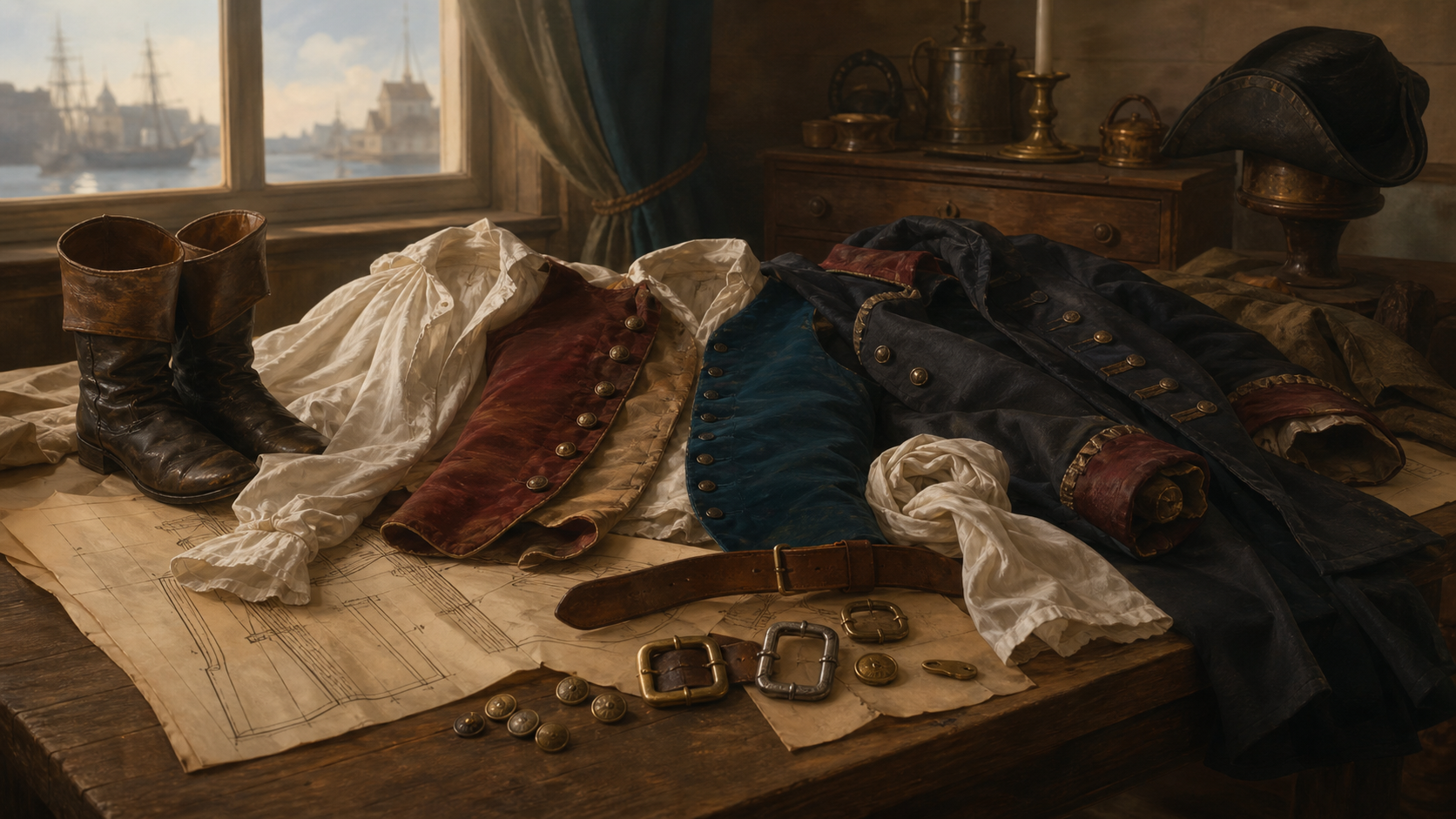
Hollywood, influenced by artists like Howard Pyle and N.C. Wyeth, has shaped a flamboyant pirate image: oversized hats, baggy shirts, long boots, and distinctive sashes. This portrayal, while captivating, is mostly a pro...
The pirate costume everyone recognizes is a beautiful historical mash-up.
It has the big hat, the sash, the boots, the open shirt, the heavy coat, the sword, the pistols, maybe an earring, and usually the facial expression of a man who has never once worried about laundry. It works because we recognize it instantly. It fails because pirates did not all dress that way, across all seas and centuries, as if issued a uniform by the Department of Maritime Villainy.
Hollywood did not invent every piece from nothing. Artists, stage tradition, naval dress, seamen’s clothing, and real historical garments all fed the image. The lie is not that no pirate ever looked dramatic. The lie is that one theatrical silhouette can stand for all of piracy.
There Was No Single Pirate Fashion
Pirates were not a nation. They were not a regiment. They did not have a standard uniform, an approved hat shape, or a quartermaster in charge of brand consistency. They were sailors, raiders, privateers, buccaneers, smugglers, mutineers, corsairs, and coastal fighters from different regions and periods.
That means clothing changed with time and place. A sixteenth-century sea dog, a seventeenth-century Caribbean buccaneer, an early eighteenth-century Atlantic pirate, and a nineteenth-century smuggler did not all walk out of the same wardrobe. They wore what their period, work, money, climate, and plunder allowed.
The ordinary sailor’s body is the place to start: practical clothes for hard work in wet, dirty, dangerous conditions. Shirts, jackets, breeches, caps, kerchiefs, sashes, stockings, shoes, and loose garments all mattered because men had to climb, haul, scrub, steer, fight, sleep, and survive. Fashion did not disappear at sea, but practicality kept kicking it in the shins.
The Costume Became a Shortcut
Popular culture loves visual shortcuts. Bank robbers get striped shirts and bags marked “swag.” Cowboys get hats and spurs. Pirates get a look that says “pirate” before anyone has to explain prize law, privateering, or the War of the Spanish Succession.
That shortcut became especially powerful through nineteenth-century illustration, stage tradition, and later film. Artists such as Howard Pyle and N.C. Wyeth helped define the romantic pirate look for modern audiences. Their pirates were not meant to be museum mannequins. They were designed to be vivid. They succeeded so well that the picture outlived the correction.
Movies then flattened the image further. A costume that may fit one approximate era badly becomes the default for all eras. Buccaneers, Golden Age pirates, fictional sea villains, and children’s party pirates all start borrowing from one another until history gives up and asks for a chair.
Real Pirates Dressed From Many Sources
A pirate’s wardrobe could come from ordinary sailor clothing, captured goods, personal preference, military castoffs, local markets, or clothing taken from prizes. Fine garments might be worn ashore or during moments of display. Rough working clothes might dominate the deck. A sash might hold weapons, but it might also simply be useful. A hat might signal style, rank, or weather protection depending on context.
Clothing could also reveal inequality. A captain who had access to fine fabrics and stolen luxury could dress better than the crew. A common sailor might wear patched, stained, salt-worn garments. Some pirates may have deliberately cultivated a threatening appearance. Others probably looked like tired seamen with bad prospects and worse manners.
The reality is less uniform but more alive.
The Famous Pieces Need Context
The big hat belongs to certain periods and ranks more than to all pirates everywhere. Tall boots are overused in costume because they look dramatic, though they were not ideal shipboard footwear for ordinary work. Loose shirts and sashes have more practical logic, but even they varied. Earrings, eye patches, hooks, and peg legs became symbols because stories needed instant recognition.
A careful pirate-attire page should not simply throw these items overboard. It should ask what each one can honestly support. Did pirates ever wear fine coats? Yes, some could. Did every pirate dress like a tavern aristocrat? No. Did sailors wear practical clothing suited to hard labor? Obviously. Did popular culture improve the silhouette until it became more familiar than the truth? Absolutely.
Why the Myth Is Hard to Kill
The costume survives because it is useful. It lets children play, actors signal danger, stores sell outfits, and readers recognize the subject at a glance. Nobody wants to attend a pirate party dressed as “a historically plausible exhausted Atlantic seaman with uncertain wages and mildew.” That may be accurate, but it is not much of a party invitation.
Still, accuracy makes the fantasy better. Once you know the costume is a collage, you can choose the parts more intelligently. A buccaneer look should not match a Golden Age privateer. A captain’s shore-side finery should not be mistaken for everyday deck clothing. A practical sailor outfit can be more authentic than a mountain of fake leather.
The better truth is simple: pirates did not have a single fashion. They had clothes, stolen goods, workwear, display, and legend. Hollywood stitched them into one gorgeous lie, and then everyone wore it to Halloween.


