Article
The legend, tested
In 1716, Robert Drury described pirates with detailed attire, indicating common pirate appearance. Typically, they wore short, loose jackets, different trouser styles, shoes (not boots) and various headgear, like bandann...
The Golden Age pirate is the one most people think they know.
He has a tricorn hat, a sash, a short jacket, pistols, a cutlass, maybe boots he should not be wearing on a wet deck, and the confidence of a man who has never had to mend anything. Some pieces of that image touch reality. The problem is the way costume turns a working sailor into a permanent parade float.
Golden Age pirate clothing was not one official look. It was a mixture of ordinary seamen’s dress, practical shipboard needs, stolen goods, period fashion, weapons, and display. A pirate might look like a rough sailor most of the time and a triumphant thief when plunder allowed.
Start With the Seaman
The common pirate was usually a seaman before he was a legend. That means short coats, shirts, breeches or slops, caps or hats, stockings, shoes when available, and garments suited to work. A ship demanded climbing, hauling, reefing, rowing, pumping, loading, fighting, sleeping badly, and being wet more often than dignity preferred.
Short coats made sense because long garments could get in the way. Practical clothing mattered because a pirate ship was a workplace. It was an illegal workplace, but the ropes did not care.
This is the correction at the heart of Golden Age dress. The everyday pirate probably looked much closer to a sailor than to a stage villain. The famous pirate look grew from real elements, but it selected the most dramatic ones and made them permanent.
Sashes Were Practical and Dramatic
Sashes appear often in pirate imagery, and they are not unreasonable. A sash could hold pistols, knives, or small items. It could help secure clothing. It could add color. It could also serve the simple purpose of making a man look more dangerous.
That last point matters. Pirates used appearance as part of intimidation. Visible weapons, bold clothing, and confident movement could help a boarding party seem larger than it was. A sash full of pistols was not only style; it was a warning system tied around the waist.
Still, not every sash in a costume should be treated as a historical document. The garment was plausible and useful, but the exact look varied by person, period, and source.
Jackets, Breeches, and the Problem of Cleanliness
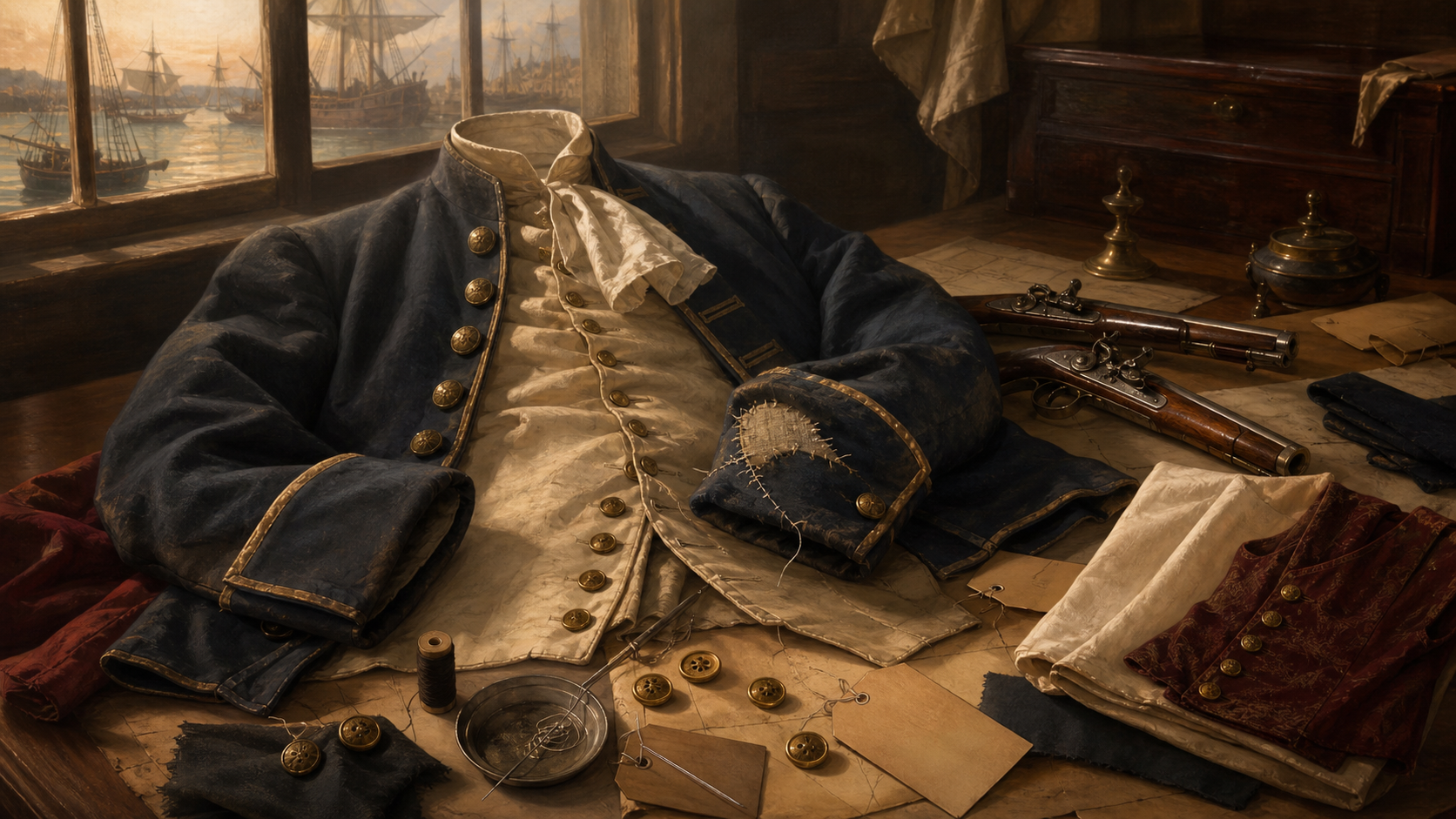
The Golden Age pirate did not live in a world of spotless costume pieces. Clothing at sea wore out quickly. Salt stiffened it. Tar stained it. Smoke, sweat, fish, blood, rain, and mildew had opinions. A sailor’s clothing was repaired, reused, traded, stolen, and adapted.
Jackets could be plain or better quality depending on status and luck. Breeches, slops, shirts, waistcoats, and head coverings could all vary. Some men may have looked surprisingly ordinary. Others, especially captains or successful pirates ashore, could dress more richly.
The key is not to flatten the range. A poor pirate and a successful captain celebrating in port did not necessarily look alike. A working deck and a shore-side tavern did not demand the same clothes.
Stolen Clothing Changed the Wardrobe
Pirates stole more than coins. Clothing, fabric, buckles, hats, shoes, coats, and luxury goods were all valuable. Fine clothing could be worn, sold, gifted, or used to mark status. This helps explain why some accounts describe pirates dressed richly. Theft made fashion mobile.
But stolen finery could also become impractical. A silk garment may impress in port and suffer at sea. A rich coat may signal success and still be a nuisance in foul weather. Pirate style was therefore situational. Wear the useful thing when working. Wear the impressive thing when being seen.
That is more human than the costume-shop version and much more believable.
Captains Had More Room for Display
Captains and successful officers had better chances to dress above the common sailor. They had more status, better access to plunder, and stronger reasons to perform authority. A captain dressed richly could signal success to his crew and danger to his enemies.
But even captains needed credibility. Clothes alone did not command a pirate crew. A captain had to find prizes, navigate danger, divide shares, and keep enough confidence aboard to avoid mutiny. Fine buttons looked better when backed by competence.
The most memorable pirate outfits probably belonged to moments of display rather than routine. Popular culture turned those moments into the whole life.
Why the Golden Age Look Survived
The Golden Age look survived because it is visually efficient. A sash, hat, coat, pistols, and cutlass announce piracy faster than a careful paragraph about maritime labor. Films and illustrators kept the parts that read best and ignored the parts that smelled worst.
A better PiratesInfo page can enjoy the image without obeying it. Golden Age pirates did wear jackets, sashes, weapons, and sometimes fine stolen clothing. They also wore ordinary seamen’s clothes, suffered through weather, patched garments, and dressed for work because work filled the day between robberies.
The real pirate wardrobe was not less interesting than the costume. It was more flexible. It shifted between labor and display, poverty and plunder, fear and fashion.
The costume gives us the pirate at his most recognizable. The history gives us the pirate trying to keep his shirt from rotting before the next prize.


