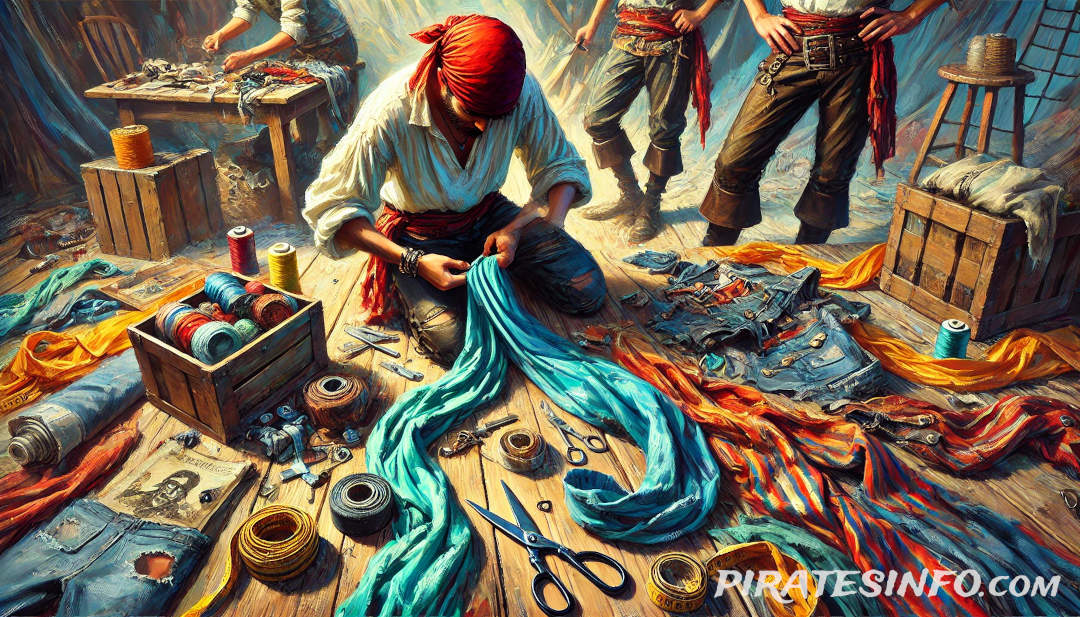
A DIY pirate costume works best when it looks assembled by a clever person, not rescued from a bargain bin during a small emergency.
The good news is that pirates are forgiving costume subjects. They live well in layers, mismatched textures, scarves, belts, pouches, old shirts, and clothes that look as if they have survived weather, poor decisions, and one tavern bill too many.
The bad news is that “forgiving” is not the same as “anything goes.”
A random striped shirt, plastic sword, and eye patch can read as pirate, but it may also read as someone who lost a fight with a costume drawer. A better DIY costume starts with a role, builds a practical base, adds one or two dramatic signs, and stops before the accessories stage a mutiny.
You do not need a perfect historical outfit.
You need a believable silhouette, comfortable layers, and enough personality that the costume feels intentional.
Start with the base
Open the closet before opening your wallet.
Look for:
- loose white, cream, tan, or faded shirts
- dark trousers, cropped pants, leggings, or skirts
- vests, waistcoats, cardigans, or sleeveless jackets
- scarves, bandanas, shawls, or fabric strips
- belts, especially wide or weathered ones
- boots, sandals, plain dark shoes, or neutral footwear
- old jewelry, rings, chains, beads, or simple pendants
- small bags or pouches
A pirate costume is mostly shape. Loose top, defined waist, layered middle, head covering, and one prop will carry the look farther than a printed shirt trying to impersonate a whole ship.
If the outfit looks too modern, add a sash. If it still looks modern, add a vest. If it still looks modern, change the shoes. Shoes betray more costumes than enemies ever did.
The no-sew pirate
The easiest DIY pirate costume needs no sewing.
Use a loose shirt. Roll the sleeves. Add dark pants or a skirt. Tie a scarf at the waist as a sash. Add a belt over the sash. Tie a bandana or scarf around the head. Add a pouch or small bag. Finish with boots or dark shoes.
That is already most of the costume.
For a captain, add a coat or long cardigan and a hat. For a deckhand, keep it simpler and rougher. For a tavern pirate, add a tankard prop or rolled paper map. For a treasure hunter, add a pouch of fake coins or a hand-drawn map.
No sewing. No panic. No plastic beard required.
Make fabric do the work
Fabric strips are secret pirate technology.
An old scarf can become a sash. A torn strip of cloth can become a headwrap, wrist tie, belt accent, or pouch tie. A scrap of patterned fabric can add color without making the whole outfit loud.
If you need a sash and do not have one, cut or fold a long piece of fabric. Red, burgundy, dark blue, brown, black, or striped fabric works well. It should look tied, not engineered.
A shirt can be aged slightly by choosing an off-white or worn-looking piece instead of bright modern white. Avoid actually damaging good clothing unless the household has voted and the shirt has no legal counsel.
Layering is the trick. A plain shirt plus sash plus vest plus scarf looks like a costume. A plain shirt alone looks like laundry.
DIY pirate for kids
Children need comfort first and accessories second.
A simple kid pirate costume can be:
- oversized shirt
- dark pants or leggings
- soft sash
- headscarf
- cardboard or foam sword if appropriate
- hand-drawn treasure map
- small pouch or paper coin bag
Avoid heavy belts, sharp props, complicated lacing, and hats that fall off every nine seconds. If the child is going to school, check whether toy weapons are allowed. A map, pouch, and bandana can do plenty of pirate work without creating a front-office incident.
For very young children, skip anything that tightens around the neck, drags underfoot, or requires adult engineering to use the bathroom. Historical authenticity is not worth a hallway disaster.
DIY pirate for adults
Adult DIY costumes can be more stylish because adults usually have better closets and fewer opinions about foam swords.
Try a loose shirt with black or brown trousers, boots, a scarf sash, wide belt, rings, and a vest. Add a coat for authority. Add a headscarf for a working sailor look. Add a tricorn-style hat if you want the classic captain silhouette.
For a subtler look, build a “privateer” costume: cleaner shirt, dark coat, belt, boots, map, and just enough suspicion to make customs officials nervous.
For a tavern pirate, use rolled sleeves, vest, sash, tankard, pouch, and a grin suggesting the story has been improved since lunch.
The adult costume wins when it feels like clothing first and costume second.
Make a map
A hand-drawn map is one of the easiest props.
Use brown paper, kraft paper, parchment-style paper, or a tea-stained page if you are feeling theatrical and responsible near liquids. Draw a coastline, island, dotted route, compass rose, skull, ship, or X. Crumple it gently. Roll it and tie it with string.
This is not historically rigorous, but it is costume gold. A map gives the hands something to do and tells the viewer the character is not merely dressed as a pirate but currently involved in trouble.
For children, a map can replace a weapon. For adults, it can make the costume more interesting than another plastic cutlass.
The map is probably lying. That is part of its charm.
Make a pouch or treasure bag
A small pouch adds depth immediately.
Use a drawstring bag, coin purse, small leather-like bag, fabric pouch, or even a cloth square tied around fake coins. Attach it to a belt or sash. Fill it lightly so it hangs with purpose.
Good pouch contents:
- fake coins
- shells
- beads
- folded note
- small compass-style prop
- rolled map piece
- toy gem
Do not fill it with anything heavy enough to turn the sash into a medical device.
A pouch makes the costume feel used. It suggests the wearer has stolen, traded, found, hidden, or at least organized something.
Hair, makeup, and weathering
Messy is good. Filthy is optional.
For hair, braids, loose waves, tied-back hair, scarves, beads, or a bandana can all work. The goal is movement and texture, not perfection.
For makeup, a little smudged eyeliner, sun-browned tone, scar effect, or weathered shadow can help. Use restraint. Pirates spent more time dealing with weather than contour palettes.
To weather the outfit, choose worn fabrics, muted colors, and off-center ties. You do not need to rub dirt into clothes unless the costume is for a photo shoot and the washing machine has signed a waiver.
A costume should look lived-in, not infected.
What to buy if you buy anything
A DIY costume can be mostly homemade, but a few purchased pieces can help.
Most useful upgrades:
- good sash
- wide belt
- simple vest
- tricorn-style hat
- toy cutlass
- pouch
- fake coins
- boot covers if shoes are unavoidable
- compass or telescope prop
Buy the pieces that are hardest to fake well. A good belt or sash can rescue an ordinary shirt. A decent hat can define a captain. A pouch or map can make a simple outfit feel complete.
Avoid buying too many accessories. The goal is not to carry an entire pirate gift shop on your body. That is what exits are for.
Common DIY mistakes
Do not use too many symbols at once. Eye patch, hook, parrot, sword, skull bandana, striped shirt, gold chains, and fake pistol can turn the costume into a pirate traffic jam.
Do not make everything black. Black is useful, but real shipboard clothing had more range, and an all-black outfit can look like a stagehand with a sword.
Do not ignore movement. If the wearer cannot walk, sit, bend, and carry a drink or candy bag, the costume is losing to furniture.
Do not forget the role. A deckhand, captain, smuggler, and treasure hunter should not all look identical. One clear choice makes the costume better.
The quick recipe
Here is the fastest useful version:
1. Loose shirt. 2. Dark trousers, skirt, or leggings. 3. Scarf sash at the waist. 4. Belt over the sash. 5. Vest or open jacket. 6. Headscarf or hat. 7. Pouch or map. 8. Neutral shoes or boots. 9. One optional prop. 10. Stop.
Stopping is underrated.
The better pirate is built, not bought
A DIY pirate costume should feel like a character, not a checklist.
The best version uses ordinary clothing, changes the silhouette with layers, adds texture with scarves and belts, and gives the wearer one strong story signal: map, pouch, hat, coat, or prop. It can be playful, stylish, historically inspired, or deliberately over-the-top.
But it should look chosen.
Pirates were not neat. They were not uniform. They were not always glamorous. They were sailors, rogues, privateers, smugglers, captains, failures, survivors, and legends after the fact.
That gives the DIY costumer permission.
Build the person first. The pirate will follow.


