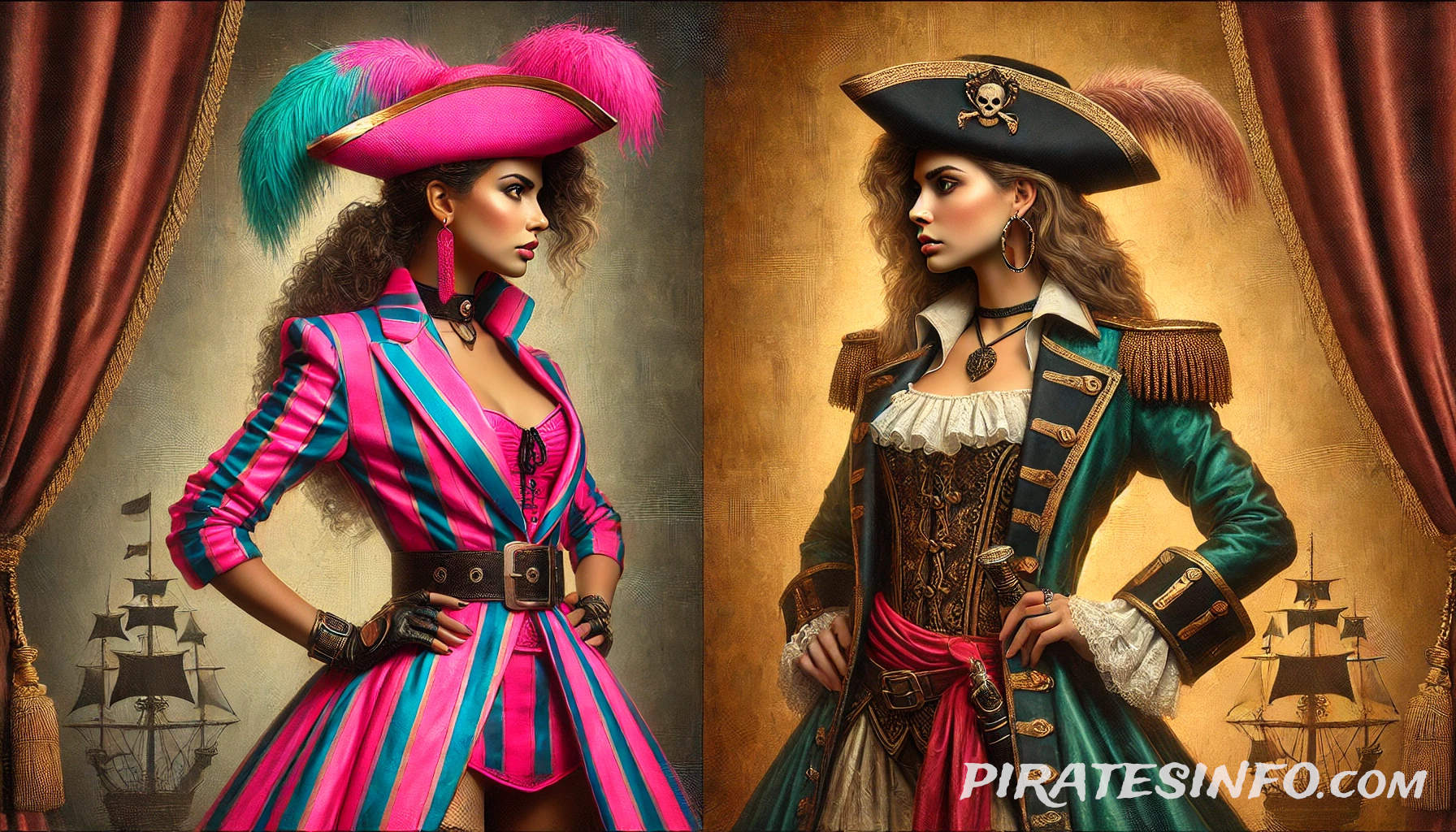
A classic pirate costume says “pirate” before the wearer has entered the room.
That is its great strength and its great danger.
The hat, sash, boots, sword, flowing shirt, skull detail, and dramatic coat are efficient. Nobody asks what you are supposed to be. No one mistakes you for an exhausted poet, failed musketeer, or man who got lost on the way to a Renaissance fair. The classic pirate costume does the job quickly.
The modern pirate costume asks a different question.
Can it be more comfortable? More flexible? More believable? More personal? Can it borrow from history without becoming homework? Can it let someone dance, walk, sit, climb stairs, supervise children, eat snacks, and still look like they might know which end of the ship is trouble?
Both styles can work.
The trick is knowing what you need the costume to do.
The classic pirate costume
The classic pirate costume is built from symbols.
It usually includes a loose shirt, vest or coat, sash, belt, boots or boot covers, headscarf or tricorn-style hat, and maybe a sword, eye patch, or treasure accessory. It is theatrical, fast, and easy to read. For Halloween, stage events, school plays, themed parties, and photos, that instant recognition matters.
The classic look exists because popular culture has trained everyone to read the shape. It is less about exact history and more about shared visual language. A large hat means command. A red sash means danger. A sword means adventure. Boots mean swagger. A skull means the costume is not here to discuss maritime insurance.
The classic version is best when you want the fantasy clearly visible.
It is weaker when the pieces are shiny, stiff, too thin, or overloaded. A full costume set can look good from ten feet away and tragic up close. The solution is not always to spend more. Often it is to replace one cheap element with one better one: real scarf instead of printed headwrap, proper belt instead of fabric strip, simple boots instead of plastic covers, matte shirt instead of glossy costume top.
Classic costumes work. They just need editing.
The modern pirate costume
A modern pirate costume is less locked into one silhouette.
It might use a linen-look shirt, dark jeans or trousers, boots, sash, vest, coat, scarf, jewelry, pouch, and one strong prop. It may borrow from fantasy, steampunk, historical reenactment, coastal style, tavern wear, or adventure clothing. It can look more lived-in and less like it came folded around cardboard.
The modern approach is especially good for adults who want to look stylish rather than purely comic. It can also be more comfortable because it uses real clothing as the base. A person wearing actual trousers and shoes will usually have a better evening than someone trapped inside a one-piece costume with opinions.
Modern costumes also allow better character choices. You can build:
- a practical deckhand
- a polished privateer
- a dangerous captain
- a port smuggler
- a tavern rogue
- a sea-worn treasure hunter
- a historically inspired woman pirate
- a kid-friendly adventurer
The modern costume is not always more authentic. It can drift into fantasy just as easily as the classic costume. But it gives you more control.
Which is more historically accurate?
Neither, automatically.
A classic costume often reflects the pirate of movies, storybooks, stage shows, and Halloween racks. A modern costume may look more natural but still mix centuries, regions, and social classes in ways a historian would notice immediately and politely suffer through.
A historically inspired pirate outfit starts with sailor clothing: shirt, trousers or slops, jacket or waistcoat, sash or belt, head covering, practical shoes, and layers that allow movement. It uses muted colors, natural-looking textures, and accessories that suggest work rather than decoration.
The more your costume looks like clothing someone could actually wear while hauling rope, standing watch, climbing, fighting, sleeping badly, and running from consequences, the closer it feels to the record.
That does not mean you must give up drama.
Pirates understood appearance. Captains could cultivate fear. Stolen clothing could raise status. Fine coats existed. Bright sashes existed. Style had a job. The difference is that real style sat on top of practical need.
The best costume remembers the need.
Comfort decides more than people admit
A costume that looks wonderful for seven minutes and becomes unbearable for four hours is not a costume. It is a small personal lawsuit.
Classic costumes can be comfortable if the fabric breathes, the waist fits, the hat stays put, and the props are not too heavy. Modern costumes often win here because they use real clothes: actual boots, actual trousers, actual belts, actual shirts.
For children, comfort should decide almost everything. A child pirate needs soft fabric, safe props, easy movement, and pieces that survive running. A historically perfect sash is not worth tears in the parking lot.
For adults, consider the event. A standing party can tolerate more dramatic boots. A seated dinner needs a coat that allows arms to bend. A hot outdoor event needs lighter fabric. A cold festival needs layers that are real, not decorative lies.
Pirates suffered enough. Your costume does not have to continue the tradition.
Classic is better when...
Choose a classic pirate costume when you need quick recognition.
It is ideal for:
- Halloween parties
- school plays
- group costumes
- themed events
- stage use
- photographs
- kids who want the obvious pirate look
- anyone who wants the fantasy more than the footnotes
Classic costumes are also good when multiple people need to coordinate. A group of children in scarves, sashes, and hats reads instantly as a crew. A party host can use classic elements to set the mood quickly.
The key is to improve the weak points: replace flimsy accessories, add real layers, avoid too much plastic, and make sure the wearer can move.
Modern is better when...
Choose a modern pirate costume when you want personality, comfort, or a less obvious look.
It is ideal for:
- adults who want style
- Renaissance fairs or festivals
- cosplay-adjacent outfits
- historical-inspired looks
- tavern or smuggler characters
- photo shoots
- costume parties where everyone else will wear the same hat
- people who dislike one-piece costumes
Modern costumes are also easier to adjust. You can start with normal clothes and add pirate identity through scarf, sash, belt, pouch, coat, jewelry, and prop.
This makes the costume more reusable. A good shirt, vest, belt, or boots can serve many future costumes. A cheap printed jumpsuit can mostly serve the trash bin, though it may do so with confidence.
The hybrid approach is usually best
The strongest pirate costumes often mix classic and modern.
Use classic symbols for readability: hat, sash, sword, coat, scarf.
Use modern or real clothing for comfort and texture: shirt, trousers, boots, belt, vest.
Then choose one historically inspired detail: muted colors, practical layers, weathered fabric, a map instead of a giant plastic weapon, a pouch that looks useful, or a coat that suggests rank without shouting.
This hybrid approach gives you the best of both worlds. The audience sees pirate immediately. The outfit still looks like someone chose the pieces with a brain attached.
How to choose
Ask four questions.
First: Who is wearing it? A child, adult, performer, party guest, teacher, host, or reenactment-curious history nerd?
Second: Where is it being worn? Indoors, outdoors, school, bar, theater, festival, ship-themed event, Halloween route, or photo setup?
Third: How long must it last? One hour? All night? Multiple events? Several years of children growing through chaos?
Fourth: What story should it tell? Captain, deckhand, privateer, smuggler, tavern rogue, treasure hunter, or movie pirate in full glory?
Once those answers are clear, the choice gets easier.
Classic gives instant signal.
Modern gives control.
Hybrid gives the best chance of looking like a pirate and feeling like a person.
The better costume wins by intention
A costume does not fail because it is classic. It fails when it is lazy.
A costume does not succeed because it is modern. It succeeds when it is coherent.
The best pirate costume has a clear role, comfortable base, layered texture, one or two strong accents, and props that support the character. It does not need to pass a doctoral exam. It needs to look like someone stepped out of a sea story with enough practical sense to survive the first chapter.
Classic or modern, that is the real test.
The pirate should look ready for adventure.
Not ready for return shipping.


