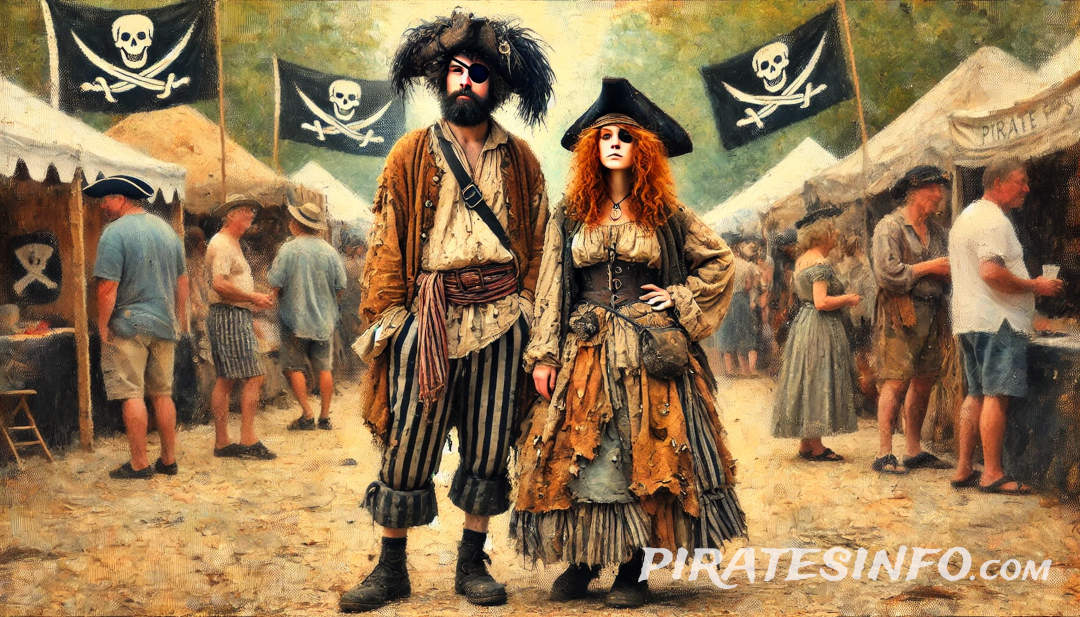
Authentic pirate costumes begin with a disappointing truth for anyone hoping history came pre-packaged with a skull button.
Pirates were sailors.
That does not make them boring. It makes them better. Real shipboard clothing had to work: climb, haul, sweat, dry, tear, patch, hide a knife, survive weather, and still occasionally impress someone in a port tavern who had poor judgment and money. Pirates did not dress like a modern costume aisle. They wore practical clothing, stolen clothing, patched clothing, ordinary sailors' clothing, and sometimes fine clothing taken from people who had recently become less attached to it.
So an authentic pirate costume is not one exact uniform.
It is a way of building an outfit around function, texture, class, climate, and a little theatrical nerve.
Start with the sailor, not the skull
Most pirates came from the working world of the sea: merchant ships, privateering, naval service, fishing, smuggling, coastal trade, or other hard maritime labor. Their clothing reflected that world.
A convincing base usually includes:
- a loose shirt
- trousers, slops, or breeches
- a vest or waistcoat
- a sash or belt
- a headscarf or simple hat
- practical shoes or boots
- a jacket or coat if the character has rank, money, or stolen taste
The clothes should look like they can move. If the wearer cannot bend, sit, walk, and raise an arm without declaring war on a seam, the costume has betrayed the sea.
Authenticity does not mean discomfort. It means the choices make sense.
Use natural-looking textures
The fastest way to improve a pirate costume is to reduce shine.
Look for fabrics that suggest linen, cotton, canvas, wool, leather, rope, brass, and worn cloth. Costume materials do not have to be museum-grade, but they should avoid looking like they were printed yesterday by a machine with a deadline.
Matte beats glossy. Weathered beats perfect. Layers beat printed detail. A simple cream shirt with a real sash and vest looks more convincing than a shiny one-piece costume covered with fake lacing.
This is why thrift-store pieces can work so well. A loose shirt, old vest, scarf, wide belt, and dark trousers can become more believable than a full costume set if the pieces feel touched by life.
Pirates did not dress in fonts. They dressed in fabric.
Color should look lived in
An authentic-looking pirate outfit does not need to be dull, but it should avoid looking freshly invented by a candy wrapper.
Good base colors include:
- off-white
- tan
- brown
- faded blue
- charcoal
- gray
- rust
- muted red
- dull green
- weathered black
Then add one stronger color: a red sash, patterned scarf, dark blue coat, brass-toned buckle, or bright headwrap.
Fine clothing existed, and pirates could steal it. A successful captain might dress better than a common sailor. But fine does not mean flawless. Salt air, travel, violence, and shipboard work are not kind to clothes. Even a dramatic outfit should feel like it has touched the world.
Captains dressed differently from deckhands
A common deckhand costume should be practical. Shirt, trousers, sash, scarf, vest, and pouch are enough. Add a simple belt, neutral shoes, and maybe a knife-like prop if the setting allows it.
A captain can carry more authority: a longer coat, better hat, boots, cleaner shirt, larger buckle, and a prop such as a map, telescope, or document case. The captain's outfit should look like status, not clutter.
A privateer or officer-leaning costume can be more polished. That is useful for characters who live near the legal gray zone: not quite pirate in their own story, absolutely pirate in someone else's complaint.
The mistake is dressing every pirate like the captain. Real ships had hierarchy, labor, dirt, fatigue, and men who were not issued dramatic coats by the Department of Swashbuckling.
What about stripes?
Stripes can work, but they are not a magic authenticity button.
Modern pirate costumes lean hard on stripes because stripes read instantly from across a room. They are useful stage language. They are not proof that every pirate dressed like a seaside mime who lost discipline.
Use stripes sparingly. A striped sash, scarf, or shirt can look good if the rest of the outfit feels grounded. Too many stripes turn the costume into a cartoon. The same is true of skull prints, giant buckles, and plastic boot covers.
One loud element is style.
Five loud elements are a committee meeting.
Women's authentic pirate costumes
Historically inspired women's pirate costumes do not need to be limited to corsets, skirts, and decorative helplessness.
Women associated with piracy, including Anne Bonny and Mary Read, are often remembered through stories of practical clothing, disguise, and fighting aboard ship. The details of those lives need careful handling, but the costume lesson is useful: movement matters.
A strong historical-inspired outfit for a woman can use trousers, shirt, sash, vest, coat, boots, scarf, skirt, or stays depending on the chosen character. The best version gives the wearer agency. It should look like she can climb, command, run, fight, or at least leave the tavern before the bill arrives.
A skirted costume can also work if it is built for the role: tavern keeper, coastal smuggler, privateer-adjacent figure, port-world character, or captain with deliberate theatrical style. Authenticity is not one silhouette. It is whether the silhouette makes sense.
Children's authentic pirate costumes
For children, comfort outranks everything.
A child pirate costume should be soft, safe, washable if possible, and easy to move in. Use elastic waistbands, soft sashes, lightweight scarves, and props that will not create trouble at school or events.
The historically inspired version is simple: loose shirt, dark pants or skirt, sash, headscarf, vest, and a map or pouch. A child does not need a plastic arsenal to look like a pirate. Often the map does more work than the sword.
If the costume is for school, a museum event, or a history project, lean practical: sailor layers, muted colors, and a short note explaining that real pirates dressed more like working seafarers than movie captains.
The teacher will survive the disappointment.
Accessories that help
The best accessories suggest use.
A pouch suggests coins, tools, tobacco, food, or stolen small things. A map suggests travel and trouble. A telescope suggests command. A sash adds color and shape. A belt anchors the outfit. A scarf keeps hair, sun, and sweat under control. A tankard suggests tavern storytelling. A fake coin necklace suggests treasure without requiring a chest the size of regret.
An eye patch can work, but it is overused. A hook can work, but it turns the whole costume into a joke unless the role wants that. A parrot can work for a playful look, but it is more icon than evidence.
Choose accessories that tell the chosen character's story.
The authentic compromise
A truly accurate outfit for a specific sailor in a specific decade and port is a research project. That can be wonderful, but most costume buyers do not need that level of precision.
The useful compromise is this:
Make the costume look like clothing first and pirate clothing second.
That means practical layers, natural-looking materials, muted colors, useful accessories, and a clear role. Add drama, but let the drama sit on top of work.
The costume rack gives you pirate symbols. History gives you pressure: weather, rope, hunger, stolen coats, rank, port life, and the need to move fast when the wrong sail appears.
A good authentic pirate costume borrows from both.
It lets the wearer look like they belong in the story without pretending the story was clean.


