Pirate culture
Custom, symbol, and story
Port Royal's pirate reputation rests on real privateering wealth, colonial vice, and the 1692 earthquake that turned a boomtown into a warning.
Port Royal did not become infamous because pirates were good at branding.
It became infamous because the money was real.
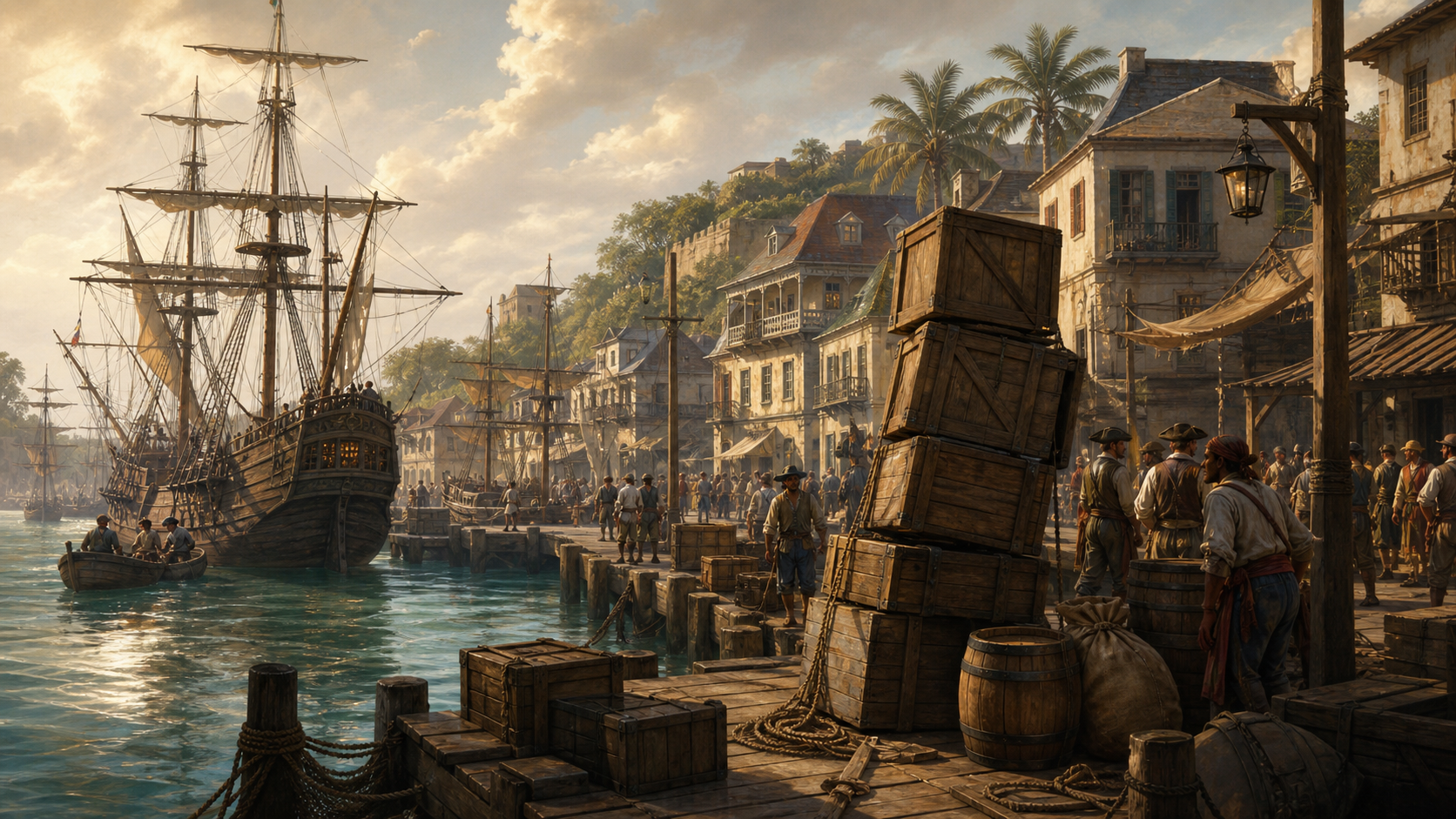
In the seventeenth-century Caribbean, Port Royal sat at the edge of empire, trade, privateering, slavery, war, vice, and opportunity. It was a harbor city where ships came in heavy with goods and men came ashore ready to spend. It was a place where violence at sea could become profit on land before anyone had time to ask too many moral questions.
Then, in 1692, the earth opened.
The earthquake that shattered Port Royal did what disasters often do to notorious places: it turned geography into sermon. A wealthy, violent, hard-drinking town slid into catastrophe, and later memory could not resist the lesson. The wickedest city had been judged. The story was too neat to leave alone.
History, naturally, is messier.
Why Port Royal mattered
Jamaica’s position made Port Royal valuable.
After England took Jamaica from Spain in 1655, the island became a forward base in a Caribbean still shaped by imperial rivalry. Spain remained the great target. English Jamaica needed defense, money, labor, trade, and ways to survive in a hostile region. Privateers and buccaneers offered one answer. They could harass Spanish shipping and settlements while bringing prize goods and spending power into the colony.
That arrangement made Port Royal rich and morally flexible.
A privateer who hurt Spain could look useful. A buccaneer who brought in wealth could become welcome. Taverns, merchants, officials, dockworkers, sex workers, enslaved people, sailors, soldiers, and traders all crowded into the same economy. The city’s reputation for vice did not float above its economy. It grew from it.
Port Royal was a machine for turning maritime violence into shore-side money.
The privateering city
The pirate version of Port Royal often forgets the paperwork.
Many of the men associated with the city were privateers or buccaneers operating in a world where English authorities found anti-Spanish violence useful until they did not. The distinction matters. A privateer could claim authorization. A pirate could not. But the experience of the Spanish victim might not feel softened by the English paperwork.
Port Royal thrived in that gray zone. Ships came in with prize goods. Merchants handled cargo. Drink houses and brothels swallowed wages and shares. Officials tolerated what served the colony. Respectability and robbery did not always enter by separate doors.
That does not mean everyone in Port Royal was a pirate or that the city was only a den of criminals. It was a colonial port. It had commerce, families, military concerns, legal trade, churches, administration, and ordinary lives. The wicked reputation became famous because it sat on top of real wealth and visible excess.
A city does not need to be all sin to become useful as a warning.
Vice was part of the economy
The “Sin City” label survives because it is easy to picture.
Sailors with sudden money. Taverns loud enough to scare the furniture. Gambling, drinking, sex, knives, sermons, disease, bragging, and the kind of financial decision-making that ends badly before sunrise. It is a vivid image, and some of it is grounded in the rhythms of a port full of transient men and violent wealth.
But the vice should not become a cartoon.
Port Royal’s economy also rested on slavery and imperial exploitation. Jamaica’s plantation world, forced labor, transatlantic trade, and military position all belonged to the background. If the city becomes only a pirate party, the article loses the darker system that made the party possible.
The money came from ships, war, trade, privateering, slavery, and colonial ambition. The tavern was where some of it went afterward.
The earthquake made meaning too easy
On June 7, 1692, a devastating earthquake struck Port Royal.
Parts of the city collapsed, sank, or were swallowed by liquefied ground and sea. Buildings fell. People died. The physical destruction was enormous, and the psychological afterlife was even larger. A city with a reputation for vice had suffered a sudden disaster. For many observers, the moral interpretation arrived almost before the dust settled.
That is the danger of perfect symbolism.
The earthquake was a geological event, not a footnote written by an offended preacher. But notorious places invite moral storytelling. Port Royal’s collapse became a warning because it was narratively convenient: wealth, wickedness, and then the ground itself refusing to hold.
The sermon version is memorable. The historical version is more interesting. A colonial boomtown built on a fragile spit of land, dependent on violent maritime systems and crowded with wealth, people, and risk, suffered a real natural disaster. Later writers turned the disaster into judgment because the city’s reputation made the interpretation too tempting.
What survived after the fall
Port Royal did not vanish from history in one clean gulp.
The disaster changed the city’s role, damaged its standing, and helped shift economic gravity elsewhere, especially toward Kingston over time. But the memory of Port Royal remained powerful because it offered everything pirate legend likes: wealth, vice, danger, privateers, a harbor, and a spectacular ending.
Archaeology has added another layer. Sunken and preserved remains make Port Royal more than a moral tale. They give researchers a rare material glimpse of a seventeenth-century colonial port abruptly damaged and partly preserved by catastrophe. The city is not only a legend about sin. It is an archive under water and mud.
That is a better reason to care than the old sermon.
Why Port Royal still matters
Port Royal matters because it shows the shore-side economy of piracy and privateering.
Pirates and privateers needed ports, buyers, taverns, officials, warehouses, repair, information, and people willing to profit from violence they did not personally commit. Port Royal made that system visible. It was not the only such place, but it became one of the most famous because its wealth, reputation, and catastrophe lined up too neatly for memory to ignore.
For the wider stronghold route, follow Tortuga, Nassau, and Madagascar. For the legal and political route, continue to Henry Morgan and privateering. For the myth route, ask why places with real violence become easier to enjoy once they are safely ruined.
Port Royal was not wicked because the earth later opened.
It was wicked, wealthy, useful, vulnerable, and human long before that. The earthquake did not create the story. It gave the story an ending so dramatic that history has spent centuries trying not to look too pleased with it.

