Pirate culture
Custom, symbol, and story
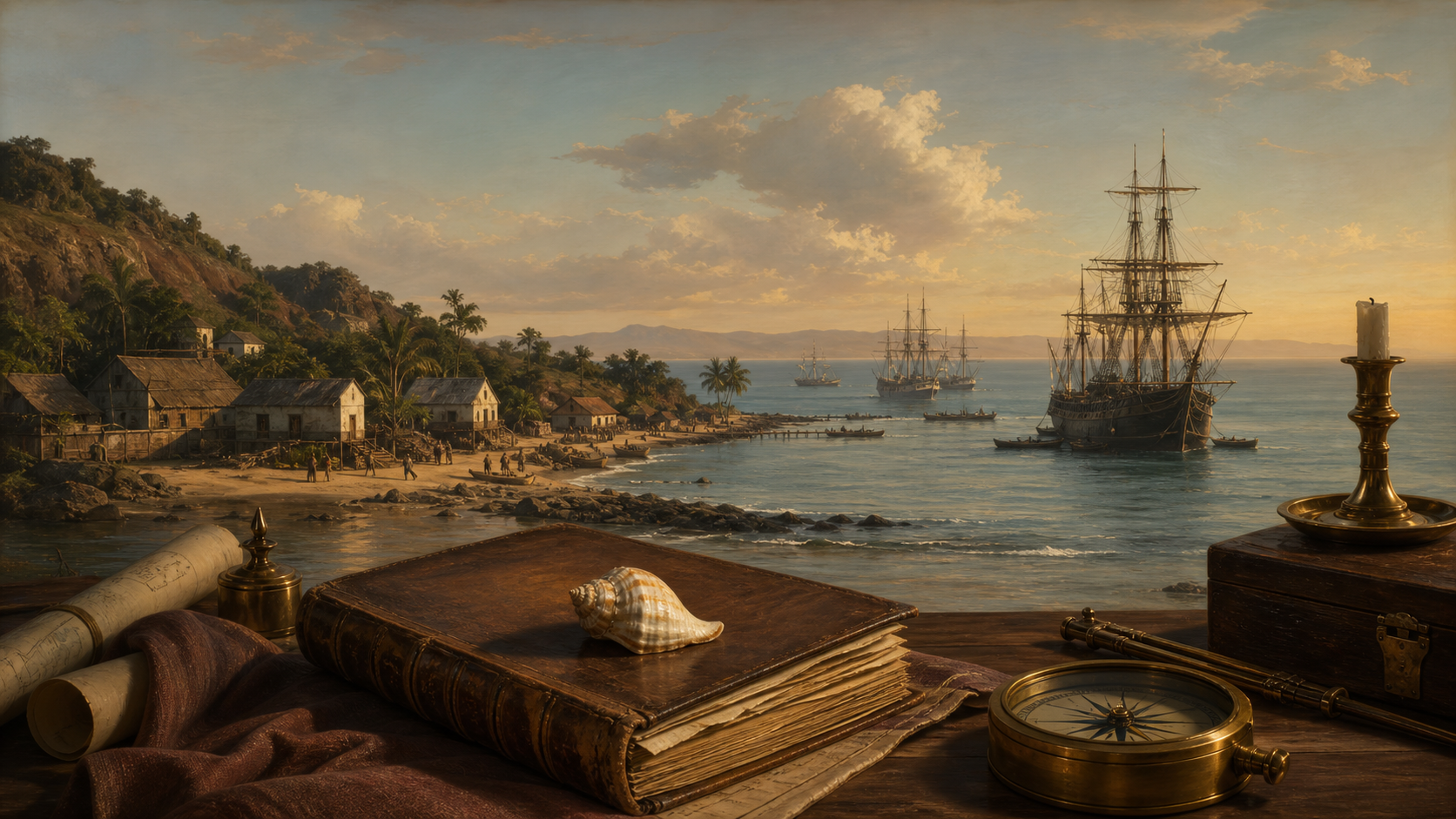
Madagascar, an island jewel of the Indian Ocean, became a pirate haven in the 17th and 18th centuries. Attracting buccaneers like Captain Kidd and Thomas Tew, its isolated coves and abundant resources made it ideal for p...
Madagascar was useful before it was legendary.
That is the first thing to remember.
Long before European writers turned it into a place of pirate kings, hidden utopias, tropical wealth, and suspiciously convenient freedom, Madagascar was a real island in a real Indian Ocean. It sat near routes that carried goods, pilgrims, enslaved people, officials, merchants, soldiers, and fortunes between the Red Sea, India, East Africa, Arabia, and Southeast Asia. It had harbors, coves, provisions, fresh water, beaches for careening ships, and distance from many of the authorities who wanted pirates hanged more efficiently.
In other words, it was not a fantasy because pirates dreamed well.
It was a fantasy because the geography made the dream look almost practical.
Why Madagascar mattered
Pirates needed more than targets.
They needed somewhere to repair ships, take on water, find food, divide goods, hide from patrols, recruit men, trade stolen cargo, and wait for the next opportunity. The Indian Ocean offered prizes that could be astonishingly rich, but it also demanded range and support. A pirate ship far from friendly ports was a hungry workplace with guns. Without access to shore, it could become a coffin with better flags.
Madagascar offered possibilities.
The island’s size, coastline, and position made it attractive to European sea rovers operating far from Atlantic centers of power. Its western and northern coasts gave access to places where ships could anchor, repair, and negotiate. Nearby trade routes promised prizes. Distance complicated pursuit. Local politics created opportunities for alliance, conflict, trade, and misunderstanding.
That last point matters. Madagascar was not empty scenery waiting for pirates to become interesting. It had its own peoples, rulers, economies, conflicts, and coastal networks. A serious article cannot treat the island as a pirate hotel with palm trees. Pirates entered an existing world and made arrangements within it, sometimes through trade, sometimes through violence, sometimes through marriage, alliance, or intimidation.
The island was not a blank map. It was a crowded one.
The pirate settlement problem
Pirate settlements around Madagascar have attracted enormous fascination because they appear to offer the one thing most pirate stories cannot: a place where outlaws might build something instead of merely stealing and running.
Some pirates did settle, at least temporarily. Some formed relationships ashore. Some joined local communities or created mixed households. Some used island bases as practical support points for Indian Ocean cruising. Those facts are interesting enough.
Then the legend adds furniture.
The greatest example is Libertalia, the supposed pirate utopia often associated with Captain Misson in later literature. Libertalia is a magnificent idea: pirates rejecting tyranny, sharing wealth, building a free community, and becoming better philosophers than anyone reasonably expected from armed sea robbers. It is also best treated as legend or literary invention rather than a securely documented pirate republic.
The idea survived because it gives readers what they want piracy to mean: freedom without accounting, rebellion without victims, a better society built by men who somehow stopped being predators the moment the island became pretty enough.
The real Madagascar story is harder and more interesting. It involves supply, trade, local relationships, violence, survival, and the way distant places became screens for European fantasies.
The Indian Ocean changed the scale
Madagascar also widens the pirate map beyond the Caribbean.
The popular pirate imagination keeps drifting back to Nassau, Tortuga, Port Royal, and the American coast. Those places matter. But some of the richest and most consequential pirate actions happened in the wider Indian Ocean world. Henry Every’s attack on the Mughal ship Ganj-i-Sawai in 1695 created a diplomatic crisis because the target was connected to Mughal power, pilgrimage, trade, and English commercial privilege.
That is the kind of world Madagascar touched.
A pirate operating in the Indian Ocean was not merely chasing a chest. He was moving through routes tied to empires, religious travel, company trade, local rulers, and diplomatic consequences. A prize could be more than cargo. It could become an international problem. Madagascar’s usefulness came from its position near those routes and from the difficulty of imposing order across such distances.
Piracy followed weak points. Madagascar sat near many of them.
Why Europe wanted the island to be a pirate kingdom
European readers loved Madagascar because it allowed them to imagine piracy at a safe distance.
A pirate in London or Jamaica could be dragged into court. A pirate on a distant island could become a king, a philosopher, a husband to a princess, a hoarder of impossible treasure, or the founder of a society where normal rules lost their boots in the surf. Distance made invention easier.
The island became a place where inconvenient details could be softened. Violence became adventure. Local people became background. Trade became treasure. Temporary arrangements became kingdoms. Rumor became geography.
That does not mean everything said about pirates in Madagascar is false. It means the story needs sorting. Which claims rest on records? Which rest on travel writing, rumor, or later fiction? Which turn Malagasy communities into scenery for European self-invention? Which are true enough to keep, but smaller than the legend wants them to be?
Those questions should stay visible.
The real story is better than the postcard
The stronger Madagascar article does not need to shout in fake pirate dialect or promise buried republics under every palm.
The real story already has scale: Indian Ocean routes, careening beaches, ship repair, local trade, mixed communities, European fugitives, company power, Mughal outrage, island politics, and the long afterlife of a place that became more legendary the farther it moved from ordinary evidence.
Madagascar mattered because it was practical. The legend survived because practicality became romance once the guns went quiet.
For readers following the factual route, connect this page to Henry Every, Indian Ocean piracy, and the Wokou as examples of piracy outside the familiar Caribbean frame. For the warmer legend route, connect it to pirate utopias, Libertalia, and the dangerous appeal of imagining outlaws as founders of freedom.
Madagascar’s pirate past is not a simple paradise story.
It is what happens when geography, trade, distance, violence, and European imagination all find the same island and start making claims on it.

