Pirate culture
Custom, symbol, and story
Tortuga, a Caribbean island off Haiti's coast, became a notorious pirate haven in the 17th century. Originally settled by the Spanish, it was soon overtaken by the French and English, who welcomed buccaneers. These pirat...
Tortuga became famous because it was useful.
That sounds less romantic than “pirate island,” but it explains more.
The island sits off the northern coast of Hispaniola, close enough to matter and rough enough to frustrate easy control. In the seventeenth century, that position made it attractive to hunters, smugglers, raiders, privateers, settlers, and men who lived in the gaps between empires. Tortuga was not a theme park with better hats. It was a contested piece of Caribbean geography where opportunity and violence kept finding each other.
The name itself helped. Tortuga — turtle island — sounds as if it had been invented by a novelist with a good ear. But the real island did not become important because of the name. It became important because of what the surrounding world made possible.
The Caribbean was already an argument
Tortuga’s pirate history begins with the wider Caribbean.
Spain claimed enormous authority in the region, but authority on a map is not the same as authority in every cove. Other European powers pressed into the spaces Spain could not fully hold. French, English, Dutch, and other adventurers, traders, raiders, and settlers moved where profit and weakness invited them. Islands, harbors, and coastlines became points in a struggle over land, trade, labor, and maritime violence.
Tortuga’s proximity to Hispaniola mattered because Hispaniola was valuable, contested, and difficult to police completely. The island offered a base near Spanish routes and settlements, a place where men could hunt, trade, repair, plan, drink, hide, and argue over plunder. It was not safe. It was not orderly. It was useful.
Useful is often more important than safe in pirate history.
Buccaneers before the costume
The buccaneer world around Tortuga grew from rough frontier economies as much as from piracy itself.
The word buccaneer points back toward hunters and meat-smoking practices in the Caribbean before it became a romantic label for sea raiders. These men were not born as polished pirates with black flags already folded in their pockets. They were hunters, sailors, smugglers, fighters, deserters, escaped servants, fortune-seekers, and opportunists. They moved between land and sea because the border between the two could be profitable.
That movement matters. A buccaneer might hunt cattle, trade illegally, raid Spanish settlements, join a privateering expedition, or slide into piracy depending on war, opportunity, and who was willing to call the violence useful. Tortuga offered a place where those activities could gather.
The result was not freedom in the clean modern sense. It was a rough male world of violence, hunger, disease, alcohol, bargaining, and sudden profit. A man might escape one hierarchy only to enter another with fewer rules and sharper knives.
Why Tortuga attracted trouble
Pirate and buccaneer bases needed certain things.
They needed access to targets. They needed shelter. They needed food and water. They needed shore communities, buyers, fences, informants, and places to repair ships. They needed enough disorder or protection to keep authorities from immediately shutting them down. Tortuga had enough of those ingredients to become important.
Its position near Hispaniola gave access to Spanish wealth and traffic. Its rough terrain and island setting complicated control. Its population and visitors created a market for goods, information, and violence. It could serve as refuge, staging ground, and marketplace depending on who held power at the moment.
But bases like Tortuga also brought their own instability. Men who lived by raiding did not become peaceful because they had found a convenient anchorage. Rivalries, drunkenness, revenge, command disputes, and competing national interests could turn the refuge into another battlefield. Pirate strongholds were often less like nests and more like pressure cookers with rum.
The island changed as empires changed
Tortuga’s importance shifted with colonial politics.
War made raiders useful. Peace made them awkward. A buccaneer who harassed Spain might be tolerated by Spain’s enemies until diplomacy required a cleaner face. A settlement that looked like a strategic asset one year could look like a liability the next. The Caribbean did not stop being violent when a treaty was signed; it simply gave everyone new words to argue with.
That is why Tortuga should be read as part of imperial history, not only pirate legend. It was shaped by Spanish pressure, French settlement, English activity, privateering, smuggling, and the slow hardening of colonial control. The island’s pirate reputation grew from the fact that states were competing, enforcement was uneven, and violence could be profitable when pointed in the right direction.
The pirate label often tells us who was complaining.
The legend polished the dirt
Later culture turned Tortuga into a shorthand.
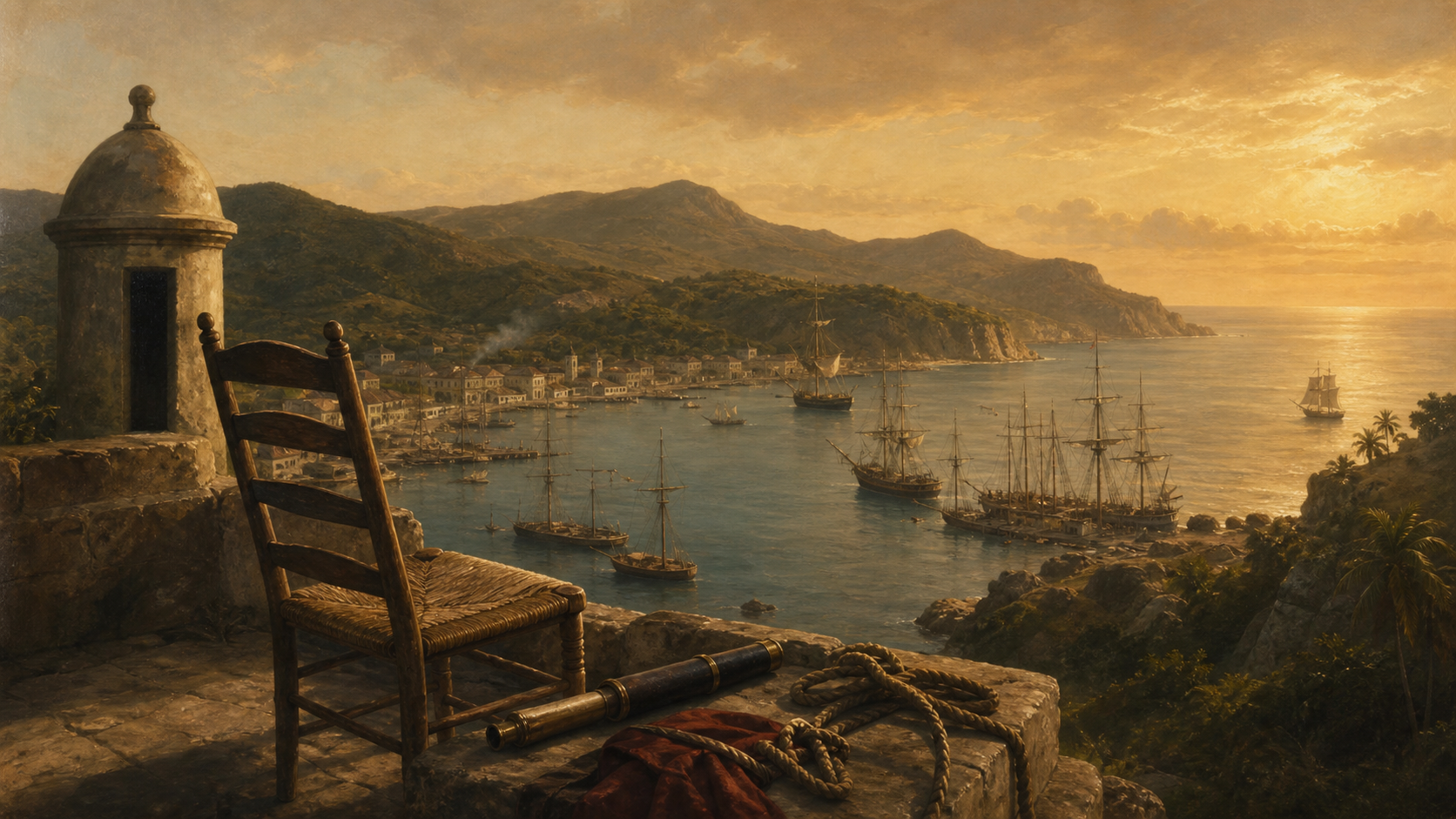
Say Tortuga and many readers imagine taverns, lanterns, swaggering captains, stolen coins, and a harbor full of ships whose crews are waiting for the next adventure. That image is not useless. It preserves the island’s role as a place where law was strained and sea violence gathered.
But it is too clean.
The real Tortuga involved hunting, disease, hunger, colonization, raids, fear, forced labor, local politics, rival European claims, and men whose lives could be brief even by pirate standards. The tavern version keeps the atmosphere and loses the cost.
A good page should keep both. Let the name carry its charge. Then show the machinery under it.
Why Tortuga still matters
Tortuga matters because it shows that piracy did not happen only on ships.
The sea robber needed land. He needed food, drink, sex, repair, markets, rumors, and a place to become human again between acts of violence. Tortuga gave some men that chance for a time. It also gave empires another reason to fight, bargain, and impose order when disorder stopped being useful.
For the wider stronghold route, connect this page to Port Royal, Nassau, and Madagascar. For the colder factual route, connect it to buccaneers, privateering, and the way law changed its tone when violence served the right flag.
Tortuga’s legend is fun because it feels like a pirate door left open.
The history is better because it shows why the door was there, who profited from it, and why everyone eventually tried to slam it shut.

