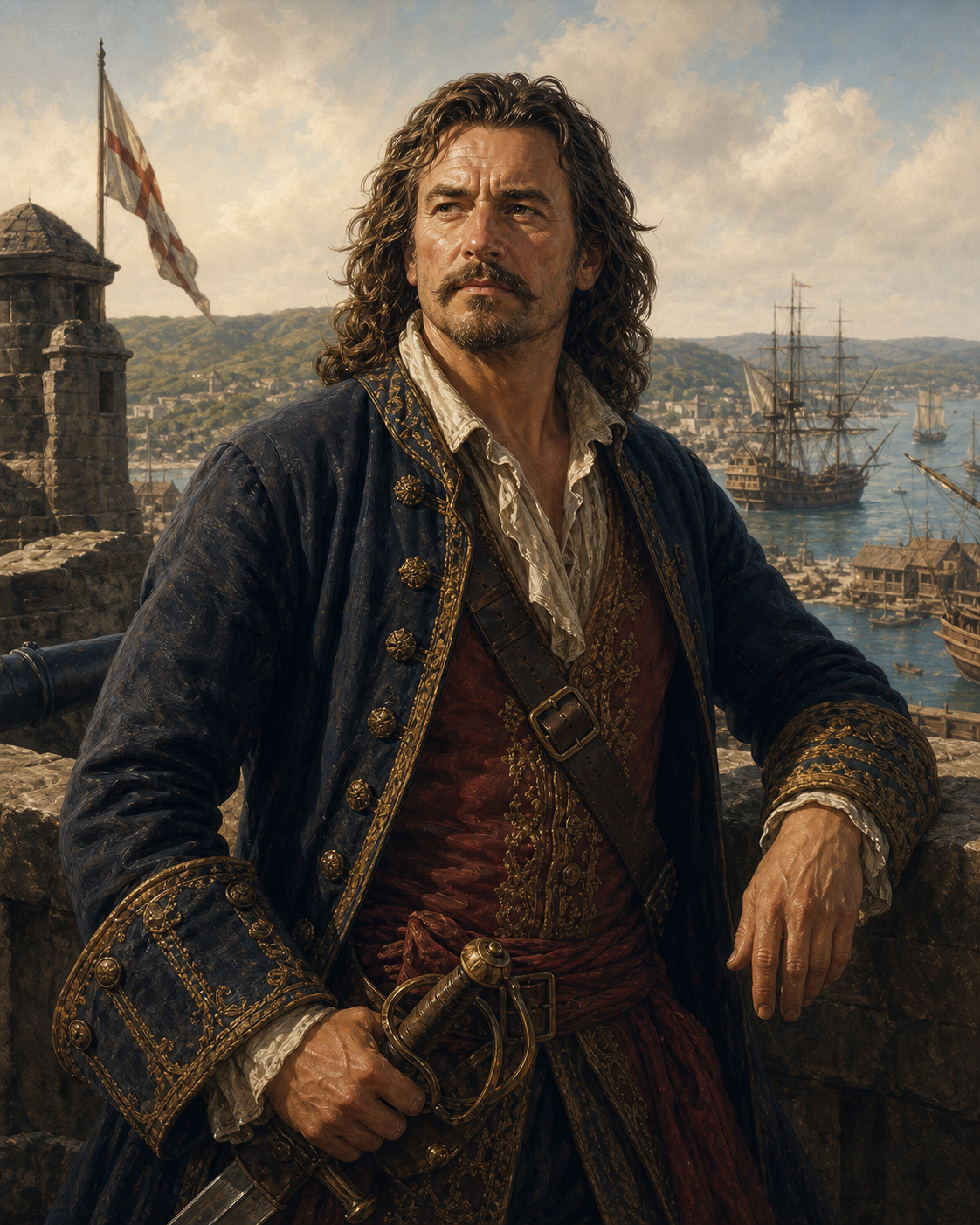
The story
Roche Brasiliano Turned Cruelty Into a Career
Before the buccaneer became a romantic cousin of the pirate, the word belonged to a much rougher Caribbean.
It pointed toward hunters, raiders, smugglers, sailors, fighters, and opportunists living in the gaps between empires. Roche Brasiliano belongs to that world. His reputation is violent, unstable, and filtered through accounts that knew exactly how to make readers keep turning pages.
That does not make him harmless. It does mean he has to be handled carefully.
Brasiliano is remembered as one of the harsher figures of seventeenth-century buccaneering, a man whose name became tied to cruelty as a method rather than an accident. The useful question is not whether he was a cartoon villain. The useful question is what kind of Caribbean world could make such a reputation profitable.
The Caribbean That Made Men Like This
Seventeenth-century buccaneering grew out of contested islands, Spanish wealth, illegal trade, hunting camps, privateering commissions, weak enforcement, and men who moved too easily between rough labor and armed raiding. The Caribbean was not a cheerful outlaw playground. It was a pressure system built from empire, land hunger, maritime opportunity, and violence that changed labels depending on who needed it.
A buccaneer could be useful when he hurt Spain, intolerable when diplomacy changed, and terrifying to the people who met him at sea or on shore. That shifting status matters for Brasiliano. Men like him worked in a world where violence could be tolerated, encouraged, condemned, or hunted depending on the flag, the season, and the inconvenience.
The older buccaneer world also reminds us that piracy did not arrive fully formed with a skull flag and a theatrical captain. It grew from work: hunting, curing meat, moving through islands, knowing coasts, trading outside official channels, and taking advantage when imperial systems left holes. The sea did not create brutality from nothing. It gave brutality mobility.
Cruelty Was Not Just Temper
Fear could be operational.
It could make captives talk, towns surrender, crews hesitate, and a name travel ahead of a landing party. A reputation for cruelty was therefore not just personal ugliness. It could become a tool, a warning, and a way to turn resistance into calculation.
That is the cold meaning of Brasiliano’s story. Cruelty could become part of the job.
The danger of that method was obvious. Terror could make enemies yield, but it could also harden hatred, invite revenge, and ensure harsher treatment if the raider was captured. Reputation made a man larger at a distance and more hated up close. Brasiliano’s afterlife sits inside that contradiction: remembered because he frightened people, but not made admirable by being remembered.
A strong article does not need to list every lurid episode for entertainment. It should explain what those episodes were doing in the story. Violence in buccaneer accounts often served practical purposes: extracting information, punishing resistance, frightening settlements, disciplining captives, or proving dominance to one’s own men. That makes the cruelty more disturbing, not less. It was not always a loss of control. Sometimes it was a business tool.
The Source Problem Has Teeth
Much of the buccaneer world reaches us through writers such as Alexandre Exquemelin, whose Buccaneers of America is essential and complicated. It preserves names, habits, scenes, and horrors that might otherwise vanish. It also comes through memory, moral drama, translation, commercial appetite, and the expectations of readers who wanted shocking Caribbean stories.
That means Brasiliano needs two forms of caution at once.
First, every lurid detail should not be treated as if it arrived with a modern evidentiary seal. Second, caution about sources should not become an excuse to soften the world being described. Buccaneering was violent. Spanish, Dutch, French, English, African, Indigenous, and mixed Caribbean lives were all caught in colonial systems that did not need pirates to become cruel.
The safest approach is to keep record and reputation beside each other. Brasiliano’s name survives because early accounts remembered him as brutal even by buccaneer standards. The exact shape of each story can be tested, but the larger point remains: his afterlife was built around fear.
Why the Story Survived
Brasiliano survives in pirate memory because he gives buccaneering a darker edge than the tavern version allows. He was not a grand strategist, a gentleman raider, or a misunderstood rebel with a convenient moral defense. He represents the rough middle ground between private war, opportunistic violence, and the appetite for stories about men who went too far.
That makes him useful, but not comfortable.
His story asks what happens when empire rewards violence in one direction, condemns it in another, and leaves enough space for men to build careers in the difference. It asks why cruelty could become a form of leverage. It asks why readers keep returning to men whose reputations should repel them.
The answer is not admiration. It is recognition. Pirate history is full of figures who reveal what the systems around them were willing to tolerate until the damage became embarrassing.
Where Brasiliano Belongs
Roche Brasiliano belongs near the buccaneer world rather than the later Golden Age script. For comparison, follow Henry Morgan, whose state usefulness changed how violence was remembered, or the broader history of piracy where privateering, raiding, and empire keep changing each other’s names.
Brasiliano is not useful because he gives readers a hero. He is useful because he keeps the romance honest. Buccaneering was not only daring raids, warm water, and stolen silver. It was captives, fear, extraction, retaliation, and stories written later by people who knew the market for horror.
The real lesson is colder than the legend. In the rough Caribbean of the seventeenth century, cruelty could travel, earn, and survive on paper long after the man himself was gone.


