Modern piracy
Context before conclusions
The Golden Age of Piracy: a pivotal era where maritime rogues influenced global trade, politics, and naval tactics. Dive into a period marked by famed pirates, significant battles, and cultural shifts, as the lines betwe...
Software piracy is piracy by metaphor, but the metaphor stuck because the emotional shape feels familiar: someone takes value, moves it through a network, and forces the law to chase a faster route.
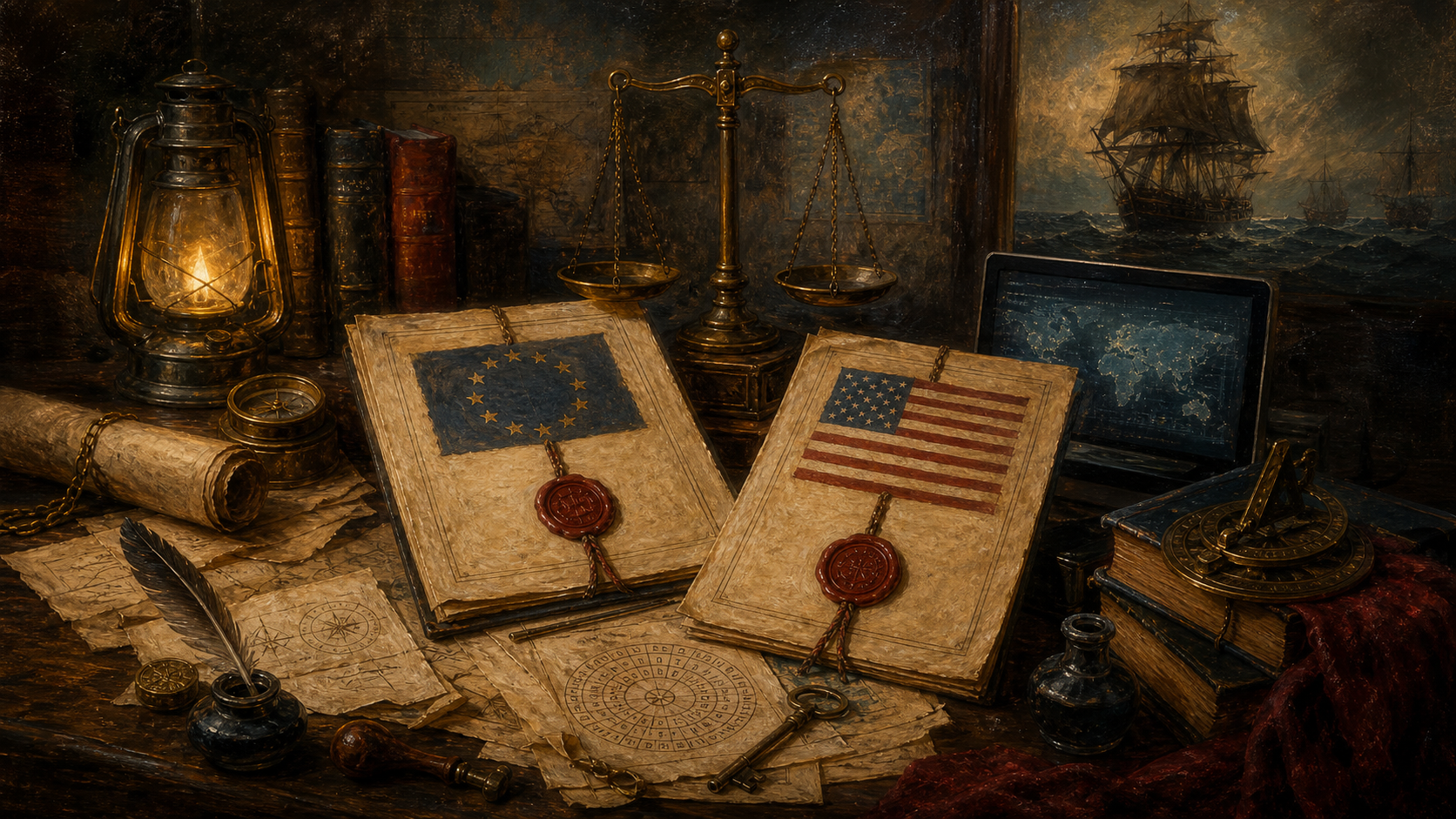
No ships are required. The cargo is code, licenses, activation keys, cracked installers, counterfeit downloads, subscription access, copied media, and unauthorized distribution. The sea is the network. The hidden cove is the forum, torrent index, file locker, private server, or suspicious download button wearing the expression of a man who absolutely has malware in his pocket.
This page is historical and educational, not legal advice. Software law is complex, national rules differ, and details change. Before publication, any precise current legal claim should be checked against official sources. The safer purpose here is broader: to explain why the word piracy survived the voyage from sailcloth to source code.
The Metaphor Works Because Distribution Is the Battlefield
Old piracy attacked movement across water. Software piracy attacks movement across networks.
That is why the term still feels useful. In both cases, value travels. In both cases, the owner wants control over where that value goes. In both cases, unauthorized distribution makes enforcement difficult because copying or movement can outrun the people trying to stop it.
But there is a major difference. A stolen cargo of sugar is no longer in the hold of the original ship. A copied file can be in thousands of places while the original still exists. Digital piracy is not simple theft in the old physical sense. It is unauthorized copying, distribution, access, or circumvention. The harm is not that the original vanished. The harm is that control, licensing, revenue, security, and legal permission were bypassed.
That difference matters. The metaphor is useful, but only if it does not flatten the law.
What Software Piracy Usually Means
Software piracy can include several different behaviors.
A person may install paid software without a valid license. A company may use more copies than it paid for. A website may distribute cracked versions of commercial software. Someone may sell counterfeit activation keys. A user may bypass technical protection measures. A platform may host unauthorized files. A business may unknowingly rely on unlicensed tools because nobody checked the old machines in the corner.
These are not all identical. A teenager downloading a cracked game, a company under-licensing enterprise software, a criminal group distributing malware-infected installers, and a reseller selling fake keys are different situations. They may all sit under the broad cultural label of software piracy, but the legal and practical consequences can vary widely.
That is where the pirate metaphor begins to creak. A black flag is simple. Licensing is not.
The United States: Copyright, DMCA, and Enforcement Pressure
In the United States, software is generally protected through copyright law, with additional layers involving contracts, licenses, anti-circumvention rules, trade secrets, trademarks, and sometimes criminal enforcement. The Digital Millennium Copyright Act is especially important in discussions of technological protection measures and takedown systems.
The practical American picture is not only courtroom drama. It includes license audits, civil lawsuits, takedown notices, platform enforcement, enterprise compliance, criminal cases in serious distribution networks, and software companies using technical systems to limit unauthorized use.
The U.S. approach often feels aggressive because of strong private enforcement, large statutory-damages conversations in copyright culture, and the central role of major software and platform companies. But even here, the details matter. Not every unauthorized copy produces the same legal response. Enforcement depends on scale, intent, evidence, commercial harm, jurisdiction, and the appetite of the rights-holder.
The movie version wants a hacker in a basement. The real version often has spreadsheets, licensing departments, lawyers, and someone discovering that the old design software on three workstations was never properly renewed.
The European Union: Harmonization With National Teeth
The European Union also protects software, but the machinery is shaped by EU directives, national implementation, and member-state enforcement. EU law has worked to harmonize major rules around software protection, copyright, databases, digital services, and technological measures, while still leaving practical enforcement to national systems.
That means “EU law” is not one single police officer kicking down one single door. It is a layered structure: EU-level rules, national laws, civil enforcement, criminal provisions in some contexts, platform obligations, consumer rights, and court interpretations.
The EU also tends to place software piracy inside a broader regulatory environment that includes data protection, digital markets, platform responsibility, consumer protection, and cross-border enforcement. The result is not necessarily softer or harder than the U.S. in a simple way. It is structurally different.
A clean comparison should avoid lazy ranking. The better question is not “who is stricter?” The better question is: which legal tools are used, who enforces them, what remedies exist, and how quickly enforcement can move across borders?
Why Businesses Should Care More Than Teenagers Think
Software piracy is often imagined as an individual act: one cracked installer, one game, one editing suite, one “temporary” download that somehow remains temporary for six years.
But the bigger risk often sits in organizations.
Businesses can face audit exposure, security problems, reputational harm, interrupted operations, contract disputes, and penalties if they use unlicensed software. Pirated software can also bring malware, backdoors, broken updates, unstable systems, and legal uncertainty into places that depend on trust.
That is the practical difference between romantic rule-breaking and business risk. A pirate flag looks rebellious until payroll depends on it.
For companies, software compliance is not merely moral housekeeping. It is operational hygiene. Know what is installed. Know what is licensed. Know what terms apply. Know who approved it. The most dangerous cracked software is not always the one downloaded by a villain. Sometimes it is the forgotten tool that became part of the workflow because nobody wanted to ask why it still worked.
Why the Pirate Word Still Has Power
The word piracy survived because it moralizes copying. It turns a licensing dispute into a sea story. That can be useful, but also misleading.
Rights-holders like the word because it suggests theft, danger, and illegitimacy. Users sometimes resist the word because copying is not the same as carrying a box out of a warehouse. Both reactions reveal something. The law needs categories; culture wants metaphors.
Piracy is a powerful metaphor because it makes invisible copying feel visible. It gives software companies a villain, gives enforcement campaigns a story, and gives users a rebel costume they may not deserve.
The better treatment is less theatrical. Unauthorized software use can be legally risky, commercially harmful, and technically dangerous. It can also arise from confusion, poor procurement, bad IT management, or unclear licensing terms. The same label covers very different behavior.
The Modern Pirate Does Not Need a Ship
Digital piracy shows how far the pirate image has traveled. The old pirate attacked ships because ships carried wealth. The software pirate attacks licenses, platforms, activation systems, and distribution channels because that is where digital value moves.
But the old lesson remains: piracy exposes weak points in systems. It finds where law is slow, where enforcement is expensive, where value moves quickly, where users are tempted, where legitimate access feels costly or inconvenient, and where a black market can make itself useful.
That does not make software piracy romantic. It makes it historically recognizable.
The black flag did not disappear. It was compressed into a download link, hidden inside a cracked installer, and sent sailing through a network where the customs house is always one update behind.


