Modern piracy
Context before conclusions
In the 19th century, America's clash with Cuban pirates changed the Caribbean's narrative. Beyond tales of swashbucklers, this conflict had deep geopolitical stakes. Dive into this underexplored maritime saga, where nati...
The phrase “America’s war against Cuban pirates” sounds like a clean little campaign: republic on one side, sea robbers on the other, justice sailing in with a flag and a tidy conclusion.
The real story is untidier, which usually means more useful.
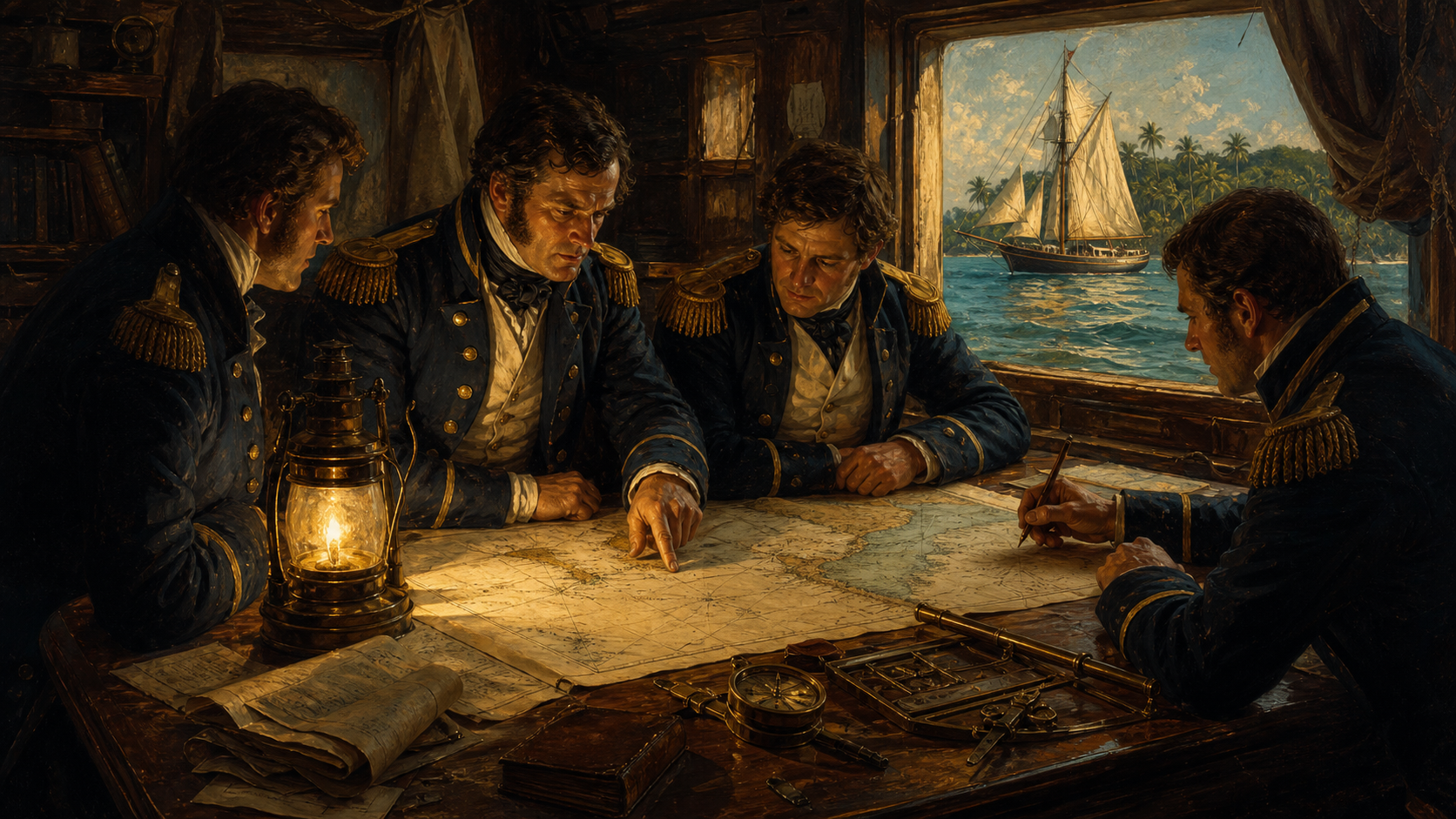
Piracy around Cuba and the wider Caribbean in the early nineteenth century sat inside a crowded world of collapsing empires, privateering claims, smuggling, slave trading, revolutionary wars, Spanish authority, American commerce, and naval power still learning how far it could reach. The pirates were real. So were the frightened merchants, captured crews, and coastal communities caught in the middle. But the labels were not always as neat as later patriotic summaries prefer.
Why Cuba Mattered
Cuba sat near routes that mattered. Ships moving through the Caribbean carried sugar, coffee, silver, manufactured goods, enslaved people, mail, passengers, and political rumor. The island’s coasts, coves, and nearby channels created opportunities for people who knew the water better than distant officials did.
A pirate did not need to rule the sea. He only needed a vulnerable ship, local knowledge, buyers for stolen goods, and enough delay before law arrived. That is why maritime violence could become persistent even when no pirate empire existed. The geography did some of the work.
For American merchants, the problem was practical before it was romantic. A captured vessel meant lost cargo, injured or murdered sailors, higher risk, and pressure on the government to protect trade. Young naval power often grows when commerce complains loudly enough.
Privateering, Smuggling, and Piracy Shared the Room
The Caribbean after the age of revolutions was full of armed vessels carrying explanations. Some captains claimed commissions. Some shifted between legal and illegal activity as opportunity changed. Some were smugglers who became more violent when profit required it. Some were simply pirates.
That overlap matters. It does not excuse robbery or murder, but it explains why suppression was harder than pointing at a black flag. Officials had to ask who authorized the vessel, what nation claimed jurisdiction, where stolen goods were sold, and which local authorities were too weak, too compromised, or too busy to interfere.
A pirate can be chased by a navy. A whole coastal gray economy is harder to hang.
The American Naval Response
The United States responded with patrols, pursuit, seizures, and pressure. The campaign helped shape American naval activity in the Caribbean, where protecting trade meant learning shallow waters, local politics, and the frustrating habit of pirates disappearing into shore networks.
The naval story should not be written as effortless heroics. Pursuing small vessels among islands, reefs, inlets, and foreign jurisdictions was difficult. Pirates could scatter, hide, claim protection, or rely on people ashore who benefited from the traffic. Suppression required more than courage. It required information, persistence, diplomacy, and the ability to make the cost of piracy higher than the profit.
That is the practical heart of anti-piracy work. The state must make crime less convenient.
What the Campaign Reveals
The American campaign against Caribbean piracy reveals how piracy survives in the cracks between law and geography. It also shows how a navy’s moral language can sit beside commercial interest. Protecting sailors and punishing murder mattered. Protecting trade mattered too. Governments often discover their principles and their shipping receipts in the same drawer.
For the pirates’ victims, none of this was theoretical. They faced armed men, stolen goods, violence, fear, and sometimes death. The article should keep those people visible. Pirate history becomes too easy when ships are only prizes and crews are only background.
Why This Still Matters
The story belongs near modern piracy because the pattern has not disappeared. Valuable routes, local instability, weak enforcement, and shore networks still matter. The tools have changed. The logic remains stubborn.
For broader context, follow the modern piracy route. For the older Caribbean setting, read the Golden Age and privateering pages. America’s campaign against Cuban piracy is not just a footnote after the famous age. It is a reminder that piracy does not end when the costume changes. It ends when geography, profit, and weak enforcement stop cooperating — and they rarely stop all at once.


