The story
John Rackham
John Rackham is proof that pirate fame is not distributed by achievement alone. Capture hundreds of ships and history may still make you share a paragraph. Sail with two famous women, wear memorable clothing, carry a flag tradition with excellent graphic instincts, and die at the right dramatic angle, and suddenly your afterlife has legs. Rackham, better known as Calico Jack, was not the most successful pirate of his age. He was one of the most memorable.
That difference is the point. Rackham's career was short and relatively modest beside figures such as Blackbeard, Bartholomew Roberts, or Ching Shih. Yet his story gathers elements that popular memory loves: bright calico clothing, Anne Bonny, Mary Read, a skull-and-crossed-cutlasses flag associated with him in later tradition, capture in Jamaica, trial, execution, and a final legend sharp enough to keep being repeated. Rackham is useful because he shows how pirate celebrity works.
Calico Jack And The Shape Of A Reputation
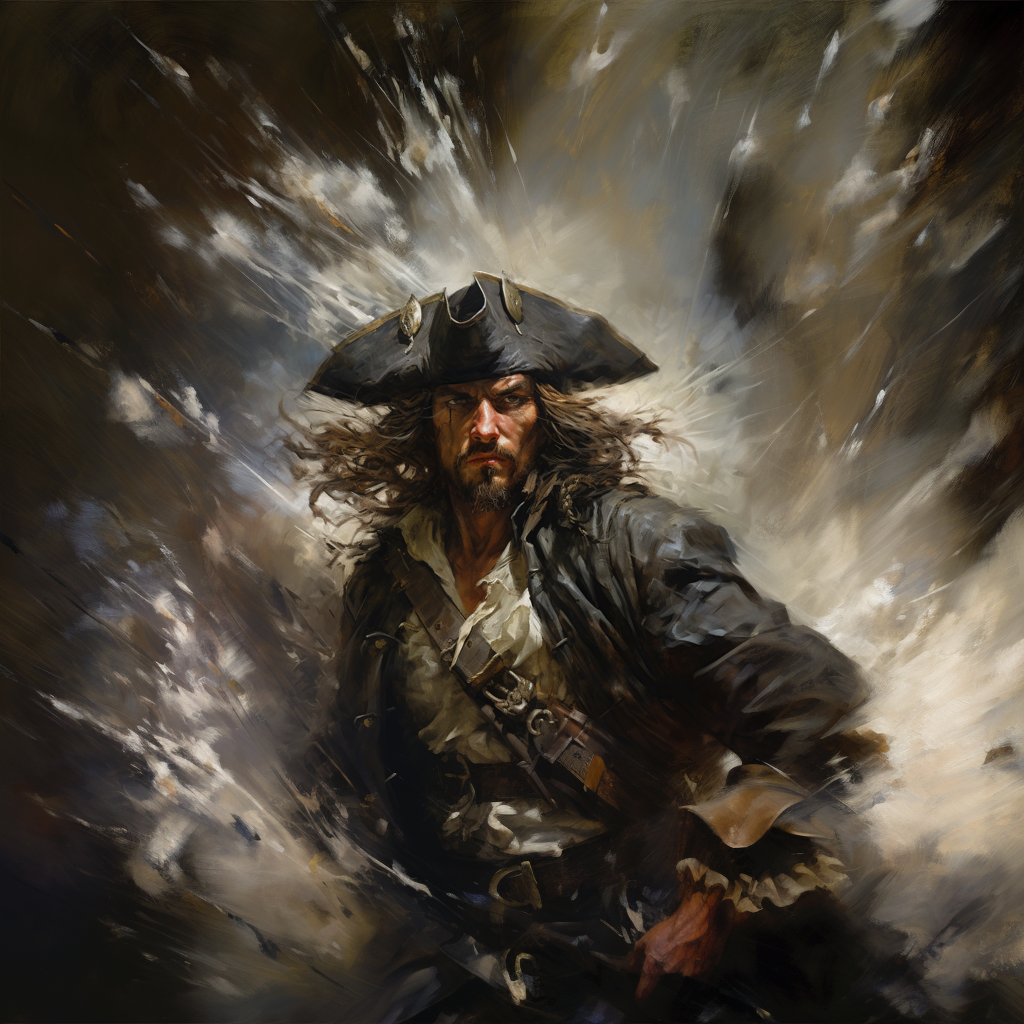
Rackham earned the nickname Calico Jack from the bright calico clothing associated with him. That detail matters because it gives the story visual shape. Many pirate careers blur together in records of small prizes, short cruises, and grim endings. Rackham arrives with a look. History is not supposed to be this shallow, of course, but memory often keeps the person whose outline is easiest to draw.
The nickname can make him sound lighter than he was. Rackham was still part of a violent maritime world. Pirate crews stole vessels, threatened sailors, took goods, and operated under the pressure of colonial pursuit. The clothing belongs in the story, but it cannot carry the whole story. A bright coat does not make piracy harmless. It only makes the remembered figure easier to spot at a distance.
Rackham's career also exposes the difference between scale and survival in memory. He did not dominate the Atlantic. He did not build a large raiding machine or command a major confederation. His name stayed alive because the story was compact, stylish, scandalous, and easy to retell. Pirate memory is not a scoreboard. It rewards flags, companions, courtroom drama, and quotable endings at least as much as tonnage.
Anne Bonny And Mary Read
Rackham is inseparable from Anne Bonny and Mary Read, the two women tried with his crew in Jamaica in 1720. Their presence has made his story famous, though it often means Rackham becomes the least interesting person in his own paragraph. That is not a failure of the page; it is part of the history of the story. Bonny and Read changed the afterlife of Rackham's name because later readers found them irresistible.
They also deserve more than decorative placement in his downfall. Their records are thin but remarkable, and the surviving tradition around them mixes documentation, trial context, gendered fascination, and later dramatic embroidery. Rackham's story becomes stronger when they are treated as historical figures, not accessories. Their presence raises questions about gender, disguise, labor, violence, and the way pirate stories decide who gets remembered.
The famous line attributed to Anne Bonny about Rackham needing to fight like a man belongs to the Rackham legend, but it needs caution. It is sharp, memorable, and very convenient, which is exactly why it has traveled so far. The safer treatment is to explain that the saying belongs to the later source tradition rather than pretending every word arrived with a courtroom seal. A doubtful line can still tell us something about reputation, gender, and how later readers wanted the scene to feel.
For connected lives, readers can move to Anne Bonny and Mary Read. Rackham works best as a doorway into those stories rather than as a man who swallows them. His profile gains depth when it lets the people around him keep their own gravity.
The Flag And The Legend
The skull over crossed cutlasses is strongly associated with Rackham in modern pirate imagery. As an icon, it has conquered the world. As a historical attribution, it deserves care because pirate flags can be difficult to pin down with absolute confidence. The design is so good that later culture almost wants it to be neatly documented. History rarely behaves so politely.
That does not mean the flag should vanish from the story. It means the flag belongs as part of Rackham's cultural afterlife as much as his documented life. The design explains why he remains visually useful. It is clean, theatrical, and instantly legible. Rackham may not have run the largest operation, but the image attached to him has outperformed many larger careers. His graphic-design department, whether historical fact in every detail or later tradition sharpened by repetition, had a very long future.
The flag also helps explain why pirate history needs evidence boundaries. Some details rest on firmer records. Others survive because they are memorable, plausible, repeated, or too satisfying to leave alone. Rackham's story is full of these sticky elements. The result is not a reason to discard the legend. It is a reason to keep the legend in the right place, beside the record rather than on top of it.
Capture, Trial, And Execution
Rackham was captured by the pirate hunter Jonathan Barnet and tried in Jamaica in 1720. The ending was swift and public. He was hanged, and his body was displayed as a warning. The state understood branding too. Pirates used fear, flags, and reputation to make ships surrender. Colonial authorities used trials, executions, and displayed bodies to announce that the sea had limits.
This ending pulls the story out of costume and back into law. Rackham's career may look colorful from a distance, but the consequences were bodily. Trial and execution were not footnotes; they were part of how governments tried to restore order after maritime violence became too visible. The romance survives because it is easier to remember clothes, flags, and famous companions. The actual ending involved courts, punishment, and a public lesson no one had to squint to understand.
Bonny and Read complicate the ending further because their pregnancies reportedly delayed execution. That detail moved them into a different afterlife from Rackham, whose story ends more bluntly. He became the hanged man in a tale that kept giving other people more room. That is one reason his profile should not pretend he was the center of every consequence. He was central to the crew, but not to every meaning the story later acquired.
Why Rackham Still Matters
Rackham matters because he separates operational importance from cultural memory. He was smaller than the biggest predators, but better than many of them at explaining pirate celebrity. His fame exposes how reputation chooses its favorites. Style, companions, gender drama, flag imagery, and a memorable fall can carry a name farther than a larger but less shapely career.
That does not make him unimportant. It makes him a useful case study. Rackham helps readers see how pirate history becomes pirate legend: records become stories, stories become images, images become costumes, and then the costume starts pretending it was the whole man. The calmer profile does not have to kill the style. It only has to keep the style attached to a real, dangerous maritime world.
For the wider gallery, return to Famous Pirates. For the broader context of piracy, law, punishment, and memory, follow the history of piracy. Rackham belongs between those routes because his career shows both the violence of piracy and the odd selectiveness of pirate fame.
John Rackham was not the greatest pirate by scale. He was Calico Jack: visually memorable, legally doomed, attached to two far more compelling companions, and carried forward by a flag tradition that later culture refused to put down. That is enough to make him historically useful. He reminds us that pirate legend does not simply preserve achievement. It preserves whatever history can still recognize in silhouette.


